Friday, 6 February 2026

Afreximbank Membership: Transforming South Africa's Auto Market

Afreximbank Membership: Transforming South Africa's Auto Market

In a strategic move poised to reshape the continent’s economic landscape, South Africa’s recent accession as a shareholder of the African Export-Import Bank (Afreximbank) is being heralded as a potential game-changer for its cornerstone auto industry.

Analysts suggest the decision could unlock crucial finance, accelerate the implementation of the African Continental Free Trade Area (AfCFTA), and ultimately steer the sector towards a more prosperous, integrated future.

A US$8-billion commitment: HE Cyril Ramaphosa, President of South Africa and Dr George Elombi, President and Chairman of Afreximbank at the Country’s accession signing ceremony, marking the launch of a major Country Programme engineered to bolster the South African economy

The local automotive industry, a critical pillar of the national economy contributing nearly 5% to GDP and supporting hundreds of thousands of jobs, has long grappled with the challenges of limited scale, fragmented markets, and expensive access to trade finance. Joining Afreximbank directly addresses these pain points.

The most significant potential impact lies in the synergy with the AfCFTA. While the agreement promises a continental market of 1,3-billion people, its rollout has been hampered by logistical hurdles, payment system disparities and a simple lack of trade finance tailored for intra-African commerce.

Afreximbank, a key financial architect of the AfCFTA, operates the Pan-African Payment and Settlement System (PAPSS), which allows for instant cross-border payments in local currencies.

The macroeconomic outlook for local automakers, battered by global supply chain woes and sluggish domestic demand, stands to gain substantially. Increased export volumes into Africa would improve plant utilisation in places like Kariega, East London, and Rosslyn, enhancing economies of scale and potentially making local production more cost-competitive globally.

Furthermore, Afreximbank’s project finance capabilities could attract investment into the critical transition to new energy vehicles, however success hinges on our local industry’s agility to produce vehicles competitively tailored for diverse African consumers and on government’s parallel work to fix our ports, rails and energy supply.

If these domestic challenges are met, the combination of Afreximbank’s financial muscle and the AfCFTA’s market access could transform South Africa from a powerhouse serving mainly its domestic and traditional European export markets into the undisputed automotive hub of Africa.

The journey has begun, and the industry is now watching closely to see how quickly the promised finance flows onto the factory floor and out through the continent’s borders.

More than 2-million VW Polo models have been built at the Kariega plant

As always, there is a ‘but’ and in this case it comes from Volkswagen South Africa.

When Volkswagen Group Africa (VWGA) chairperson and managing director Martina Biene wrote to President Cyril Ramaphosa shortly before Christmas, it was an effort to push urgency into a process she believes has dragged on far too long, with real implications for the future of South Africa’s automotive industry.

Speaking at VW’s annual Media Indaba in Kariega, Biene said: “I wrote a letter to the President prior to Christmas. I mainly outlined that for us at VWGA, this year is crucial for securing an investment decision from VW headquarters for the next project in the pipeline.”

Her request was straightforward: clarity. Not only on the financial viability of future projects, but also on whether South Africa’s policy direction gives investors enough confidence to commit long-term capital.

“For this investment decision, they look at the economics and the business case,” she explained. “But headquarters also look at what’s happening in the country. One of their non-negotiables is seeing improvement in South African policies.

“You might have a business case,” she cautioned, “but there are stronger business cases elsewhere if we can’t show that investing here is sustainable.”

She didn’t mince her words: “This year for us is make or break.”

Professor Adrian Saville, economist and strategy specialist at GIBS, echoed the concern. Asked whether a major manufacturer could realistically leave South Africa, he didn’t hesitate.

“Could a specific business leave? Absolutely. Capital can go anywhere,” he said. “There are 200 markets you can choose to allocate capital to. There’s nothing that guarantees South Africa a place at the front of the queue.”

Saville pointed out that the country’s industrial history is full of once‑significant manufacturers that no longer exist. “South Africa is an industrial graveyard. No company is too big, too established or too important to walk away if conditions deteriorate.”

Despite the seriousness of her message, Biene says she received no direct reply from Ramaphosa. “The unfortunate thing is that the President didn’t reply to me,” she confirmed.

She did note that there has since been activity between the Automotive Business Council (Naamsa) and the Presidency’s staff, suggesting the letter may have prompted some movement behind the scenes.

Whether that translates into actual policy progress remains unclear. “Am I satisfied with that? I don’t know,” she said.

Saville argues that certainty alone isn’t enough if the underlying policy is weak. “Policy certainty over a policy that doesn’t work is a death blow,” he said. “We’ve got a knife at a gunfight.”

Still, both he and Biene acknowledge that South Africa has shown it can get policy right. The Automotive Production and Development Programme and the South African Automotive Masterplan are often cited as examples of what’s possible when government acts decisively.

The challenge, Biene says, is timing. “We don’t have the luxury of two or three years of debating and deliberating. The requirement is urgent.”

Her letter to the President was intended to make that point clear. Whether the message lands will matter not only for Volkswagen, but for the entire vehicle manufacturing sector in South Africa.

https://bit.ly/3MsFyZQ

Wednesday, 4 February 2026

Growth and Innovation at Isuzu Motors in South Africa

Growth and Innovation at Isuzu Motors in South Africa

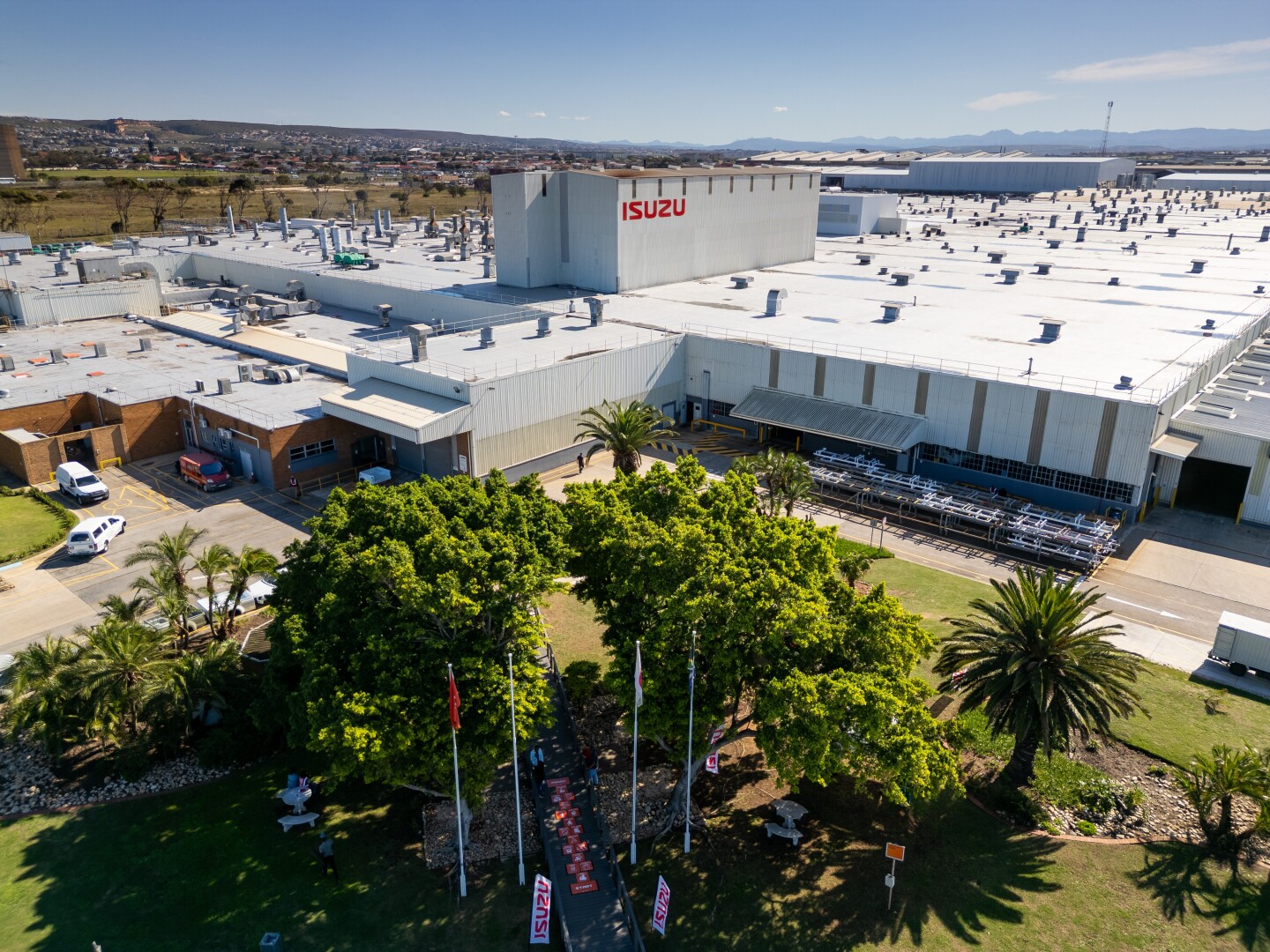
GQEBERHA – Isuzu Motors South Africa used its annual corporate address, held at its Struandale manufacturing plant, to detail its business evolution since 2018 and chart its course for the coming years.

The event, served as a backdrop to discuss the firm's changed structure and market approach.

A central feature of the address was the formal introduction of the Isuzu Corporate Philosophy to the local market. Centered on the purpose statement ‘Moving the World – For You’, the framework outlines the company's approach to creating value for customers, employees and society.


"This philosophy articulates why we exist: to help move people, goods and communities forward in a way that creates lasting value," says Billy Tom, President and Chief Executive Officer of Isuzu Motors South Africa. He emphasised it was a guiding principle, not merely a slogan.

The company linked this philosophy to its local operations, stating it translates into providing reliable mobility solutions, responding to customer needs, and strengthening its role in local economies.

"The organisation today is different from the one we launched eight years ago," he says. "We have transformed our leadership, modernised operations and expanded our product offering, while staying true to our core values."

The address provided figures to illustrate recent market performance. In 2025, the company retailed 26 000 vehicles in South Africa, representing growth of 12,2% from the previous year. Exports to other African markets rose by 4,5% to 5 371 units.

Isuzu maintained its position as the top-selling brand in the combined medium and heavy commercial vehicle segments for a 13th year. Passenger vehicle sales also grew, with D-MAX sales increasing by 11,7% and MU-X volumes rising by 45,4% following the launch of a new model.

"Customers choose Isuzu for reliability, durability and vehicles suited to African conditions," says Craig Uren, Executive Vice President for Revenue Generation. "Our focus is on innovating from that foundation to stay relevant in a changing market."


The company highlighted its ongoing investment in its Eastern Cape manufacturing base, noting its role in regional jobs and skills development. It cited the recent establishment of a R750-million component manufacturing facility by VSL Manufacturing in Struandale, supported by Isuzu, as an example of deepening local supply chains.

Internally, the company reported continued investment in employee development, linking it to four consecutive Top Employer certifications. Community initiatives in water security, education and conservation were also noted.

Looking forward, the company confirmed plans to launch a new D-MAX and next-generation truck range in 2026.

"Amid new product introductions, our commitment endures: to deliver solutions customers can trust, now and in the future," Uren added.

Separately, the company released sales data confirming its continued lead in the commercial vehicle sector. For the period from January 7, 2025 to January 6, 2026, Isuzu held a 26,8% share of the combined medium and heavy commercial vehicle cab-over-chassis market.

"This outcome is based on product strategy, engineering refinement, and a focus on customer operational needs," says Uren. He attributed the sustained performance to factors including total cost of ownership, vehicle durability, aftersales support, and long-term partnerships with clients.

https://bit.ly/3Zh9Di2

Wednesday, 28 January 2026

Strong growth forecast from UD Trucks and updates to Quester

Strong growth forecast from UD Trucks and updates to Quester

Against a backdrop of economic pressure and market volatility, UD Trucks Southern Africa is charting a course of confident and stable growth. This is anchored by disciplined execution, solid retail partnerships and a consistent focus on keeping customers' vehicles on the road.

These points were central to the recent UD Trucks 2026 Media Engagement at Zwartkops Raceway under the theme ‘Confident, Stable Growth though Volatile Underneath’.


The operating environment continues to present challenges, from rising input costs and fuel price fluctuations to infrastructure concerns. Despite this, UD Trucks Southern Africa is maintaining a resilient performance, which in turn strengthens customer trust in the brand’s support for long-term business sustainability.

This is reflected in the company’s annual figures. UD Trucks Southern Africa achieved an 8% share of the overall new-vehicle market, and a 10,8% share in the heavy-duty segment. This contributed to aggregate industry sales which rose to 31 652 units, up from 31 190 units in 2024. The aftermarket business also saw considerable growth, with Service Agreement uptake reaching around 50%, underscoring the focus on long-term customer value, vehicle uptime and operational efficiency.

“While the operating environment remains challenging, our performance shows that customers trust UD Trucks to deliver reliable solutions that support their businesses,” says Filip Van den Heede, Managing Director of UD Trucks Southern Africa. “Our focus remains clear: to drive further for better by offering innovative products, strong retail partnerships and solutions that make a real difference to customer operations.”

The UD Quon, the flagship long-haul model, continues to lead innovation within the range. Built for demanding heavy-duty applications, the Quon integrates advanced technology with a focus on productivity and uptime for customers facing intense commercial pressure.


“The Quon represents the height of UD innovation—from performance and safety to driver comfort and connectivity. It is engineered for customers who expect more from their vehicles,” says Van den Heede.

The event also showcased the UD Quester, a model that has been integral to the brand’s success in growth markets globally. Since its launch in 2013, the Quester has established a reputation for efficiency, durability and versatility across sectors like long haul, general cargo, construction and waste management.

Its development is directly informed by customer feedback, with a clear emphasis on fuel efficiency, safety, driver comfort and uptime—all critical factors in managing the total cost of ownership.

Notable features on the 2026 UD Quester include:
• The ESCOT Direct Drive Gearbox, which contributes to fuel efficiency and consistent driving.
• A 4-Stage Retarder for enhanced braking performance and vehicle control.
• UD Stability Control to aid in rollover prevention and directional stability.
• A driver crash bag for added occupant safety.
• A refreshed cab interior designed with driver comfort and usability in mind.

“Quester is more than a truck—it is a business partner,” says Esaia Taunyane, Sales Director at UD Trucks Southern Africa. “Every feature on the Quester is guided by customer feedback. By improving efficiency, safety and the driver experience, we help customers reduce total cost of ownership and achieve stronger long-term returns on their fleet investments.”


With fuel being a major operational cost, the Quester’s engineering—including efficient powertrains, driving support systems and UD Connected Services—is designed to help customers achieve more kilometers per litre without compromising on performance or reliability.

Uptime remains a fundamental part of UD Trucks Southern Africa’s offering. Through proactive maintenance planning, predictive servicing and responsive breakdown support, the company helps customers reduce unplanned downtime and safeguard productivity.

“Uptime is about anticipation, not reaction,” says Sanjay Naipal, Aftermarket Director at UD Trucks Southern Africa. “By combining proactive maintenance solutions with strong dealer support and connected services, we help customers manage costs, protect productivity and keep their fleets moving—even in demanding operating conditions.”

UD Trucks Southern Africa continues to invest in its dealer network, understanding  strong retail environments are crucial to customer experience and uptime. Recent developments include the opening of the new CMH Commercial Pinetown dealership, upgrades to the McCarthy Commercial Boksburg facility to enhance service capability, and a major expansion at McCarthy Commercial Alrode to increase workshop and parts capacity. Further facility improvements are underway in Richards Bay, Worcester, Kimberley, Bloemfontein and Port Shepstone.

People are central to UD Trucks Southern Africa’s long-term strategy. Ongoing investment in cadet development, driver training and leadership programmes reinforces the commitment to building industry-ready skills.

“Driving further for better goes beyond our products,” Van den Heede concludes. “It reflects our purpose of creating a better life—for people, for the planet and for sustainable growth. It is about how we support our customers, empower our people and contribute meaningfully to the communities in which we operate.”

https://bit.ly/4k58gwp

Monday, 12 January 2026

Chinese EV Manufacturers Expand in Africa

Chinese EV Manufacturers Expand in Africa

Chinese electric vehicle manufacturers are swiftly expanding their presence across Africa, as trade barriers in Western markets encourage them to seek new customers on the continent. African demand for electric and hybrid vehicles has risen steadily, driven by urbanisation, higher fuel prices and government incentives for greener mobility.

Major cities such as Nairobi, Lagos, Johannesburg and Cairo are experiencing early adoption of EVs in private, commercial and ride-hailing fleets, despite infrastructure challenges like limited charging networks. The market is further buoyed by a surge in affordable models from Chinese automakers, which blend competitive pricing with plug-in hybrid technology to meet local needs.

Analysts note that Africa’s EV market remains small compared to global sales, but growth rates are among the fastest in emerging regions. This positions the continent as a critical frontier for automakers looking to diversify beyond traditional markets.

In this context, Hong Kong-based Tiazhou Okla Automotive Co., known as Okla Global, has announced a strategic partnership with Treadway Investment Bank to accelerate its expansion across Africa. Treadway will provide corporate finance expertise, facilitate government and private sector partnerships, and help Okla navigate regulatory frameworks in key African markets.

Under the agreement, Okla plans to establish manufacturing and assembly plants in Zimbabwe, South Africa, Nigeria, Kenya and Egypt. These facilities will serve as regional hubs: Zimbabwe and South Africa for the Southern African Development Community (SADC), Nigeria for the Economic Community of West African States (ECOWAS), Kenya for East Africa, and Egypt for North Africa.

Okla stated that this collaboration marks a significant step in its mission to become a leading player in Africa’s electric vehicle industry. Treadway’s role will be central in securing financing, navigating regulatory frameworks and leveraging government relationships to accelerate Okla’s rollout. The partnership is also expected to boost local economies by creating jobs and strengthening industrial ecosystems through localised assembly and production.


Okla’s entry comes amid rapid expansion by Chinese automakers across Africa over the past five years. Companies such as Build Your Dreams (BYD), Chery, Geely, Foton, Great Wall Motor, Haval and Sinotruk have pursued opportunities across the continent, focusing on affordable vehicles as they build local presence. Their growth has been supported by local assembly plants, accessible financing models and strong after-sales support, reshaping consumer expectations and the broader automotive market.

Simultaneously, local players are cultivating their own EV ecosystems. For example, MojaEV Kenya, a Nairobi-based EV distributor, is set to begin local assembly of electric vehicles in partnership with domestic assemblers later this year. This shift from imports to in-country assembly is seen as critical to lowering costs and meeting rising demand for sustainable transport in Kenya and neighbouring markets.

In a related development, Jiangsu Yunyi Electric Company, a high-tech Chinese manufacturer specialising in automotive electronic components, has announced plans to invest approximately R1,2-billion in a production site in Tangier, Morocco’s automotive hub. The company said the Tangier plant will serve as a key overseas production base, leveraging local resources to enhance its global competitiveness and support medium- to long-term strategic goals. Jiangsu Yunyi Electric provides innovative solutions for new energy vehicles, including voltage regulators, rectifiers, diodes, sensors and intelligent wiper systems.

Morocco is emerging as a global automotive powerhouse, attributed to its political stability, geostrategic location, economic performance and incentives for investors. The country’s automotive ecosystem employs over 222 000 skilled workers. This strategic sector has grown exponentially over the past decade, making Morocco the leader in Africa for automotive manufacturing and exports.

In 2025, Morocco’s automotive market was valued at approximately R89,82-billion and is projected to reach around R158,94-billion by 2030, according to expert forecasts. The sector is export-oriented, with 1-million cars produced in 2025. Morocco, which has increased its target to 1,5-million vehicles by 2026, produced 560 000 cars in 2024 and 250 000 in 2020.

https://bit.ly/4qM3OVc

Friday, 9 January 2026

AAAM's 2026 Goals: Boosting Africa's Automotive Industry

AAAM's 2026 Goals: Boosting Africa's Automotive Industry


The African Association of Automotive Manufacturers (AAAM) has announced that 2026 will be its year of “progressive development through collaboration,” building on what it describes as a successful period of partnership-building in 2025.

Chief Operating Officer Victoria Backhaus-Jerling stated that the coming year would be focused on turning momentum into measurable outcomes. “Through our collective efforts, we have strengthened partnerships across the value chain,” she said. “Now is the time to translate that foundation into tangible progress for the continent’s automotive industrialisation.”


A key focus will be expanding AAAM’s continental footprint, bolstered by the establishment of its North Africa office in 2025. The office is intended to enhance engagement with regional stakeholders and reinforce North Africa’s role within the broader African automotive value chain.

The association has outlined eight strategic priorities for the year ahead. Top among them is unlocking intra-African trade by supporting the ratification and implementation of the automotive Rules of Origin under the African Continental Free Trade Area (AfCFTA). This follows the expected formal adoption by Heads of State in February of a 40% African originating content threshold—a milestone that would allow automotive products to begin trading under the AfCFTA framework. AAAM will work closely with Afreximbank, the AfCFTA Secretariat and African governments to guide members through the new trading environment.

Further priorities include accelerating automotive policy implementation in key markets such as Egypt, Ghana, Côte d’Ivoire, Kenya, Nigeria and Ethiopia, as well as engaging newer markets like Angola. “Policy certainty remains the foundation of sustainable industrialisation,” Backhaus-Jerling emphasised.

On the manufacturing front, AAAM aims to secure at least five concrete component manufacturing investments in Africa through targeted matchmaking and feasibility studies. The association will also advance sustainability initiatives, promoting re-manufacturing, alternative powertrains, micromobility solutions and supportive legislation for New Energy Vehicles.


Other focal points include enhancing automotive data and market intelligence across the continent, scaling up skills development through executive short courses, and fostering mineral beneficiation to connect Africa’s mining sector with local automotive manufacturing. As a strategic partner to the 2026 Mining Indaba, AAAM plans to help build a more integrated pan-African value chain.

Finally, the association reaffirmed its commitment to affordable mobility, noting continued collaboration with vehicle asset-financing stakeholders to develop accessible and sustainable transport solutions.

“All these initiatives are driven by a single commitment,” Backhaus-Jerling concluded, “to deliver greater impact for our members, strengthen collaboration, and deepen the partnerships that will accelerate sustainable industrial growth across Africa.”

https://bit.ly/3Z3KFCp

Tuesday, 16 December 2025

AAAM 2025: Great Milestones in Africa's Automotive Industry

AAAM 2025: Great Milestones in Africa's Automotive Industry

The African Association of Automotive Manufacturers (AAAM) is closing 2025 on a high note, pointing to major strides in policy, capacity building, and regional integration as catalysts for the continent's automotive industrialisation.

The year saw a leadership transition, with the appointment of Victoria Backhaus-Jerling as the new CEO in March, committing to building on the strong foundation laid by former CEO Dave Coffey, steering the organisation towards what it terms "inclusive and strategic industry leadership."

Victoria Backhaus-Jerling

A significant operational move was the establishment of a dedicated North Africa office in Tunisia. This expansion is designed to bolster the association's footprint and directly support regional value chain development across the continent. Further strengthening its focus, AAAM also onboarded a dedicated project manager to drive the expansion of component manufacturing for both OEM assembly and the thriving aftermarket.

The association highlights a pivotal breakthrough for the sector: the conclusion of negotiations on the automotive Rules of Origin under the African Continental Free Trade Area (AfCFTA). This long-awaited agreement provides critical clarity for manufacturers and investors, forming the legal bedrock for integrated regional value chains and increased intra-African trade. With adoption targeted for February 2026, AAAM has pledged its support to member states and institutions to ensure effective implementation.

Intra Africa Trade Fair in Aligiers

Building on this policy milestone, AAAM, in partnership with Afreximbank and the AfCFTA Secretariat, launched an Industrial Policy Executive Short Course. The programme brought together senior policymakers to enhance capabilities in industrial policy design, localisation, and value chain development—a move AAAM believes is essential for creating sustainable automotive ecosystems.

The association also maintained its high-profile advocacy role, convening the Africa Automotive Forum at the Intra-African Trade Fair (IATF2025). The event served as a key platform, sparking dialogue among policymakers, manufacturers, and financiers on affordable mobility, competitive value chains, and the power of intra-African trade to achieve scale.

"Our engagements across North, East, West, and Southern Africa, as well as key international markets, have reinforced the unique dynamics of each region," says Backhaus-Jerling. "Our expanded footprint and strengthened partnerships are geared towards supporting the financing and policy frameworks needed to turn industrial ambition into reality."

As the association looks to 2026, the focus shifts firmly to implementation. With the foundational policies now taking shape, AAAM states its mission is to drive deeper collaboration and build resilient, inclusive automotive value chains across the African continent.

https://bit.ly/3MAnUDn

Thursday, 4 December 2025

Hino Motors Unveils Future Transport Solutions at Japan Mobility Show

Hino Motors Unveils Future Transport Solutions at Japan Mobility Show

Japanese truck manufacturer Hino Motors showcased its vision for future transport at the recent Japan Mobility Show in Tokyo, highlighting both advanced mobility solutions and its enduring commitment to the Dakar Rally.

A centrepiece of the Hino exhibit was the production version of a hydrogen fuel cell-powered Hino 700 freighter. Designed to support carbon neutrality, this heavy-duty truck incorporates advanced safety technologies enabling Level 4 autonomous driving on expressways. The company said improvements to its radar system, along with new camera mountings and LIDAR sensors, aim to support its goal of reducing traffic casualties.


Also on display was a customised version of the Hino Dutro Z EV battery-electric vehicle, currently being shown at events in South Africa. The Tokyo exhibit featured a mobile office configuration, utilising the vehicle’s low cargo floor to create a walk-through, spacious interior. Hino suggests such derivatives could serve as on-site control rooms for managing outdoor events or disaster response.


In a separate motorsport endeavour, Hino will be the sole Asian truck manufacturer contesting the 2026 Dakar Rally in Saudi Arabia, marking its 35th consecutive entry. The event, running from January 3, will see a single Hino 600 Series racing truck compete against 46 other trucks from European manufacturers, including Iveco, MAN and Tatra. The Russian Kamaz team, a former dominant force, has not participated since 2023.

The 2026 route will form an 8 000 km loop starting and finishing in Yanbu, featuring 5 000 km of timed sections and a rest day in Riyadh on January 10. Team Hino Sugawara will be led by driver Teruhito Sugawara, who has completed the rally 20 times consecutively. He will be joined by navigator Somemiya Hirokazu and technician Mochizuki Yuji.

https://bit.ly/4pHY4eM

Monday, 1 December 2025

Morocco vs South Africa: The Future of the Automotive Industry

Morocco vs South Africa: The Future of Automotive Industry

A strategic shift is unfolding across the African automotive landscape, defined not by a single event but by a confluence of ambitions in boardrooms from Casablanca to Johannesburg. The recent, quiet establishment of Tesla’s commercial presence in Morocco, signaled by the recruitment of a Country Sales & Delivery Leader in Casablanca, represents more than a new showroom; it is a calculated entry into a market being deliberately engineered as an electric vehicle hub.

This move coincides with a parallel gravitational pull from Chinese automotive manufacturers toward South Africa’s established industrial base, setting the stage for a continental transformation driven by competing visions of the future.


BAIC factory in South Africa's Eastern Cape
Morocco’s ascent is not accidental. While its overall vehicle production of 559 645 units in 2024 trails South Africa’s historical output, its trajectory and focus are distinct. The kingdom is poised to manufacture between 40 000 and 50 000 fully electric vehicles in 2024, a figure that underscores a targeted industrial policy.

This output is particularly significant given that South Africa has yet to produce a single fully electric vehicle domestically. Morocco’s 5% year-on-year production increase is built upon foundational advantages: geographic proximity to European markets and a charging infrastructure network of approximately 1 000 stations, dwarfing South Africa’s estimated 400-500.

Government policy has been instrumental in creating a fertile environment. Exemptions from value-added tax and customs duties on EV imports have lowered financial barriers for consumers and manufacturers alike. The market response is quantifiable, with EV sales reaching 1 125 units in 2024 and projected to surge to 4 248 in 2025.


Toyota's Prospecton factory near Durban, Kwa-Zulu Natal

This policy framework, designed to position Morocco as a central hub for EV manufacturing and sales, is what makes Tesla’s entry a strategic beachhead. The American automaker’s presence is widely interpreted as a move to capitalize on this surging demand and the country’s export-oriented logistics, potentially encouraging other EV-focused brands to consider North Africa.

“The country offers a mature industrial ecosystem, a skilled and experienced workforce, and a supply chain that has been tested and proven over decades,” says Lydia Zhang, Executive Vice President for Client Coverage in Corporate Investment Banking at Standard Bank, quoted recently in FANews. Zhang notes  South Africa’s role as a gateway to a continent with low motorisation rates presents a compelling investment rationale.

Yet, South Africa’s path is markedly different. Its automotive sector, a cornerstone of manufacturing for decades, finds itself at a crossroads. The rise of Chinese brands like Chery, GWM, BYD and BAIC has reshaped the domestic market, moving them from fringe players to household names based on affordability and improving quality.

This commercial success is now prompting deeper consideration. Several leading Chinese original equipment manufacturers (OEMs) have launched feasibility studies into establishing local assembly plants in South Africa, attracted by the existing supplier base and potential for continental growth.

This interest emerges as traditional manufacturers reassess their South African operations. The potential vacuum creates an opportunity, but one fraught with the nation’s well-documented challenges. “Infrastructure constraints, including energy supply and logistics, continue to be monitored,” Zhang observes, adding investors seek clarity on tariffs, labour laws and long-term policy.

The policy environment itself is a subject of intense debate. Experts argue South Africa’s automotive tax structure inadvertently undermines its own industrial ambitions.


Ford Ranger assembly in the modern plant in Rosslyn, Pretoria

“Our vehicles are overtaxed,” says Professor Justin Barnes, Executive Director of the Toyota Wessels Institute for Manufacturing Studies. He highlights an “inverted market structure” where ad valorem taxes are disproportionately high for cheaper vehicles, stifling domestic demand. Furthermore, the duty differential between imported completely built-up (CBU) units and locally assembled completely knocked-down (CKD) kits is considered too narrow, disadvantaging local component manufacturers who effectively compete against near-zero import duties.

South Africa’s Automotive Masterplan 2035 envisions producing 1,4-million vehicles annually, with half for the domestic and regional African market. Currently, the structure is inverted; the country imports more vehicles than it manufactures for local consumption. “We need a robust domestic market and need to make the regional market our operating environment,” Barnes argues. Failure to do so, he contends, leaves South African producers vulnerable to the demanding and rapidly shifting requirements of distant developed export markets, particularly as they transition to new-energy vehicles (NEVs).

This NEV transition is where the contrast with Morocco becomes stark. South Africa’s high import tariffs and limited purchase incentives have resulted in a negligible EV market. The finalization of a revised Automotive Production and Development Programme (APDP) framework to incentivize NEV production is seen as crucial. Such a policy could unlock a strategic advantage: South Africa’s duty-free trade access to Europe. This access could position the country as a manufacturing and export base for Chinese OEMs keen to produce NEVs for the European market.

“While we would expect Chinese OEMs to begin with semi-knocked down or limited-scale assembly, it is important that this evolves into full-scale CKD production within a defined timeframe,” says Lydia Zhang. “We see this progression as critical for job creation and meaningful local industry participation.”

The emerging picture is of a continent with two powerful, divergent automotive narratives. In the north, Morocco is leveraging agile policy, geographic advantage, and infrastructure investment to build a new, EV-centric manufacturing ecosystem from the ground up, attracting global pioneers like Tesla. In the south, South Africa’s established industrial complex, while grappling with internal policy contradictions and infrastructure woes, presents a compelling case for large-scale, traditional manufacturing investment, increasingly attractive to Chinese brands seeking scale and continental access.

The outcome will hinge on execution. Morocco must convert its potential into sustained industrial depth. South Africa must align its tax and trade policies with its masterplan ambitions to unlock regional demand and attract transformative investment. Together, these parallel developments signal that the African automotive industry is no longer on the periphery of global trends but is becoming a complex and contested arena where its future footprint is now being forged.

https://bit.ly/3XZdwHv

Friday, 28 November 2025

Isuzu MVR Bus Chassis: The Ultimate in Passenger Comfort

Isuzu MVR Bus Chassis: The Ultimate in Passenger Comfort

Prioritising passenger comfort, the newly launched Isuzu MVR bus chassis features a soft ride bus suspension, delivering a smoother ride while maintaining optimal safety, handling, and stability compared to truck-based bus chassis used by many competitors.

The important consideration here is the chassis is equipped with multi-leaf springs, shock absorbers and stabiliser bars in the front and the rear.

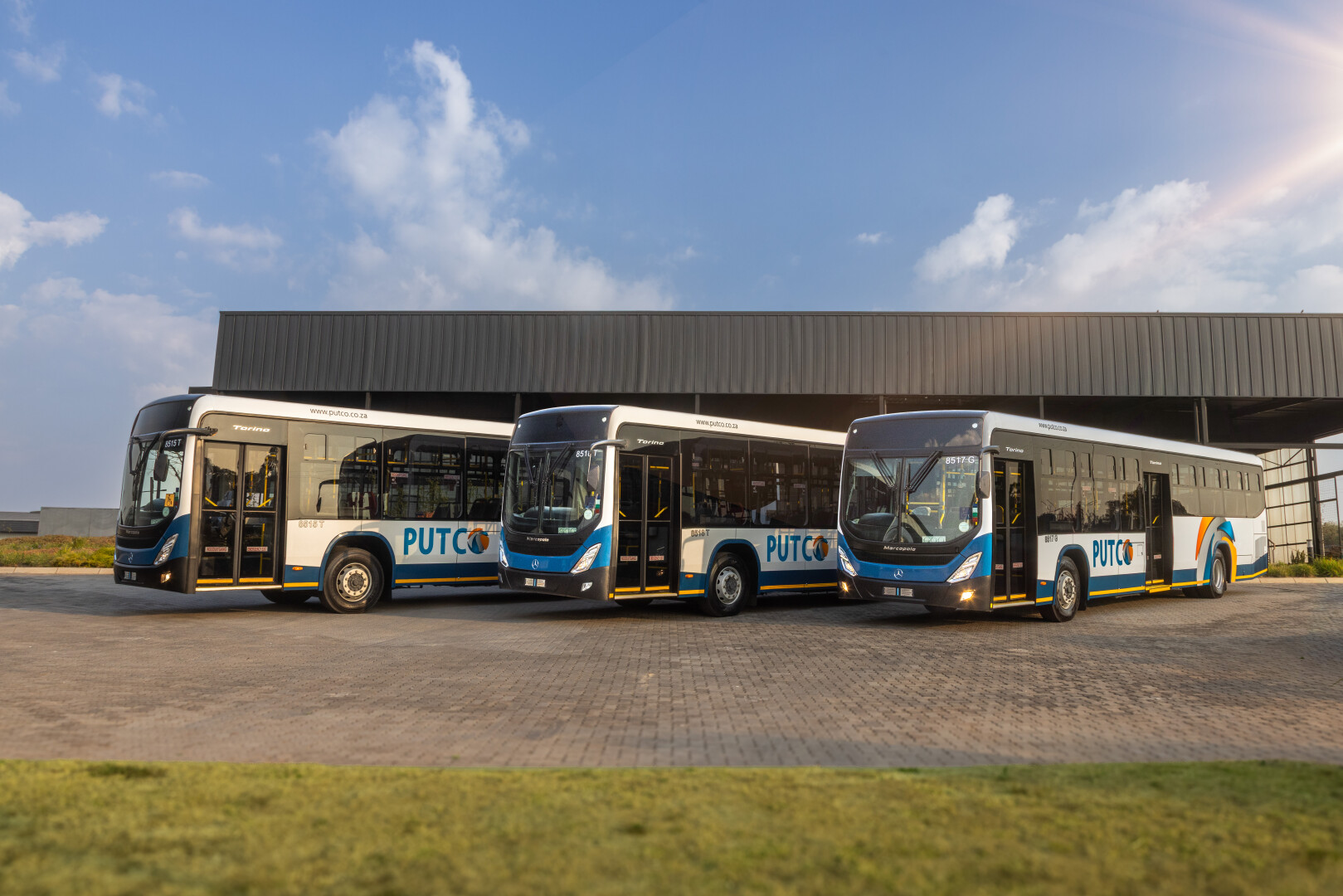
The MVR chassis has a 6 050 mm wheelbase, making it ideal for commuter applications. Its extended front overhang allows for the installation of a standard size passenger entry door, ahead of the left front wheel. This allows for easy passenger entry complemented by the Marcopolo Torino body that is fitted.


The MVR chassis has an overall length of 11 594 mm and a width of 2 367 mm. This equates to 12 600 mm and 2 600 mm respectively with the bus body installed.

The MVR chassis is powered by Isuzu’s trusted 7,79-litre inline six-cylinder 6HK1-TCS diesel engine, delivering 221 kW (300 PS) of power at 2 400 r/min and 980 Nm of torque from 1 450 r/min. It is paired with an Eaton 6-speed manual transmission.

Air Foundation Brakes

Its braking system comprises full air foundation brakes, an exhaust brake, and a magnetic retarder mounted to the rear of the transmission, enhancing both braking performance and longevity.

Designed with a higher profile relative to comparable truck-based bus chassis’, the MVR offers superior approach and departure angles, enabling effective operation in urban and rural environments. The engine is positioned further forward and lower, increasing floor space and providing comfortable seating for up to 66 passengers, 7 standing passengers, and the driver.

The vehicle utilises 315/70R22.5 tyres with 9-inch wheels, favouring contemporary industry preferences over the traditional 11R22,5 tyres with 8,25-inch wheels.

Long-distance Journeys

A 400-litre fuel tank supports long-distance journeys, with noted fuel efficiency across operations. Additional standard features include LED headlamps and tail lamps as part of the Marcopolo Torino body. Standard safety features include automatic headlights-on and an anti-lock braking system.

Passenger amenities such as air-conditioning, USB charging ports, and a sound system are available as optional operator configurations.


Iemraan Brown (Senior Manager: Planning & Program) says:

“The introduction of the new Isuzu MVR bus chassis represents a significant advancement compared to previous Isuzu bus models and current competitor offerings, as it is engineered specifically as a dedicated commuter bus chassis. In contrast, many competitors continue to use truck-based platforms, which typically involve rigid suspensions, truck transmissions, and require substantial chassis modifications.

"Each aspect of the Isuzu MVR chassis—including wheelbase, overhangs, suspension systems, engine placement, transmission with retarder, driver position, braking system, fuel tank capacity, auxiliary air tanks, electrical components, exhaust configuration, and tyre specifications—has been meticulously optimised for bus applications. This comprehensive approach maximises passenger capacity and comfort, providing ample legroom.

Urban and Rural

"An increased chassis height offers enhanced approach and departure angles, making the MVR chassis suitable for both urban and rural environments.

"The gearing is carefully calibrated to deliver superior fuel efficiency in both stop-start city driving and open road driving conditions.

"Furthermore, the power and torque outputs surpass those of comparable competitors.

"In summary, the Isuzu MVR bus chassis is a robust solution requiring minimal modification during bus body installation.”

https://bit.ly/43RIsNp

Thursday, 27 November 2025

Tip Top Milk Expands Fleet with 21 New Mercedes-Benz Trucks

Tip Top Milk Expands Fleet with 21 New Mercedes-Benz Trucks

Boosting its national logistics operations, Tip Top Milk has rolled out 21 new Mercedes-Benz Actros 2645 trucks, a move that solidifies a 15-year partnership and underscores the dairy giant's relentless growth. This latest investment brings its total fleet of the German marque to an impressive 155 vehicles, all dedicated to the crucial task of transporting fresh milk from farm to processing plants across South Africa.

The company's journey is a classic South African success story. It was founded in 2010 by the late Beyers de Bruin with little more than steadfast faith, a single Dyna 3500 milk tanker and a mission to assist farmers burdened with milk surpluses. Today, that vision has blossomed into a major enterprise operating from three depots nationwide. Tip Top Milk now employs around 200 people and is responsible for sourcing, collecting and moving a staggering 36-million litres of quality milk every month.

According to David de Jager, Chief Executive Officer at Tip Top Milk, this remarkable expansion has never come at the cost of the company's core values. "Our business is, and always has been, built around people—our customers and our employees. We pride ourselves on doing what is right and being honest in everything we do."

Relationship

This people-centric philosophy extends to their choice of equipment. The relationship with Mercedes-Benz Trucks began at the very start, when the fledgling company needed a partner that believed in its potential. "Back in 2010, Mercedes-Benz Trucks was the only brand willing to take a chance on us," de Jager recalls. "That’s where Beyers’ love for the brand started."

That initial trust has been fortified over the years through a close working relationship with Mercedes-Benz Trucks and Motus Daimler Trucks Airport. De Jager is quick to praise the support from Ruan Pienaar and his team. "Their support is unwavering, and they never make excuses. It’s a pleasure doing business with them," he adds.


In the high-stakes world of perishable goods transport, reliability is non-negotiable. Tip Top Milk has found this in the durability of their Mercedes-Benz trucks, particularly their powertrains. The fleet even includes a vehicle that has clocked over a million kilometres. "But no matter how reliable a truck is, repairs will eventually be needed," de Jager notes. "That’s where Mercedes-Benz Trucks truly stand out—the availability of parts makes all the difference and keeps our business moving."

Dealer Network

This commitment to uptime is backed by an extensive dealer network that provides Tip Top Milk with critical peace of mind. De Jager points out that on one of their major routes alone, there are at least two dealerships ready to assist. He shares a recent incident that highlights this exceptional service: "We contacted Motus Daimler Trucks Airport on a Saturday afternoon with an urgent need to replace a truck after an accident. By Tuesday, the new truck was delivered. That level of responsiveness is a testament to their commitment."

To further optimise operations, Tip Top Milk utilises the Fleetboard vehicle management system. This technology is integral to their drive for fuel efficiency and enhanced driver performance. The company has built a driver bonus structure around the data provided by Fleetboard, leading to tangible results. Through targeted training and data-driven feedback, the average driver performance score has climbed from 8,9 in 2014 to 9,4 today, delivering significant savings on fuel and maintenance.

For de Jager, the decision to stick with the brand goes beyond specs and service. "Mercedes-Benz Trucks are not only the most aesthetically pleasing on the road, they offer a host of features that support our operations," he says. "But the most important factor is our people. Our drivers spend countless hours behind the wheel, and their comfort directly affects their performance and well-being. That’s why we choose Mercedes-Benz Trucks: they deliver unmatched comfort, helping us take care of the people who keep our business moving."

Vision

Reflecting on the enduring partnership, Olaf Petersen, Vice President of Sales and Marketing at Daimler Truck Southern Africa, said, "Fifteen years ago, we saw their vision and potential, and today we’re proud to be one of the leading brands behind their business. We sincerely thank David and the entire Tip Top Milk team for their loyalty. Their continued trust inspires us to support their business as it grows from strength to strength."

As Tip Top Milk celebrates a decade and a half of operation, the arrival of the 21 new trucks is more than a simple fleet refresh; it is a powerful reaffirmation of a partnership built on a foundation of mutual trust, proven performance, and a shared commitment to keeping South Africa's dairy industry flowing.

https://bit.ly/4oe2d93

Friday, 7 November 2025

The New North African Nexus: How Tunisia, Egypt, and Morocco are Vying for Automotive Supremacy

The New North African Nexus: How Tunisia, Egypt, and Morocco are Vying for Automotive Supremacy

Something big is happening in North Africa, and it’s not what most people expect. The region’s old image—one of aid packages and political uncertainty—is fading fast. These days, it’s the roar of engines and the hum of factory floors driving the story.

While South Africa continues to dither in uncertainty, the automotive industry is taking center stage, pulling in massive investment and turning the area into a fierce battleground for the future of mobility. Tunisia, Egypt and Morocco are now competing for a spot at the top, each trying to outdo the other – and South Africa – in this billion-Rand race.

Image: Supplied

Tunisia’s latest play is grabbing headlines. After a high-profile visit from Li Shijie—a senior figure in the Chinese People’s Political Consultative Conference—Tunisia’s Foreign Investment Promotion Agency (FIPA) announced a real milestone: 22 Chinese companies are now operating in the country. That’s over R2-billion in foreign direct investment and roughly 1 100 new jobs on the ground.

Sleeves Rolled Up

But it’s not just about handshakes and speeches. At the meeting, FIPA’s Director General Jalel Tebib and Li Shijie rolled up their sleeves and got specific. They’re laser-focused on channeling Chinese investment into Tunisia’s sweet spots: automotive manufacturing, renewable energy, infrastructure, and tourism.

Tebib talked up Tunisia’s open-door policy and business-friendly climate, while Li pointed out the country’s skilled, affordable workforce, its prime location as a gateway to Europe and Africa, and the attractive trade deals that come with it. Both sides are betting big on their partnership, tying it all together with China’s Belt and Road Initiative.

Zoom in to the ground level and you’ll find the real pulse of this industrial shift: local innovators. Enter Bako Motors, a Tunisian startup that’s betting everything on solar-powered vehicles. Instead of following the crowd, Bako is using Africa’s most abundant resource—sunshine—to power their EVs.

Africa’s electric vehicle market is exploding, expected to top R76-billion by 2030. But there’s a catch: most EVs still rely on patchy power grids, which don’t always play nice. Bako Motors spotted a gap. Their solution? Compact cars and cargo vans with solar panels built right into the roof.

Image: Supplied

“Our solar cells cover more than half our energy needs,” says Boubaker Siala, Bako’s founder and CEO. “Look at our B-Van, designed for commercial deliveries—you get free energy for about 50 kilometers a day, which adds up to 17 000 kilometers a year. For businesses watching every Rand, that’s a game-changer.”

Three Wheels

Bako kicked off in 2021 with three-wheeled cargo vehicles, but they’ve quickly leveled up. Now, their four-wheeled B-Van hauls up to 400 kg and delivers a range between 100 km and 300 km. It’s priced from R1,6-million, aimed squarely at logistics and last-mile delivery companies. Their other model, the Bee, is a pint-sized two-seater perfect for city errands, starting at R1,2-million.

Sure, production is still modest—around 100 vehicles—but they’re thinking big. A third model is already on the drawing board, and the team’s gearing up for an export push, hoping their solar-powered EVs will carve out a niche across Africa.

Of course, Tunisia isn’t the only player in the game. Egypt and Morocco, the region’s heavyweights, are ramping up their own efforts with massive investments.

In Egypt, the government’s pulling out all the stops. At a recent ceremony in West Cairo Deputy Prime Minister Kamel Al-Wazir laid the foundation for the new MAC for Mobility Manufacturing Plant, bankrolled by the powerhouse Mansour Automotive Group. Think big—over R2,7-billion in initial investment. The goal? Produce 50 000 eco-friendly vehicles in the first phase alone.

Mansour Group’s chairman, Sir Mohamed Mansour, says the plant will bring in cutting-edge technology and create between 6 000 and 10 000 jobs. This is the start of Egypt’s Automotive Industry Development Strategy, aiming for a homegrown, fully integrated automotive sector. By 2032, they’re targeting annual production of 100 000 vehicles per major manufacturer, including 7 000 EVs, and want at least 35% of every car to be locally sourced.

Image: Supplied

“This factory is the seed of a future automotive city,” Al-Wazir said, framing it as the heart of Egypt’s plan to become a regional manufacturing hub for Africa and the Middle East.

Ramping Up

Not to be outflanked, Morocco continues its relentless ascent. The kingdom is already producing over a million vehicles annually and has plans to ramp this up to 2-million. The latest evidence of its momentum is the opening of a new R300-million factory in the Oujda Technopole by Austria’s Hirschmann Automotive.

The new 22 200-square-metre facility, set to create 600 new jobs, complements the company’s existing plant in Kenitra and underscores the country’s deep integration into global automotive supply chains.

During the inauguration, Khatib El Hebil, the Wali of the Oriental region, captured the sentiment, noting, “Oujda, a city of history and culture, is gradually transforming into a true hub for industrial, logistical, and technological development.”

The Road Ahead

The North African automotive landscape is now a tripartite race. Morocco is the established, export-oriented leader. Egypt is the massive domestic market leveraging its scale and government backing to force a dramatic localisation drive. And Tunisia is the agile newcomer, betting on niche innovation and strategic partnerships to carve out its own space.

For global investors and automotive giants, this competition is a boon, creating multiple, compelling options for manufacturing and assembly. For the continent, it signals the emergence of a sophisticated industrial corridor capable of not just assembling, but designing and engineering the vehicles for Africa’s future. The race for North African automotive supremacy is on, and the finish line is a multi-billion Rand prize.

https://bit.ly/49HXvg9

Monday, 20 October 2025

Boosting South Africa's Auto Industry Through Local Beneficiation

Boosting South Africa's Auto Industry Through Local Beneficiation

For decades, South Africa’s automotive industry has been a cornerstone of the local manufacturing sector, a testament to our industrial capability. From the bustling assembly lines in Kariega and Rosslyn to the state-of-the-art plant in East London, we build world-class vehicles. Yet, beneath the hum of this R500-billion-a-year industry lies a profound paradox: we are a mineral-rich nation exporting the very raw ingredients that could see us not just assemble but truly create the cars of the future.

The global automotive industry is undergoing its most significant transformation in a century, pivoting towards electric vehicles (EVs), lightweighting for efficiency and smart, connected technologies. This shift is not just about engines and software; it is a fundamental change in the materials that go into a car. For South Africa, this presents a generational opportunity to move up the value chain. The key lies in local beneficiation—the process of transforming mined ore into a higher-value product.

Here are the five most critical raw materials that, if beneficiated locally, would provide an unparalleled boost to the South African auto industry, creating jobs, fostering innovation, and securing our place in the global value chain.

1. Platinum Group Metals (PGMs): The Crown Jewels of Catalysis and Hydrogen


Image: Implats

The Raw Material: South Africa sits on roughly 80% of the world’s known platinum group metal reserves. These include platinum, palladium and rhodium.

Current State: We are the world’s leading miner of PGMs, but the vast majority is exported as refined metal or concentrate. We capture the mining risk and volatility but miss out on the immense value of specialised industrial and chemical applications.

The Beneficiation Opportunity: The narrative around PGMs is evolving. While their use in catalytic converters for internal combustion engines remains crucial, their role in the hydrogen economy is transformative.

Fuel Cell Electric Vehicles (FCEVs): FCEVs use hydrogen to generate electricity, with water as the only emission. The heart of a FCEV is its fuel cell, which requires significant amounts of platinum as a catalyst. Local beneficiation could see us move from exporting platinum bars to manufacturing catalyst-coated membranes (CCMs) or even entire fuel cell stacks.

·           Green Hydrogen Production: The other side of the hydrogen coin is production. Platinum is also a critical catalyst in proton exchange membrane (PEM) electrolysers, which produce green hydrogen using renewable energy.

The Impact: By establishing local facilities to manufacture fuel cell components and electrolysers, South Africa would not only supply the global auto industry but also catalyse its own domestic hydrogen economy. This creates a symbiotic ecosystem: local platinum enables cheaper green hydrogen, which powers local FCEVs and heavy transport, creating a circular and globally competitive advantage.

2. Aluminium: The Backbone of Lightweighting


Image: South32

The Raw Material: South Africa has a well-established aluminium industry, centred around smelters like Hillside in Richards Bay, which rely on imported alumina. However, we have vast reserves of bauxite and kaolin, the primary aluminium ores, which are largely unexploited for metal production.

The Beneficiation Opportunity: Every kilogram saved in a vehicle's weight translates directly into better fuel efficiency or longer battery range in an EV. Aluminium is the second most used material in vehicles after steel.

Primary and Secondary Smelting: Investing in energy security to make primary smelting more viable, and aggressively expanding the recycling of automotive scrap aluminium, would create a stable, low-cost local supply.

Advanced Alloy Production: Cars do not use generic aluminium; they require specific, high-performance alloys for body panels, chassis components, and battery enclosures. Local beneficiation means establishing plants that can produce these specialised automotive-grade aluminium sheets and extrusions.

The Impact: A reliable, cost-effective source of high-quality automotive aluminium would be a powerful magnet for Original Equipment Manufacturers (OEMs). It would lower the cost of production for local assemblers and make South Africa an attractive hub for manufacturing lightweight vehicle components for export, particularly for the EV market.

3. Manganese: Hardening the Steel of Our Ambition

Image: Implats

The Raw Material: South Africa holds over 70% of the world’s manganese resources, a metal indispensable to modern steelmaking.

Current State: We are the world’s largest producer and exporter of manganese ore, but we export most of it with minimal beneficiation. The real value is in adding it to steel.

The Beneficiation Opportunity: Manganese is a key alloying element that adds strength and wear-resistance to steel. Over 50% of a modern car's weight is still high-strength steel.

Ferromanganese Production: The first critical step is to expand our existing capacity to produce ferromanganese (a key intermediate product). The real prize, however, lies beyond.

Automotive Steel Production: The goal is to channel our local manganese into the production of advanced high-strength steel (AHSS) and ultra-high-strength steel (UHSS) at local mills like ArcelorMittal South Africa. These specialised steels are essential for making passenger safety cages and components that are both lighter and stronger.

The Impact: Creating a fully integrated pipeline from our manganese mines to local AHSS production would decouple our auto industry from volatile global steel prices and supply chain disruptions. It would provide a unique, raw material-based competitive edge for both our vehicle manufacturers and our component suppliers.

4. Iron Ore: The Foundational Metal, Reforged

Image: Arcelor Mittal

The Raw Material: We are a major global producer of high-quality iron ore from the Sishen mine and others in the Northern Cape.

At present, although ArcelorMittal uses some of this ore domestically, a sizeable portion is shipped overseas. The local steel industry has faced well-documented challenges, from energy costs to global competition.

The Beneficiation Opportunity: The opportunity with iron ore is not just about making more steel but making smarter steel specifically for the automotive sector. This goes together with manganese beneficiation.

Direct Reduced Iron (DRI): As the world moves towards greener steelmaking, DRI technology using green hydrogen (itself enabled by local PGMs) presents a path to produce "green steel" with a significantly lower carbon footprint.

Specialised Automotive Castings: Beyond sheet steel, local foundries can use high-purity iron to produce sophisticated engine blocks, brake components and other critical castings, moving beyond basic parts to high-value, precision items.

The Impact: A revitalised, competitive, and increasingly green local steel industry is non-negotiable for a resilient auto sector. It provides the foundational material security without which the industry cannot confidently plan for long-term growth and export-led expansion.

5. Vanadium: Powering the Electric Revolution

Plugged in chargers into two electric cars at charge station

The Raw Material: South Africa is one of the world's top three vanadium producers, with massive reserves housed in the Bushveld Igneous Complex.

Current State: Almost all our vanadium moves overseas as ferrovanadium or vanadium pentoxide, primarily for strengthening steel abroad.

The Beneficiation Opportunity: Vanadium’s star is rising because of one technology: Vanadium Redox Flow Batteries (VRFBs).

Stationary Energy Storage: The stability of South Africa’s auto manufacturing is hamstrung by an unreliable grid. VRFBs are ideal for large-scale, industrial energy storage. They can provide backup power for entire manufacturing plants, mitigating the impact of load-shedding.

EV Battery Ecosystem: While not used in the vehicle's battery itself, VRFBs are crucial for charging infrastructure. They can store solar energy during the day to power fast-charging stations at night, solving a key hurdle for widescale EV adoption.

The Impact: Local beneficiation of vanadium into electrolyte and full battery systems would directly support the auto industry by decarbonising and securing its energy supply. It creates a new, high-growth industry in energy storage that dovetails perfectly with the needs of modern, energy-intensive automotive manufacturing and the EV ecosystem.

The Road Ahead: An Integrated Strategy

Toyota's Prospecton plant

These five materials are not isolated opportunities; they are interconnected. Local PGMs can enable the green hydrogen needed for green iron and steel production. That manganese-rich, green steel, in turn, is used to build the factories and chassis for vehicles whose manufacturing is secured by vanadium batteries and whose powertrains may be powered by platinum-based fuel cells.

Realising this vision requires more than just market forces. It demands a coherent and aggressive industrial strategy—a partnership between government, mining houses, and the automotive industry. This includes:

· Policy Certainty: Creating a stable regulatory environment that incentivises local value-addition over raw exports.

· Investment in Energy: Solving the electricity crisis is the absolute prerequisite. The beneficiation of aluminium, iron and vanadium is intensely energy dependent.

· Research & Development: Establishing centres of excellence focused on mineral beneficiation and its application in the automotive and energy sectors.

The raw materials are beneath our soil. The industrial base is in our factories. The choice is ours: to continue digging and shipping, or to start building, innovating, and powering the next generation of global mobility. The road to a richer, more industrialised South Africa is, quite literally, paved with the minerals we already own.

This article is based on research from the Minerals Council South Africa, the Department of Trade, Industry and Competition (the dtic), Automotive Production and Development Programme (APDP) reviews and reports from the International Energy Agency on critical minerals.


https://bit.ly/4o3gCWy

Wednesday, 15 October 2025

Archion: Uniting Hino and Mitsubishi Fuso for Sustainable Mobility

Archion: Uniting Hino and Mitsubishi Fuso for Sustainable Mobility

Hino Motors and Mitsubishi Fuso, two prominent Japanese truck and bus manufacturers, are moving forward with a significant integration. The new holding company, Archion, will serve as the umbrella for both brands, headquartered in Tokyo.

Operations under the Archion name are set to begin on April 1, 2026. Both Hino and Fuso will retain their distinct brand identities while combining their strengths to support the broader goal of delivering next-generation commercial mobility solutions.

The integration is designed to focus on customer needs and advance sustainable transportation. Key advantages identified include implementing an integrated platform strategy—this is expected to enhance product offerings, expand the portfolio, achieve economies of scale, and improve investment efficiency.

In addition, consolidating production is on the agenda, with plans to focus manufacturing at three main sites in Japan by the end of 2028. Leadership at Archion is emphasizing transparency, compliance, and financial performance.

CEO Karl Deppen has stated the company’s vision centers on providing superior products and solutions for customers and stakeholders, while building trust through effective governance. CFO Hetal Laligi highlighted a clear financial strategy: unlocking the full potential of the integration by realizing synergies and growth opportunities, all while continuing to improve each company’s individual performance.

The aim is to reach benchmark levels of financial resilience and sustainable value creation. Satoshi Ogiso, Archion’s designated CTO, reinforced the commitment to customer-centricity and ongoing product innovation. He also pointed to accelerated development in CASE technologies—Connected, Autonomous, Shared, and Electric mobility—as a central part of Archion’s future direction.

In South Africa, Hino will continue to operate independently, with a focus on maintaining its leadership in customer satisfaction and market presence. Overall, Archion’s formation marks a strategic move. The company is positioning itself as a leader in commercial vehicle mobility, leveraging the combined expertise of Hino and Fuso to drive innovation and sustainable growth in the industry.

https://bit.ly/4nXBXRg

Friday, 3 October 2025

South Africa's Automotive Industry: Challenges and Opportunities Ahead

South Africa's Automotive Industry: Challenges and Opportunities Ahead

GQEBERHA – The South African automotive industry, a cornerstone of the nation’s manufacturing landscape, gathered this week to celebrate a significant milestone while charting a deliberate course through a period of global transition.

At the fourth South African Auto Week, naamsa: The Automotive Business Council commemorated its 90th anniversary, reflecting on a legacy of partnership and looking ahead to the challenges and opportunities presented by the global shift to new energy vehicles.

The acting Premier, Mlungisi Mvoko, also serving as the event’s ambassador, opened the proceedings by acknowledging the vital role of media collaboration and the growth of the gathering itself. The event served as a platform to recognise naamsa’s nine-decade journey, which began in this very city before its offices moved to Pretoria in 1983.

The association was lauded for its consistent work in shaping policy, driving innovation, and integrating the domestic industry into international value chains. Today, representing 56 brands, naamsa continues to operate on the principles of free enterprise and collective advancement for its members.

The annual industry report presented a picture of a sector demonstrating resilience amid headwinds. For the first time since the pandemic-related disruptions of 2020, the sector experienced a modest contraction in 2024. The total export value of vehicles and automotive components saw a decrease of R 2-billion, settling at R 268,8-billion, down from the previous year’s record of R 270,8-billion.

Despite this dip, automotive exports still constituted a substantial 40,7% of South Africa’s total merchandise exports for the year. In terms of volume, vehicle exports declined to 390 844 units from 399 809 units in 2023.

A notable bright spot emerged in the components sector, where export value increased from R 203,9 billion in 2023 to a record R 25,4-billion in 2024, a shift attributed to a changing mix of vehicles being exported. The industry also successfully expanded its global footprint, now sending products to 155 countries, up from 148 in 2023, with export value more than doubling to 39 of those nations.

The automotive sector’s role as a primary driver of South Africa’s manufacturing output remains undisputed. In 2024, vehicle and component manufacturing contributed 2,6% to the domestic manufacturing output, with the broader automotive industry contributing 5,2% to the national GDP. Investments from original equipment manufacturers and their suppliers amounted to R 10,25-billion.

A long-term perspective underscores the sector’s enduring impact. From 1995 to 2024, over 6,4-million vehicles, with a cumulative export value of R 1,95-trillion, have been shipped from South African shores. International trade agreements, particularly with the European Union and the United Kingdom, continue to be fundamental, accounting for 75,7% of exports in 2024, meaning three out of every four exported vehicles were destined for these regions.

The current year presents a complex operating environment. Geopolitical challenges, including new US import tariffs, have led to the loss of an estimated 25 000 vehicle orders from that market. Despite this, vehicle exports for the first half of 2025 were 3% ahead of the same period in 2024, even as overall production decreased by 2,2%. Domestically, new vehicle sales showed a strong increase of 14% for the first six months, a trend partly driven by a 69% influx of competitively priced imported vehicles.

A subsequent presentation struck a more cautious note, revealing that South Africa’s share of global vehicle production decreased from 0,67% in 2023 to 0,65% in 2024. This places the government’s 2035 target of achieving a 1% global market share under pressure. A central concern raised was the urgent need to transition towards electric vehicle production, as key export markets like the EU and UK move to ban new internal combustion engine vehicle sales by 2035. While some local manufacturers produce hybrid vehicles, none currently assemble battery electric vehicles domestically.


“The transition to new energy vehicles must be tailormade for a South African context and cannot be a carbon copy of what other countries and regions have done,” Neale Hill, CEO of Ford South Africa stated. He suggested that dramatic overhaul is not needed, but rather selective, targeted policies to support specific parts of the value chain where South Africa can be competitive.

The presentation concluded by highlighting a significant potential advantage. Africa, and South Africa in particular, holds vast mineral resources critical for the EV revolution, including 85% of the world’s manganese and 80% of its platinum. A clear call was made for immediate and structured collaboration between government and industry to develop a concrete framework, positioning the country to become a key player in the global EV value chain and secure the future of the automotive industry and its workforce.

“We are very concerned that our industry is falling behind Africa’s progressive automotive and industrial policy measures,” Hill warned. He concluded that the decisions taken now will fundamentally shape the future of vehicle manufacturing in South Africa, impacting its economic value, employment, and skills base. “We must act now before it is too late,” he said.


Adding to the forward-looking dialogue, Mike Whitfield, CEO of Stellantis South Africa, reflecting on the sector’s foundations, emphasised that its strength is rooted in historical cooperation between government, industry, and labour. He pointed to a major strategic development: the confirmation that Stellantis is proceeding with an investment in South Africa, affirming the country’s role as a strategic manufacturing base within the company’s global network.

This sentiment was echoed in a significant international achievement for the industry. naamsa announced that its CEO, Mikel Mabasa, has been nominated to serve as a permanent member of the International Organization of Automobile Manufacturers (OICA). Described as a “United Nations Security Council for the automotive industry globally,” this position will enable South Africa to help shape the global automotive trajectory and ensure the African continent is not left behind in critical conversations about the future of mobility.

As the week’s discussions concluded, the message from Gqeberha was clear. The South African automotive industry, built on nine decades of collaboration and adaptation, stands at a pivotal moment. The path forward requires agility, policy certainty, and a united effort to harness its inherent strengths—from its deep manufacturing expertise to its mineral wealth—to navigate the electric future and secure its position as a global automotive player.

https://bit.ly/476LzTA

Monday, 29 September 2025

Intra-African Trade Fair (IATF): A New Era for African Trade

Intra-African Trade Fair (IATF): A New Era for African Trade

Africa’s flagship trade and investment event, the Intra-African Trade Fair (IATF), has officially cemented its place as a permanent institution, now headquartered in Harare, Zimbabwe.

This move signals a significant leap forward in Africa’s journey toward economic integration. The launch of the Intra-African Trade Fair Company (IATFCO) at IATF2025 in Algiers marks a new era for the event.

IATFCO is now a standalone organization, designed to ensure the fair’s long-term sustainability and alignment with the ambitions of the African Continental Free Trade Area (AfCFTA). Zimbabwe secured the role of host after a competitive bidding process that included Burkina Faso, Cameroon, Malawi, Zambia, and South Africa.

According to IATF Advisory Council Chairman and former Nigerian President Olusegun Obasanjo, Zimbabwe was chosen for its strong conference infrastructure, excellent air connectivity, abundant accommodation, and its commitment to expansion.


As he put it, this milestone ushers in a new chapter—establishing IATF as the continent’s premier forum for trade and investment, and helping to drive the realization of AfCFTA’s vision. Afreximbank President and Board Chairman Prof. Benedict Oramah congratulated Zimbabwe and called for swift action to operationalize IATFCO as an independent and sustainable organization.

Afreximbank has committed an initial $28-million in capitalisation, with Prof. Oramah urging additional support from African governments, corporations, and financial institutions as the new entity takes shape. IATF’s role as a platform for showcasing African goods and services, facilitating deal-making, and fostering cross-border business connections has never been more vital.

With AfCFTA’s single market of 1,4-billion people and a combined GDP exceeding $3,5-trillion, the opportunities are tremendous.

The most recent fair, held in September, attracted over 112 000 visitors from 132 countries. The event concluded with more than $48,3-billion in signed trade and investment deals and featured 2 148 exhibitors—a testament to the growing influence and momentum of African trade on the global stage.

https://bit.ly/3KjCUEB

Wednesday, 24 September 2025

Transforming Africa's Auto Industry: Skills, Financing, and Policy

Transforming Africa's Auto Industry: Skills, Financing, and Policy

Afreximbank’s renewed partnership with the African Association of Automotive Manufacturers (AAAM) signals a sharp focus on building out Africa’s automotive sector from the inside. They made it official during the recent Intra-African Trade Fair 2025 in Algiers and inked the deal with signatures from Dr Gainmore Zanamwe (Director of Trade Facilitation, Afreximbank) and Ms Martina Biene (President, AAAM).

At its core, the MoU leans on three business pillars: regional value chains, accessible financing and building the right policy environment and skillsets. Dr Zanamwe said Afreximbank is all-in on helping Africa’s auto industry evolve from a patchwork of importers to a real producer. In practical terms? Investing in local manufacturing, creating jobs and reducing the continent’s over-reliance on used car imports.


Biene made it clear—this isn’t just about funding. The sector needs targeted upskilling, better logistics and modern infrastructure. All these pieces need to move together or ambition falls flat. With Afreximbank’s reach and AAAM’s vision, the goal is a continentwide network: connecting suppliers, manufacturers and finance tools so African carmakers stop playing catch-up.

This updated partnership doesn’t stand alone. Coordination with big players—the AU, AfCFTA, ARSO, and others—should streamline standards, upskill the workforce and keep blended capital flowing in. Biene says that, with focus, Africa could be producing at least 3,5–5-million vehicles annually by 2035. Projections like that mean more jobs, stronger local supply chains, and a shot at real industrial gains, not just incremental change.

The numbers at IATF2025 back up the momentum: 112 000 visitors, 2 148 exhibitors from 132 countries, and trade deals totaling $48,3-billion across just seven days. The Africa Automotive Show was a highlight, showcasing not just potential but actionable paths for how the industry could scale up fast.


While the broad terminology ‘automotive’ tends to have its focus on cars, there is a shift in the trucking industry with the show highlighting broad interest from truck manufacturers and, in deed, a new focus on the commercial vehicle sector is emerging as a key topic within Africa’s automotive industry. This follows insights shared by Ezra Mereng, the director of GF Vehicle Assemblers in Tanzania, at the recent Africa Automotive Show held as part of the Intra Africa Trade Fair in Algiers, Algeria.

Mereng detailed the establishment of his multi-brand assembly plant in Dar es Salaam, which began operations during the Covid-19 pandemic. The facility was established to move beyond simple importation and address the needs of Tanzania and its six landlocked neighbours, which rely heavily on the port of Dar es Salaam for trade.


Over the past five years, the plant has assembled more than 4 500 trucks across four brands and 11 different models, including Hyundai and FAW.

A significant driver of demand for these medium and heavy commercial vehicles, according to Mereng, is the number of large infrastructure projects underway across the continent. This demand creates immediate opportunities for local assembly operations to support sectors such as mining and transportation.

The growth of such local operations, however, is heavily dependent on government policy as a key enabler. Mereng noted that regional integration, particularly through the African Continental Free Trade Area (AfCFTA), could be pivotal.

The agreement is expected to help overcome longstanding regional trade barriers. This integration is seen as a way to develop more cohesive regional value chains for components, which would in turn improve investor profitability and enable further investment in local skills and training.

This model of local assembly is already well-established in other parts of Africa. South Africa has a long history of commercial vehicle assembly for major international brands, serving as a manufacturing hub for the region.

Similarly, Kenya has a growing presence in the sector under the East African Community framework. The emergence of assembly operations in Tanzania represents a further expansion of this trend, suggesting a gradual shift towards more localised vehicle production across the African continent.

https://bit.ly/4nEKt74