Showing posts with label economy. Show all posts

Wednesday, 7 October 2026

Major investment by Isuzu

Major investment by Isuzu

Isuzu Motors South Africa has invested just under R30 million in its commercial vehicle assembly plant in Gqeberha, a move the company says will strengthen local manufacturing capability and support its long-term commitment to South Africa's industrial and economic future.

The investment covers a range of upgrades across the commercial vehicle assembly operation. According to the company, the changes are intended to improve manufacturing capability and efficiency, strengthen quality control and digital traceability, improve employee safety and ergonomics, and support more sustainable production. Together, these improvements are expected to strengthen the plant's ability to manufacture commercial vehicles efficiently and competitively while responding to the changing needs of customers in South Africa and across the continent.
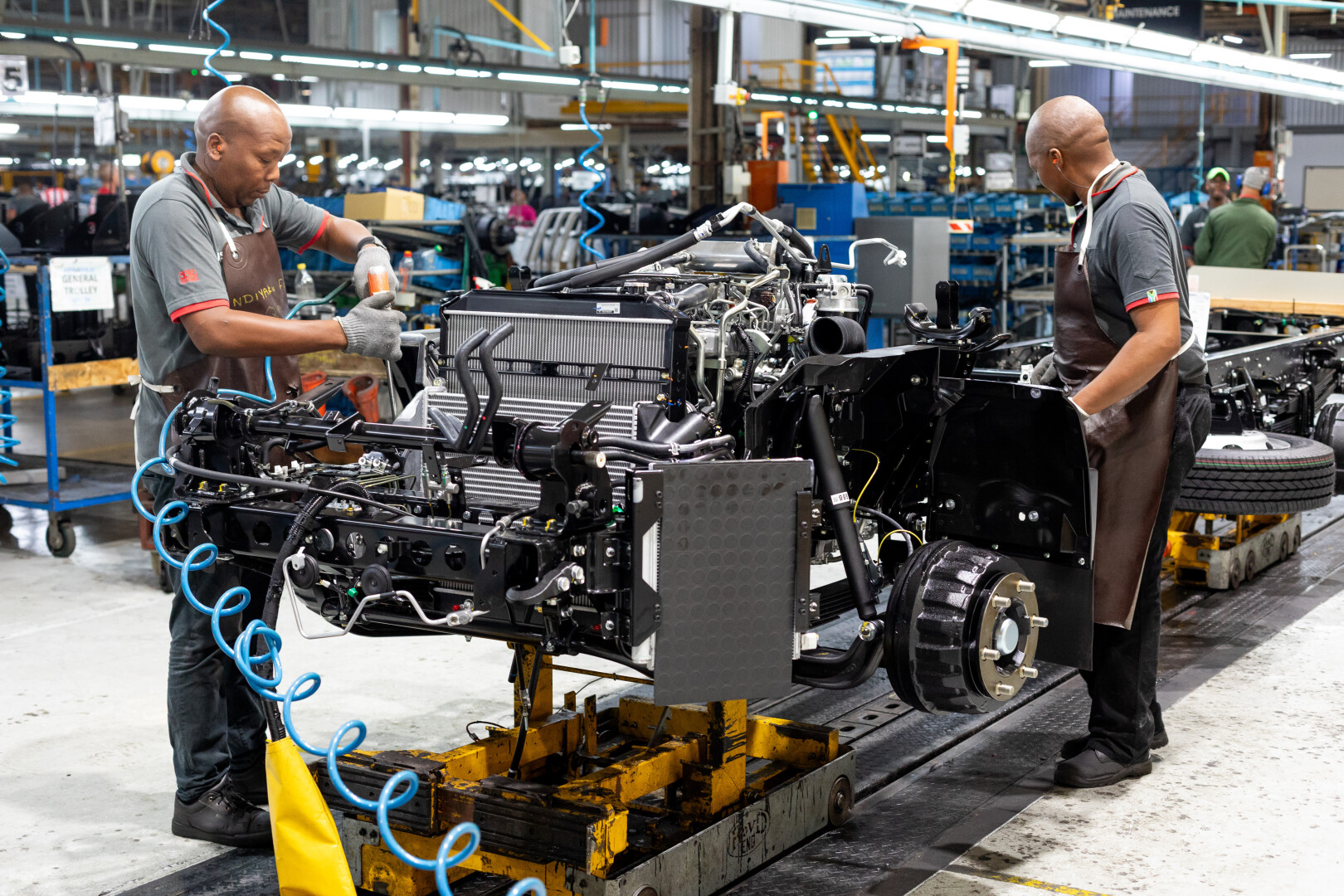

"This investment is about more than preparing our plant for a new generation of trucks. It reflects our long-term vision for manufacturing in South Africa and our confidence in the country's people, industrial capability and potential," said Johan Vermeulen, Executive Vice President: Manufacturing and Product Engineering at Isuzu Motors South Africa. "By continuing to invest in our Gqeberha operations, we are strengthening the capability and capacity needed to remain competitive and respond to the evolving mobility needs of customers across Africa."

Upgrades to the chassis and engine sub-assembly areas, as well as cab marriage, have strengthened the plant's manufacturing capability and operational flexibility. The extended chassis line allows the facility to accommodate additional stations for added content, while updated tooling and revised production layouts improve the plant's ability to support a broader range of commercial vehicle applications.

The investment also includes production and technology enhancements aimed at improving manufacturing efficiency and maintaining consistent build quality. Improved processes, tooling and digital traceability provide greater visibility across production and strengthen quality control, helping the plant manufacture vehicles more efficiently while maintaining Isuzu's build standards.

Employee wellbeing formed part of the plant upgrades, with safety and ergonomics considered in equipment selection, workstation design, lighting and workflow improvements. New equipment, including a fuel-tank gripper, lift-assist devices, a cab-marriage hoist, electronic torque tools and enhancements to the engine-dress process, is designed to reduce physical strain and support safer, more efficient working conditions for employees.

Sustainability considerations have also been incorporated into the upgrades through energy-efficient tools and motors, improved equipment and revised workflows designed to support more efficient use of resources. These improvements contribute to the company's broader focus on reducing the environmental impact of its manufacturing operations while improving operational efficiency.
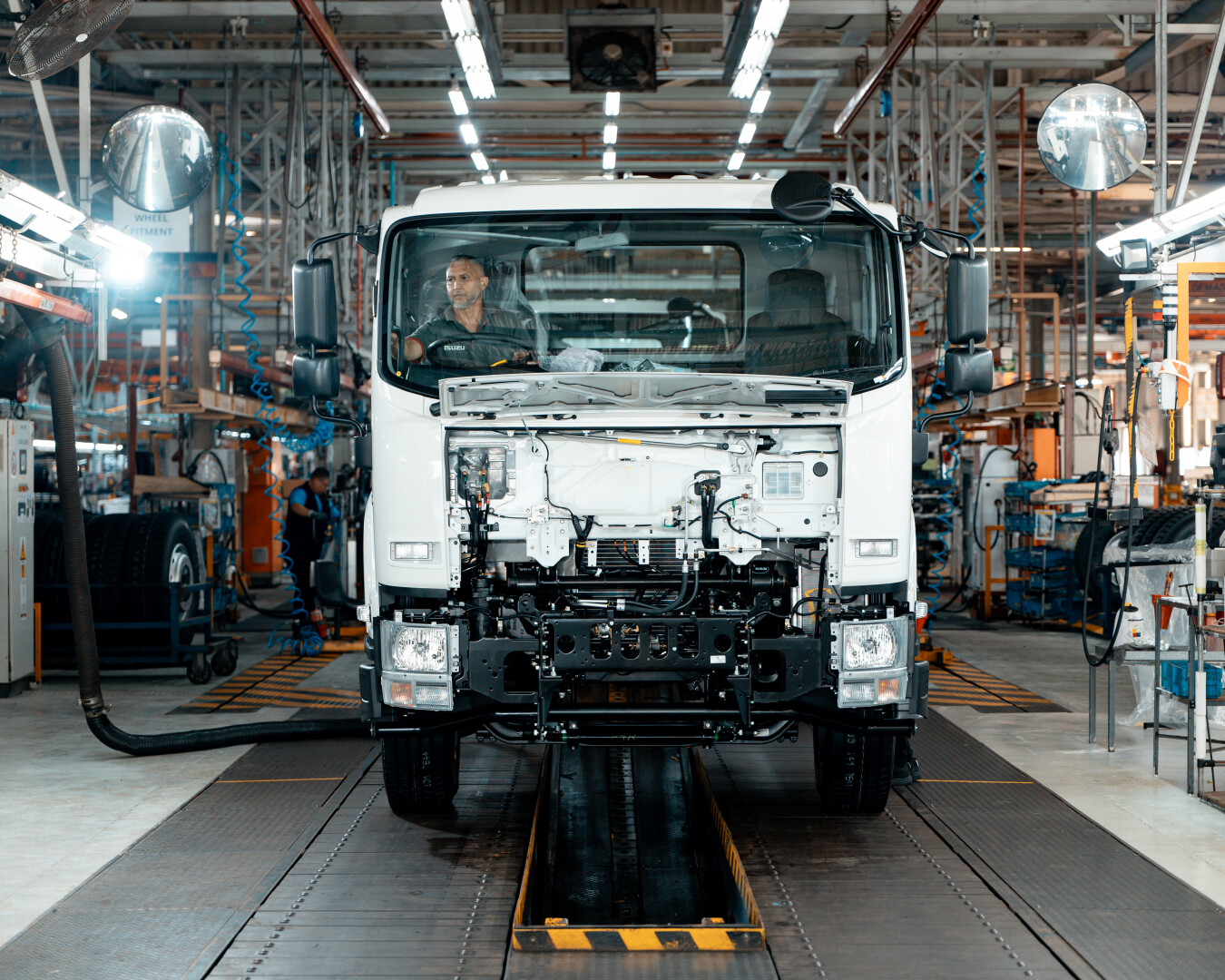

The investment also strengthens the plant's progress in preparing for evolving commercial vehicle technologies. The implementation of the upgrades involved employees and cross-functional engineering teams across the business, bringing together manufacturing expertise, technology and continuous improvement to ensure the enhancements respond to both current operational requirements and future manufacturing needs.

Through continued investment in its Gqeberha operations, Isuzu Motors South Africa says it is strengthening the manufacturing foundation required to support its long-term growth while contributing to a competitive, resilient and increasingly sustainable automotive manufacturing sector in South Africa.


https://bit.ly/4rUfAPt

Tuesday, 5 August 2025

Arise IIP Joins IATF2025 as Premier Partner

Arise IIP Joins IATF2025 as Premier Partner

Arise Integrated Industrial Platforms (Arise IIP), the pan-African developer and operator of large-scale industrial ecosystems, has been confirmed as an official Premier Partner for the upcoming Intra-African Trade Fair 2025 (IATF2025). The significant trade and investment event is scheduled for Algiers, Algeria, from 4 to 10 September 2025.

Organised by the African Export-Import Bank (Afreximbank) in co-operation with the African Union Commission and the African Continental Free Trade Area (AfCFTA) Secretariat, and hosted by Algeria, IATF2025 anticipates hosting more than 2,000 exhibitors from Africa and other regions. 

The biennial fair aims to stimulate trade within Africa and highlight diverse investment prospects across the continent, with expectations of facilitating trade and investment deals valued at over US$44 billion. This edition will feature a notable contingent of production and service companies, complemented by a dedicated forum focused on investment, trade, and advancing Africa’s economic integration.


Arise IIP, established as a joint venture involving the Africa Finance Corporation (AFC), Equitane, and the Fund for Export Development in Africa (FEDA) – a subsidiary of Afreximbank – focuses on identifying industrial needs within African nations. 

The company designs bespoke solutions to foster sustainable local processing of raw materials, increase export capacity, and enhance trade flows. Its core mission centres on accelerating Africa’s industrial development through the creation of tailored industrial parks and processing zones that leverage local opportunities.

Mrs. Kanayo Awani, Afreximbank’s Executive Vice President for Intra-African Trade and Export Development, welcomed the partnership. She highlighted the established strategic collaboration between Afreximbank and Arise IIP over recent years, driven by shared objectives of promoting intra-African trade, enabling industrial expansion, and reinforcing Africa’s role within global value chains.

Echoing this sentiment, Mr. Amit Agrawal, Chief Operating Officer of Arise IIP, expressed honour at partnering again with the Intra-African Trade Fair. He described IATF as a key platform for connecting stakeholders dedicated to Africa’s industrialisation and economic integration. Agrawal noted that participation in IATF2023 enabled Arise IIP to demonstrate the potential of local manufacturing during its Country Day event, and the company looks forward to building on this progress. 

He emphasised Arise IIP's conviction that intra-African trade is fundamental to realising the continent’s industrial capabilities, stating that IATF2025 presents a significant opportunity to form new partnerships, attract investment, and speed up the development of sustainable and inclusive industrial ecosystems.

Arise IIP’s operational footprint extends across multiple African nations, including key projects such as the Gabon Special Economic Zone (GSEZ), the Glo-Djigbé Industrial Zone (GDIZ) in Benin, the Plateforme Industrielle d’Adétikopé (PIA) in Togo, the Bugesera Special Economic Zone (BSEZ) in Rwanda, and the Industrial Platform Remo Free Zone (IPRFZ) in Nigeria.

https://bit.ly/3JgT5BI

Thursday, 2 September 2021

 New vehicle sales improve

New vehicle sales last month climbed by 24,6% compared to the preceding year and naamsa | The Automotive Business Council says the new vehicle market recovered from the economic disruptions caused by the unrest in July 2021 but, the knock-on effects of the disruptions as well as the cyberattack on Transnet operations were still visible on vehicle exports during August. 

August new vehicle sales were 41 425 units, reflecting an increase of 8 166 units, or 24,6%, from the 33 259 vehicles sold during the corresponding month last year. Export sales recorded a decline of 3 583 units, or 15,6%, to 19 446 units this year compared to the 23 029 vehicles exported at the same time last year.  

Overall, out of the total reported industry sales of 41 425 vehicles, an estimated 34 620 units, or 83,6%, represented dealer sales, an estimated 12,0% represented sales to the vehicle rental industry, 2,5% to industry corporate fleets, and 1,9% sales to government.


The August 2021 new passenger car market at 27,157 units registered an increase of 7 822 cars, or a gain of 40 5%, compared to the 19 335 new cars sold last year. The car rental industry supported the new passenger car market during the month and accounted for a sound 14 2% of car sales in August 2021. 

Toyota South Africa Motors (TSAM) led the field in August new-vehicle sales with Hilux in the top spot. Notching up 3 335 sales, Hilux sales were made up of 1 732 double cabs, 1 058 single cabs and 545 extra cabs.


This, together with performances from Hiace (1 298), Starlet (1 203), Urban Cruiser (876), Fortuner (856) and Corolla Quest (806) saw Toyota recording a total of 10 543 (market share: 25,4%) sales across the Toyota, Lexus and Hino brands. 

Leon Theron, Senior Vice President of Sales and Marketing for TSAM, says: “Ongoing challenges in the domestic new vehicle segment are worrying.” 

Domestic sales of new light commercial vehicles, bakkies and mini-buses at 11 749 units during August 2021 recorded an increase of 407 units, or a gain of 3,6%, from the 11 342 light commercial vehicles sold during August 2020. Sales for medium and heavy truck segments of the industry reflected a weak performance and at 719 units and 1 800 units, respectively, showed a decline of 56 units, or 7,2% in the case of medium commercial vehicles, and, in the case of heavy trucks and buses a decline of 7 vehicles, or a fall of 0,4%, compared to the corresponding month last year. 

“South Africa’s network of retail motor vehicle dealers once again showed tremendous resilience in tough trading conditions in August, with numbers pointing to a much more resilient market, which is encouraging,” says Mark Dommisse, Chairperson of the National Automobile Dealers’ Association (NADA).


“The global shortage of semiconductors continues to play havoc with production and is causing many factories to be idled. This shortage is likened to the COVID-19 pandemic, in that it will not go away. In fact, the problem seems to be getting more serious as time goes by with manufacturers either pausing production or deleting chip-specific functionality from certain model lines. 

“Then, here in South Africa, we are still encountering delays caused by the unrest and the port disruptions which is keeping customers waiting for their new vehicles. In some cases, they are tired of waiting and are changing brands by shopping elsewhere. Unfortunately, we will be forced to face this uncertainly for a while still and I don’t think supply will stabilise for some time to come. 

“We also have to deal with a fluctuating Rand – down one day and up the next. This is a volatile situation, and we believe this rollercoaster ride will continue in the coming months, with political uncertainty also playing a role.” 

“Taking into account that July sales were significantly disrupted, the fact sales were up 8,9% over June indicates some reparations from impacted July sales,” says Lebogang Gaoaketse, Head of Marketing and Communication at WesBank.


“We have consistently held the optimistic view of recovery for the industry during 2021, with various signs showing growing confidence from both consumers and business.” 

In terms of demand, WesBank believes the market is out-running the industry’s ability to supply.

“Between the challenges of the pandemic, micro-chip shortages affecting international production – and therefore import supply to South Africa – and the prevailing market conditions that have simply hampered the free supply of certain models, the new vehicle market is poised to capture growth opportunities while trying to keep up.” 

The bank’s demand is measured by applications for finance that continue to sit at levels equivalent to or above those experienced prior to the pandemic. 

“This is reassuring in two senses,” explains Gaoaketse. “On one hand, consumers have been keeping their vehicles for longer, especially delaying purchases through the pandemic. This will create natural demand on the replacement cycle as consumers need to renew their ageing vehicles, probably with lower mileage. 

“The market showed good recovery during August from the loss of momentum experienced in July. The outlook for the remainder of the year looks positive and will hopefully not be impacted by further lockdown restrictions or other unforeseen factors.”