Showing posts with label assembly autoplant. Show all posts

Wednesday, 7 October 2026

Major investment by Isuzu

Major investment by Isuzu

Isuzu Motors South Africa has invested just under R30 million in its commercial vehicle assembly plant in Gqeberha, a move the company says will strengthen local manufacturing capability and support its long-term commitment to South Africa's industrial and economic future.

The investment covers a range of upgrades across the commercial vehicle assembly operation. According to the company, the changes are intended to improve manufacturing capability and efficiency, strengthen quality control and digital traceability, improve employee safety and ergonomics, and support more sustainable production. Together, these improvements are expected to strengthen the plant's ability to manufacture commercial vehicles efficiently and competitively while responding to the changing needs of customers in South Africa and across the continent.
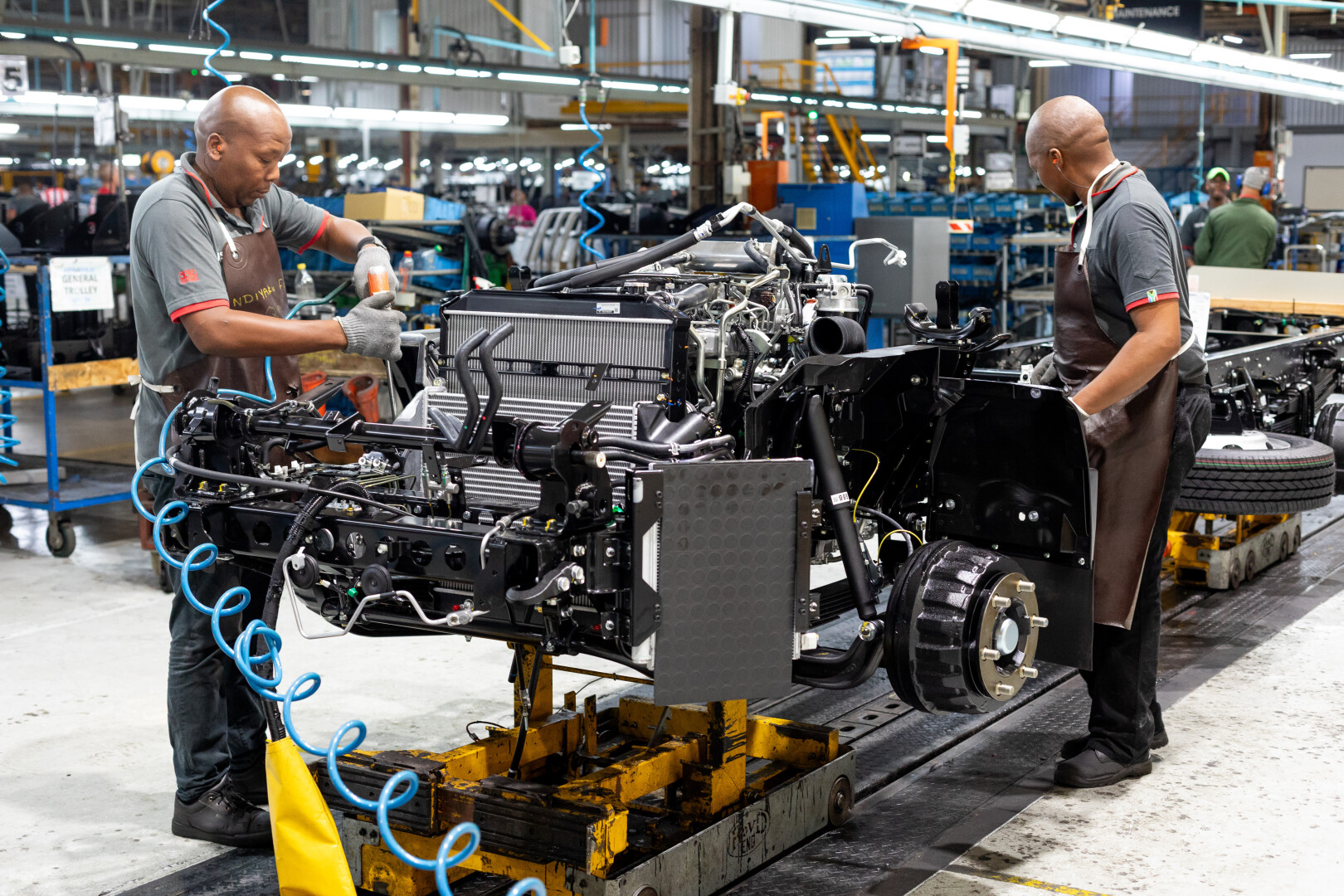

"This investment is about more than preparing our plant for a new generation of trucks. It reflects our long-term vision for manufacturing in South Africa and our confidence in the country's people, industrial capability and potential," said Johan Vermeulen, Executive Vice President: Manufacturing and Product Engineering at Isuzu Motors South Africa. "By continuing to invest in our Gqeberha operations, we are strengthening the capability and capacity needed to remain competitive and respond to the evolving mobility needs of customers across Africa."

Upgrades to the chassis and engine sub-assembly areas, as well as cab marriage, have strengthened the plant's manufacturing capability and operational flexibility. The extended chassis line allows the facility to accommodate additional stations for added content, while updated tooling and revised production layouts improve the plant's ability to support a broader range of commercial vehicle applications.

The investment also includes production and technology enhancements aimed at improving manufacturing efficiency and maintaining consistent build quality. Improved processes, tooling and digital traceability provide greater visibility across production and strengthen quality control, helping the plant manufacture vehicles more efficiently while maintaining Isuzu's build standards.

Employee wellbeing formed part of the plant upgrades, with safety and ergonomics considered in equipment selection, workstation design, lighting and workflow improvements. New equipment, including a fuel-tank gripper, lift-assist devices, a cab-marriage hoist, electronic torque tools and enhancements to the engine-dress process, is designed to reduce physical strain and support safer, more efficient working conditions for employees.

Sustainability considerations have also been incorporated into the upgrades through energy-efficient tools and motors, improved equipment and revised workflows designed to support more efficient use of resources. These improvements contribute to the company's broader focus on reducing the environmental impact of its manufacturing operations while improving operational efficiency.
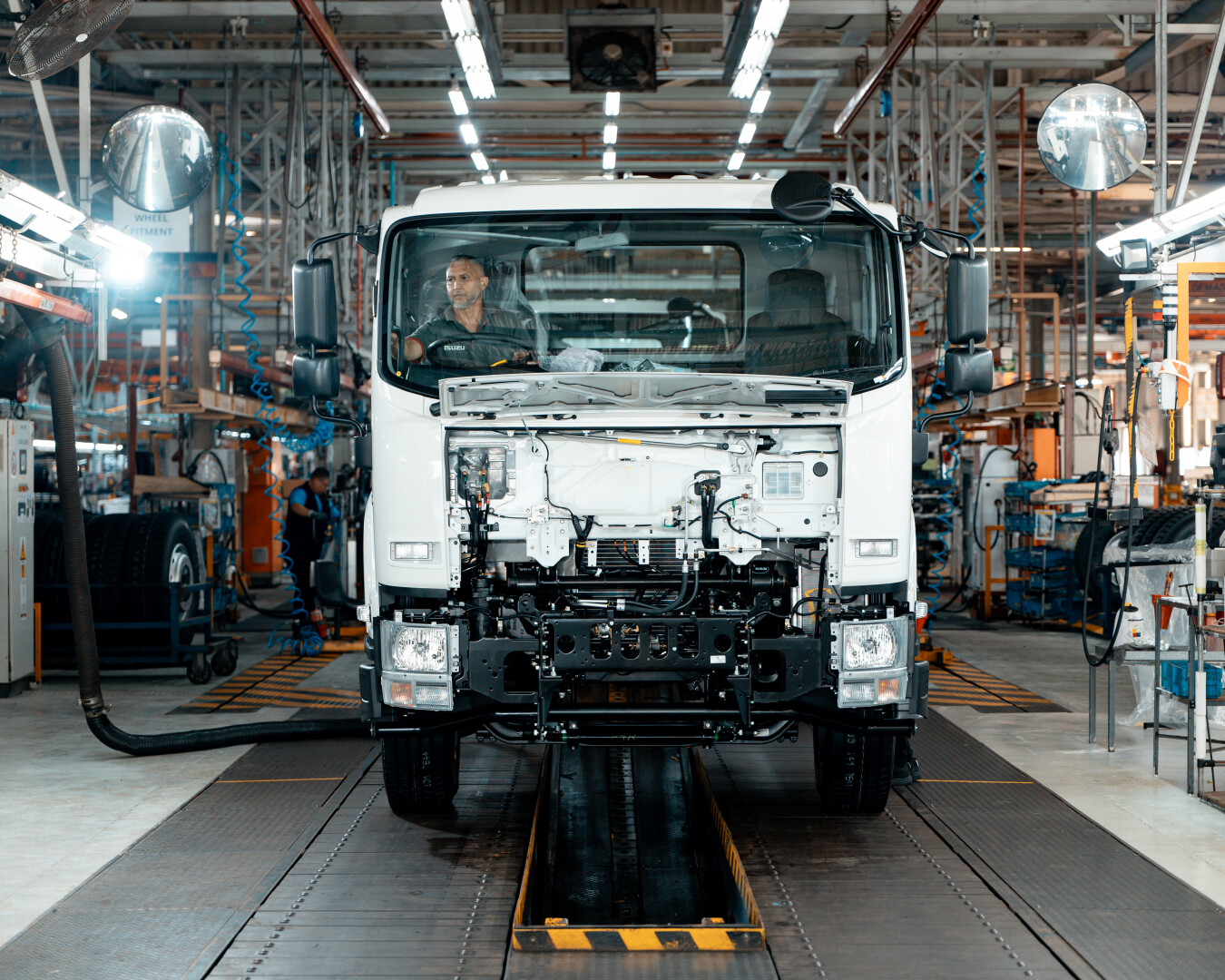

The investment also strengthens the plant's progress in preparing for evolving commercial vehicle technologies. The implementation of the upgrades involved employees and cross-functional engineering teams across the business, bringing together manufacturing expertise, technology and continuous improvement to ensure the enhancements respond to both current operational requirements and future manufacturing needs.

Through continued investment in its Gqeberha operations, Isuzu Motors South Africa says it is strengthening the manufacturing foundation required to support its long-term growth while contributing to a competitive, resilient and increasingly sustainable automotive manufacturing sector in South Africa.


https://bit.ly/4rUfAPt

Wednesday, 16 November 2022

Colin-on-Cars - First Ranger off the line

Colin-on-Cars - First Ranger off the line


After months of build-up news, a factory ‘unveiling’ and more than plenty hype, Ford Motor Company’s Silverton Assembly Plant in Pretoria, today became the third plant to commence production of the new Ranger for customers around the world.

The start of the production follows a major investment of US$1,05-billion (R15,8 billion) in Ford’s South African operations and supplier tooling to allow exports to more than 100 markets, including Europe.

Ford Motor Company now has three production hubs in the International Markets Group (IMG) region producing Next-Gen Ranger for global markets, including the Silverton plant in South Africa, and two plants in Thailand. The company also has CKD operations in Vietnam and Cambodia to assemble the Ranger, with plants in the US and Argentina to begin production in 2023.

Commitment

“The start of Ranger production in South Africa highlights our commitment to delivering must-have products for our customers, not just in South Africa but around the world,” says Dianne Craig, president of Ford International Markets Group (IMG).

“South Africa is an important part of our global Ranger manufacturing network, and it is fantastic to witness the investment being utilised to modernise and transform the Silverton Assembly Plant to produce vehicles of the absolute best quality for customers around the world.”

The expanded operations in South Africa contribute to job creation and economic development, with 1 200 new jobs added for a third shift to support the increased production volumes. This takes the workforce at Ford South Africa to 5 500 employees. Ford’s supplier network benefits too, with approximately 10 000 jobs added across the value chain.

Of the total investment, approximately US$686-million (R10,3 billion) has gone into the transformation and modernisation of the Silverton plant with the construction of its first on-site Stamping Plant, a new highly automated Body Shop, and the introduction of the latest vehicle assembly operations on the Trim, Chassis and Final line.


Furthermore, the only Ford-owned and operated Frame Line in the world was built in the new Tshwane Automotive Special Economic Zone (TASEZ) supplier park adjacent to the Silverton Assembly Plant. Ford’s investment in tooling at its major supplier companies totalled US$365-million (R5,5-billion).


In addition to the Silverton investment, Ford injected US$34-million (R600-million) into its Struandale Engine Plant in Gqeberha (formerly Port Elizabeth), which produces all the engines used in the new Ranger.

The investment in Struandale Engine Plant has helped Ford introduce the new 3,0-litre V6 Diesel engine program, comprising cylinder head machining and engine assembly. Upgrades for the Ranger were also implemented on the existing assembly line for the 2,0-litre Single Turbo and 2,0-litre B-Turbo diesel engines.


“We have put immense effort, resources, and the latest technologies in place to ensure the Ranger is truly world-class, and that the Silverton plant globally equals the very best,” says Andrea Cavallaro, Director Operations, Ford IMG.

“We took several strategic decisions including the decision to bring the stamping operations and the frame manufacturing in-house, to ensure complete control of the production quality. The process put in today guarantees that the components going onto the assembly line for every Next-Gen Ranger are of the highest quality.”

The Stamping Plant at the Silverton Assembly Plant is in a new 10 320 m2 facility and feeds stamped body panels directly to the adjacent and completely new 44 000 m2 Body Shop, which is highly automated with approximately 493 robots.

Technologies

“To meet our volume and quality objectives, we have the world’s only Ford-owned and operated chassis manufacturing plant at the Silverton plant that uses the most advanced technologies currently available,” Cavallaro added.  

In addition, the 100 000 m2 Frame Line in the Tshwane Automotive Special Economic Zone (TASEZ) supplier park, located next door to the Silverton Assembly Plant, ensures the seamless sequencing of parts directly to the assembly line.

First launched in 2011, the Ranger remained one of the leading contenders in the local market over the ensuing 11 years, earning a long list of accolades in the process.

“The success of the Ranger globally establishes it as one of Ford’s most important nameplates sold in every continent,” said Neale Hill, President, Ford Motor Company Africa. “The Next-Gen Ranger is sure to raise the bar yet again and with the start of production in the Silverton assembly plant, South Africa is proud to play a role in its growth.”

What now remains to be seen is if Ford South Africa will continue to build a range of the older version to service its large corporate market.

To my mind this is a no-brainer, especially considering the final few months of production of the outgoing model were done on the new Ranger line as a kind of tesdt bed production – so there is no reason why both cannot co-exist.

First Ranger off the line: https://www.youtube.com/watch?v=wD3xnh7cHsE


https://bit.ly/3tzpLeP