

The African Export-Import Bank has welcomed the launch of the Africa Credit Rating Agency, calling it a defining moment for the continent's financial architecture and its ability to produce credible, independent analysis of African credit risk.
The agency was unveiled recently in Balaclava, Mauritius, with its head office in Port Louis. It is an African Union initiative, overseen by the African Peer Review Mechanism, and structured as a private, self-funded entity. No government may hold a stake, a safeguard meant to keep politics out of the ratings it produces.
The chairperson of the African Union Commission, Mahmoud Ali Youssouf, told those gathered that when risk is judged through a political lens, the resulting cost of capital keeps investors and states from putting money into infrastructure, health, education, energy and industrialisation.
Denys Denya, senior Executive vice president of Afreximbank addresses guests during the launch oftheAfrica credit Rating Agency in Port Louis, MauritiusThat burden, he said, feeds directly into the debt distress many member states are already battling. The numbers bear him out. Africa's external debt service bill climbed from US$61-billion in 2010 to US$163-billion in 2024, and in most countries interest payments now outstrip spending on public health or education. Of the 55 member states, only 32 carry a rating from one of the big three international agencies. A large share of African issuers remain unrated altogether.
Denys Denya, senior executive vice president at Afreximbank, used the occasion to spell out what the new agency must get right. "The rating methodology AfCRA develops must recognise the uniqueness of our environment and its institutional structures," he said. "The Agency must set its own standards and not follow those set elsewhere." He went further: "Most importantly, AfCRA must set a new benchmark for the continent, maintain its independence, and remain wholly owned and controlled by Africans."
Afreximbank has been careful to frame the agency as an addition to the market rather than a replacement for the established international houses. Its worth, the bank says, will not be judged on whether it hands out friendlier scores, but on the credibility of its analysis, the quality of its data and the transparency of its methods.
That matters most where coverage is thinnest, in local-currency debt and in the sub-sovereign space, where cities, provinces and state-owned entities often borrow with no rating at all. Better coverage there would give investors more to work with and help domestic and regional capital markets grow deeper roots.
What this means for the car industry

The timing is hard to ignore. Africa's vehicle assembly sector is pushing through a period of real ambition. The continent built roughly 1,23-million vehicles in 2025, a sliver of the 96,4-million produced worldwide.
South Africa accounted for about 618 077 of those units, while Morocco announced in December 2025 that it had reached 1-million vehicles. Between them, the two countries make up more than 91% of African output. The long-range target is to lift the continent to between 4-million and 5-million vehicles a year by 2035, with battery-electric and hybrid models and their component supply chains included in the plan.
Money is the sticking point. The AfCFTA Automotive Fund already draws on a US$10-billion facility from Afreximbank aimed at developing local content. The African Association of Automotive Manufacturers and the AfCFTA Secretariat signed a memorandum of understanding in October 2026 covering rules of origin, trade facilitation, standards, supplier development and value chain integration.
South Africa's trade, industry and competition minister, Parks Tau, used the Africa Automotive Investment Forum to call for the plan to move from paper to practice, urging governments, financiers, assemblers, suppliers and investors to build bankable projects together.
There is a structural hurdle standing in the way. Corporate ratings on the continent tend to be capped by the sovereign rating of the country where the company is headquartered.
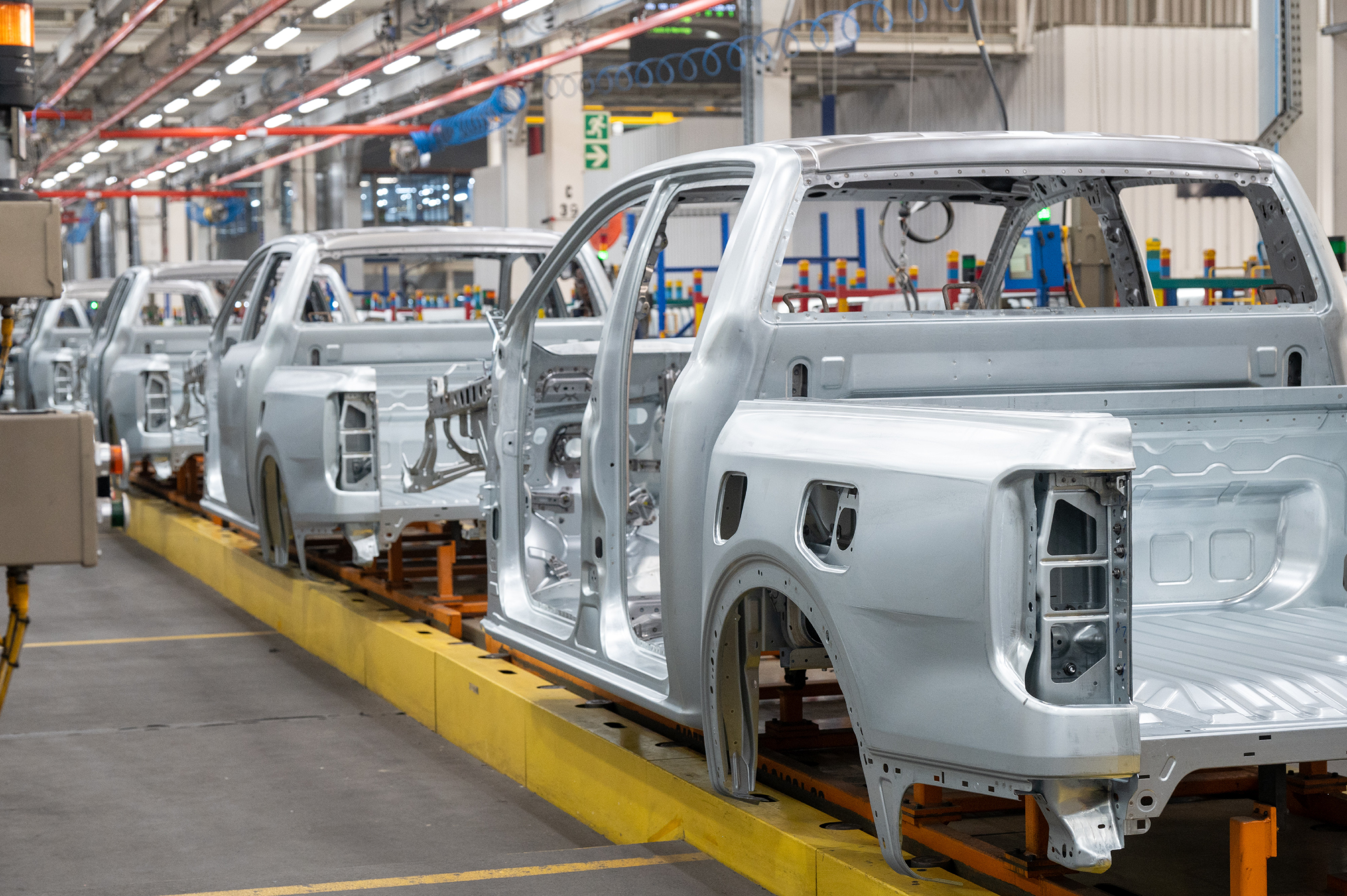
Mercedes-Benz South Africa, for instance, saw its rating pulled down from (P)A3 to (P)Baa1 in step with South Africa's own sovereign downgrades. The effect is that a plant with sound finances still pays a premium for risk it did not create. Denya's point cuts straight to this: large African companies and banks operating across several countries should not have their financial strength tethered to the rating of their home base.
For manufacturers and suppliers with operations spread across South Africa, Morocco, Egypt and Kenya, a rating agency that reads regional supply chains and cross-border production arrangements properly could mean the difference between a project that stacks up and one that does not.
The same goes for the proposed SACU-Egypt automotive pact and similar arrangements, which depend on capital markets pricing risk in a way that reflects how these businesses actually operate.
None of this happens on its own. AfCRA will have to earn its place by being useful, not by being lenient. But for an industry trying to move from assembling kits to building vehicles at scale, a ratings house that sees the continent clearly could turn out to be part of the groundwork.
https://bit.ly/4yJZbje

No comments:
Post a Comment