
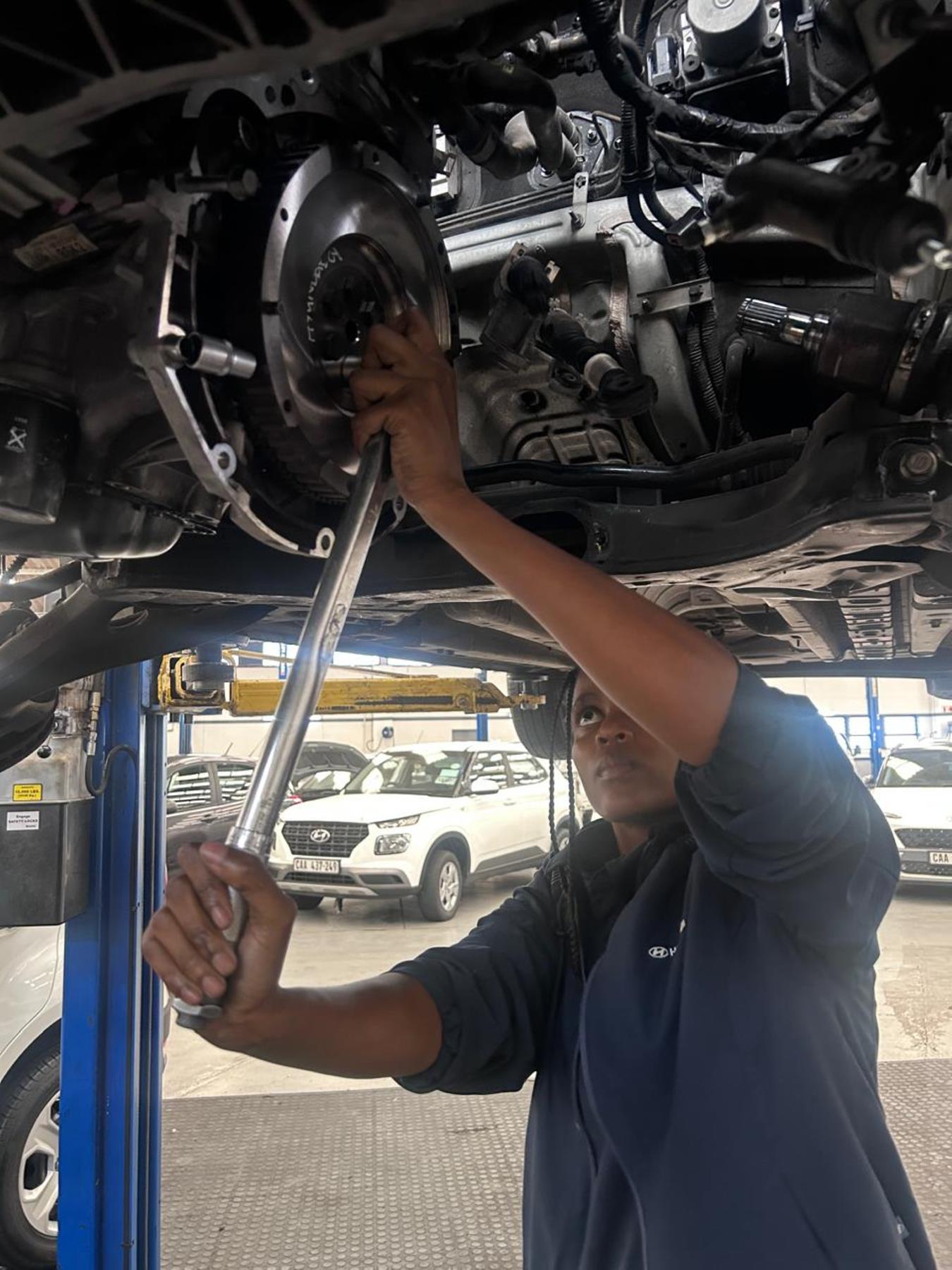
Service tools do not know if you are male or female - they respond to skill and focus. That is how 21-year-old Lathitha Mbambo describes her approach to the workshop floor at Hyundai Bellville in Cape Town, where she is upending expectations about who can excel in technical trades.
Mbambo (21) began her apprenticeship in June 2025 and has since serviced roughly 100 vehicles each month. To date, she has worked on more than 800 vehicles and maintained a clean record with no comebacks. In dealership language, comebacks refer to vehicles that return because faults were not properly resolved - a key measure of technical competence and quality assurance. For any technician, a zero-return rate across hundreds of services is notable. For a first-year apprentice, it is particularly striking.
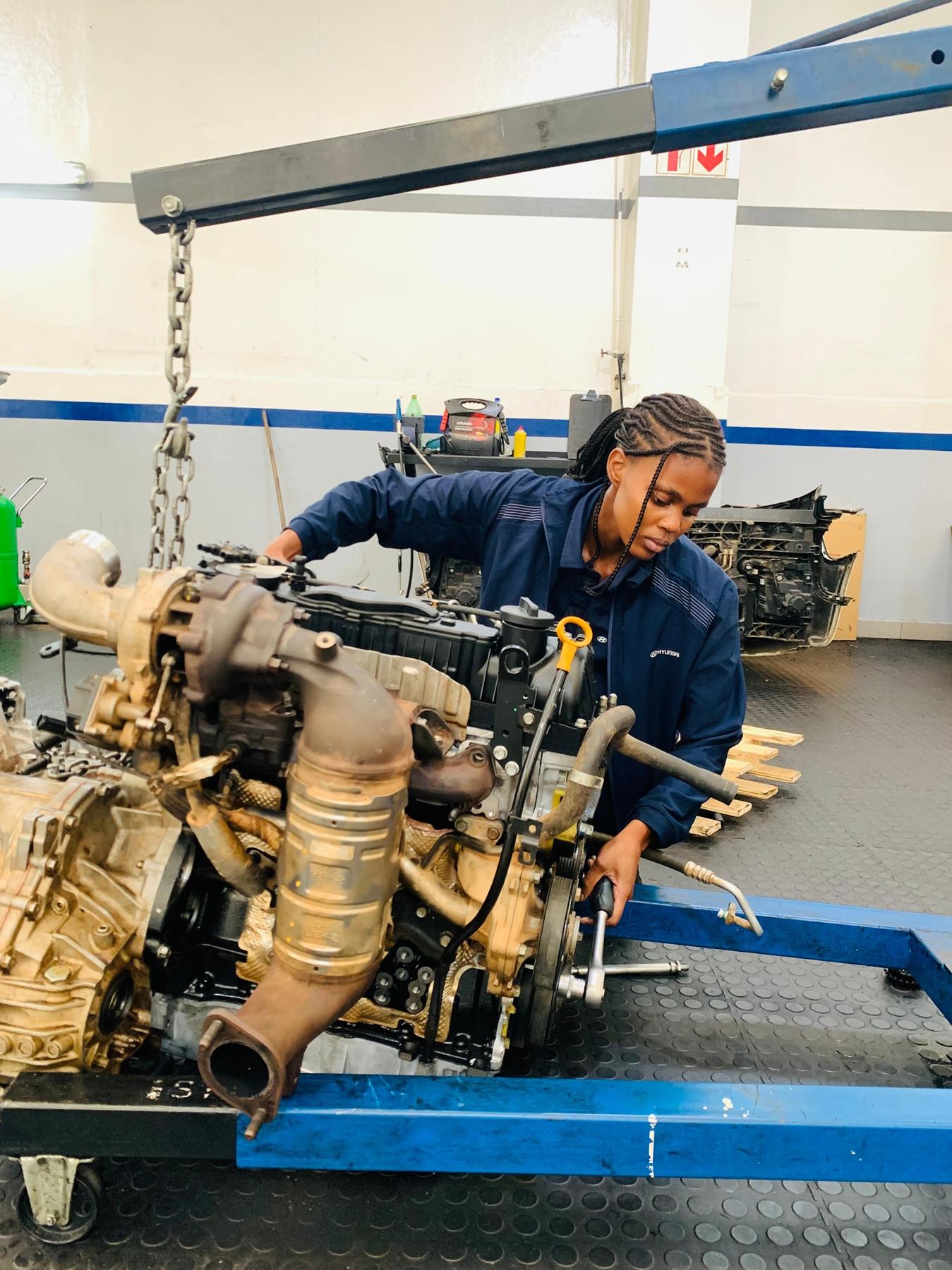
"Every vehicle that comes into the workshop represents someone's safety and trust," Mbambo says. "I approach each service as if it were my own car. If I sign off on it, I want to be 100% confident it will not return with a fault."
Keevin Peters, Dealer Principal at Hyundai Bellville, said Mbambo's productivity matches that of experienced technicians. "In this business, comebacks affect customer confidence and operational efficiency. To see this level of dedication and consistency from an apprentice speaks to both her discipline and commitment."
Managing 100 vehicles a month demands mechanical knowledge, time management, diagnostic skill and attention to detail. Mbambo said she has learned small things matter. "A missed check today becomes a problem tomorrow. My motto is do it right the first time."

Her presence in the workshop also reflects a broader shift in the automotive sector, as more young women enter technical careers. She said the tools of the trade do not distinguish between genders - only between those who apply themselves and those who do not.
In a separate development highlighting the importance of skills development, Isuzu Motors South Africa has renewed its partnership with the Nelson Mandela University's Govan Mbeki Mathematics Development Centre. The collaboration, which began in 2018, focuses on strengthening mathematics and physical science education in under-resourced schools in Nelson Mandela Bay.
The programme combines learner support, teacher training and digital resources. In the 2025 matric exams, learners who participated achieved an 80% pass rate in both mathematics and physical science. That compares with national pass rates of 64% for mathematics and 77,3% for physical science. Of the 30 learners in the cohort, 25 qualified for bachelor's or diploma studies, opening pathways to tertiary education and careers in science, technology, engineering and mathematics.

Natalie Gill, project leader at the Govan Mbeki Mathematics Development Centre, said the initiative provides interactive digital tools and professional development for teachers. "With the support received from Isuzu, we have been able to empower a significant number of learners by strengthening connections between classroom learning and real-world challenges," she said.
Nandi Matomela, Department Executive for Corporate Affairs at Isuzu Motors South Africa, said education remains a core pillar of the company's social investment strategy. "Through this collaboration, we have encouraged the adoption of STEM subjects in our schools, aligning learning outcomes with the skills and needs of the future," she said.
Several former participants in the programme are now studying computer science, civil engineering, electrical engineering and accounting. The renewed partnership aims to expand access to innovative teaching tools and mentorship, supporting more young South Africans in pursuing opportunities in the STEM economy.
https://bit.ly/4tQhPUn

No comments:
Post a Comment