Showing posts with label training. Show all posts

Thursday, 13 August 2026

Formula Africa Partners with Blocksport for Digital Community Development

Formula Africa Partners with Blocksport for Digital Community Development

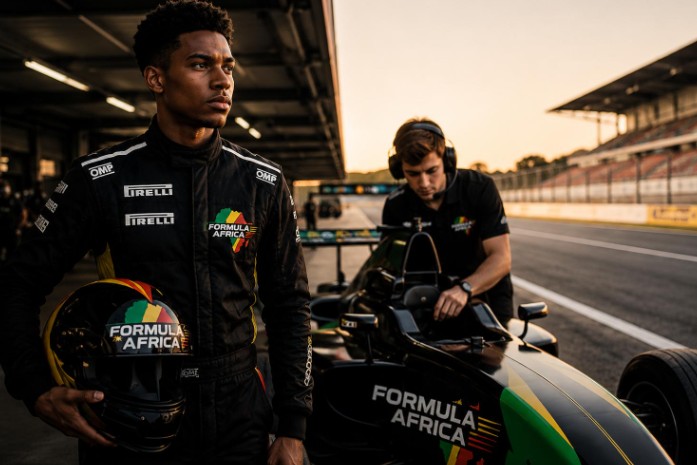
Formula Africa has brought Blocksport on board as its Founding Official Digital Community Partner, a move that sets the groundwork for the organisation’s digital entry across the continent.

The partnership sees Blocksport take on the technical responsibility for the Formula Africa Super App, which is meant to serve as a central digital space for the organisation’s growing network of young participants, local communities, and institutional backers.


Rather than building a separate app for each function, the aim is to consolidate engagement, learning materials, community interaction, and partnership coordination into one platform that can scale as the programme expands into different African markets.

Formula Africa has been clear from the start that it does not see itself as a traditional sponsor-driven project. The approach leans more towards bringing in organisations that can contribute specific capabilities—technology, sector expertise, or regional reach—and giving each a defined role within a wider ecosystem.

Blocksport is the first to sign on under this model, with its digital community tools expected to handle the membership and interaction layers of the Super App.

Julia Green, founder and executive chair of Formula Africa, said the organisation was built around the idea that access remains one of the biggest barriers for young people across the continent.

She says while talent and ambition are not in short supply, the pathways to education, skills training, and career opportunities are often fragmented. The Super App, she added, is intended to bridge that gap by keeping users connected to the organisation’s physical events and programmes, while also offering a digital journey that continues beyond a single interaction.
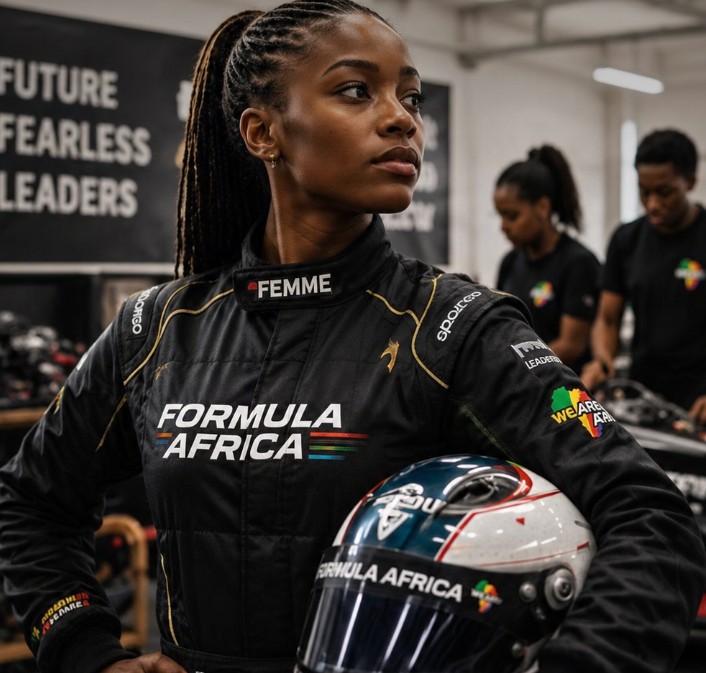

Green also confirmed Formula Africa is in active discussions with governments, schools, and industry bodies, with the aim of weaving their inputs into the platform as it develops. The Blocksport agreement is the first of what the organisation says will be several founding partnerships, with future announcements expected in areas such as engineering, artificial intelligence, financial services, and mobility.

For its part, Blocksport sees the partnership as a chance to apply its mobile-first community platform to a pan-African audience.

Chief executive Vladimiro Liulka described the youth demographic on the continent as a dynamic group that stands to gain from digital tools designed not just for connection, but for practical outcomes like job referrals, learning pathways, and community-led support. He said the Super App would be built with that in mind, focusing on usability and real-world relevance rather than novelty features.

The announcement comes as Formula Africa prepares for a broader roll-out of government engagements and commercial discussions over the coming months. The organisation has positioned this partnership as a foundational step, with the Super App expected to evolve gradually as new capabilities and partners are introduced. No timeline has been given for the app’s public launch, but those close to the project indicate that development is already under way.

Both parties have emphasised that the agreement is not a short-term sponsorship, but a long-term collaboration aimed at building a sustainable digital presence for Formula Africa’s work across the continent.

https://bit.ly/3UbyOD9

Tuesday, 9 June 2026

Fully Funded Leadership Course for Women in Automotive

Fully Funded Leadership Course for Women in Automotive

The Marcia Mayaba Foundation, working with the Impumelelo Institute, has opened applications for a fully funded leadership course aimed at five high-performing women aged 25 to 35 in the automotive value chain. The R27 500 Effective Personal Productivity (EPP) programme is designed to help address the sector’s ongoing leadership gender gap. The closing date for applications is 15 June 2026, and shortlisted candidates will be contacted directly.

Programme launch and purpose


As Youth Month gets under way in South Africa, the foundation and the institute have introduced this six-to-eight week, fully online leadership development opportunity. It targets young women already working in the automotive value chain and focuses on time management, accountability and team leadership skills. Participants can continue with their jobs while completing the course. The EPP curriculum follows a well-known LMI-licensed model that emphasises behaviour change and practical application in the workplace.

Why this matters for the auto sector

Industry discussions and research indicate that women remain underrepresented in South Africa’s automotive workforce and leadership ranks. Recent sector analyses suggest women make up roughly 10% to 20% of the automotive workforce, with even fewer in senior and executive roles. This is seen as a structural weakness, particularly as women increasingly influence consumer demand in the industry. Another industry snapshot puts women at around 15% of the workforce, with most employed in administrative rather than technical or managerial positions.


Marcia Mayaba is known in industry and community circles through the ISUZU Foundation and dealer networks. She has been involved in education and child welfare projects, fundraising partnerships and school infrastructure upgrades, showing how corporate platforms can translate into community impact. The foundation’s new leadership cohort aims to apply that community focus to human capital development specifically for women in the automotive sector.

Who should apply and how

The programme is open to female professionals aged 25 to 35 who are employed anywhere in the automotive value chain and can demonstrate strong performance, growth potential and a commitment to development. Only five candidates will be selected. Applicants need to send a short motivation letter outlining their leadership journey, achievements and aspirations to Awodwak@mmayabafoundation.co.za by 15 June 2026. Shortlisted candidates will be contacted directly by the foundation.

What success looks like – and the challenges ahead

If the programme succeeds, it is expected to create a small but focused pipeline of women ready for mid-level and senior roles. That would tackle one of the sector’s persistent bottlenecks: the gap between women’s growing influence as consumers and their low numbers in decision-making positions. However, industry observers note that training alone is not enough. Mentorship, sponsorship and deliberate recruitment and promotion practices across OEMs, suppliers and dealer networks are also needed to turn development into lasting leadership change.

Key facts


- Fully funded programme worth R27 500 per participant
- Online course lasting six to eight weeks
- Five places available
- Apply by 15 June 2026 to Awodwak@mmayabafoundation.co.za

https://bit.ly/3RZpAsC

Thursday, 23 April 2026

Empowering Female Truck Drivers in South Africa

Empowering Female Truck Drivers in South Africa

Studies and fleet operator feedback consistently show that female drivers tend to have fewer accidents, handle cargo more carefully, and communicate better with dispatch and clients. Now, Volvo Trucks South Africa is putting its weight behind expanding that pool of talent.

The company has donated a new FH440 truck-tractor unit to the Commercial Training Academy (CTA) for use in its women truck driver development programme.

Since 2019, Volvo’s Iron Women programme has trained 556 women to become fully qualified truck drivers. The current intake of 14 women is working through a 12-month course that covers vehicle operation, load management, business basics, and EyeGym – a tool to sharpen brain, eye and hand coordination.

While transport contributes roughly 6,5% to employment in South Africa, women remain severely underrepresented, making up only 22% of those employed in the sector.

Untapped

“Women represent a largely untapped talent pool, and since the start of Iron Women, we have seen more fleets actively recruiting female drivers,” says Onica Ndlovu, Director of Commercial Offer at Volvo Trucks South Africa.

“Female truck drivers become visible role models in communities where girls are still steered away from technical or physical careers. It shifts perceptions – for employers, communities, and the next generation of girls watching.”

Ndlovu added that women drivers have shown real resilience. “They are not afraid to work hard, often under tough conditions and long hours, to deliver loads safely and efficiently. For women, truck driving offers a path to financial independence that bypasses traditional qualification barriers. For the trucking industry to thrive, especially in a market like South Africa where logistics infrastructure is critical, it can’t afford to ignore half the population.”


Nicci Scott, founder and director of CTA, has long pushed for more women in the industry.

“We believe in creating social upliftment for talented women by closing the gap through quality training and practical experience,” Scott says. “But this is more than just a training initiative – it is a strategic talent pipeline. While some in the industry initially ticked a box or tentatively tested the waters, they have been met with an undeniable reality: women drivers are exceptionally resilient. They don’t just fill a seat. They bring rigour and a commitment to excellence that adds immediate, measurable value to a fleet’s bottom line.”

Fortitude

Scott said the best drivers combine technical precision with the mental fortitude required for a demanding logistics environment.

“The support from a company of Volvo Trucks’ calibre is vital because it doesn’t help women or the industry to train on equipment that isn’t industry-spec,” she added. “To meet the high expectations of modern employers, drivers need direct exposure to the sophisticated vehicles they will encounter in the workplace. Providing access to this technology allows our drivers to build genuine confidence and technical mastery for high-pressure logistics. That is how we ensure they hit the ground running as high-performing assets for any fleet.”

She described truck driving as “a high-stakes, skilled profession. We are moving past the narratives of 'male-dominated fields' and focusing on performance. This environment requires a willingness to operate under intense pressure and stressful conditions – traits our graduates possess in abundance. For these women, the road isn't just about freedom. It’s about mastering a complex machine and proving they have the grit to thrive in one of the most demanding sectors of our economy.”

Volvo Trucks has invested in cab ergonomics, adjustable seating, and safety features that make modern trucks more accessible and comfortable for drivers of different body types – helping remove some of the older physical barriers that once discouraged women from becoming drivers.

The design approach puts critical controls within easy reach of the driver, improving comfort and safety for long-haul operations.

“We are proud to make a tangible contribution to developing driver skills,” Ndlovu said. “We believe this project will continue to bring change to the local transport industry, which will truly benefit from more gender diversity.”

https://bit.ly/4cs4k6D

Monday, 23 February 2026

Lathitha Mbambo: Breaking Gender Barriers in Automotive Trades

Lathitha Mbambo: Breaking Gender Barriers in Automotive Trades

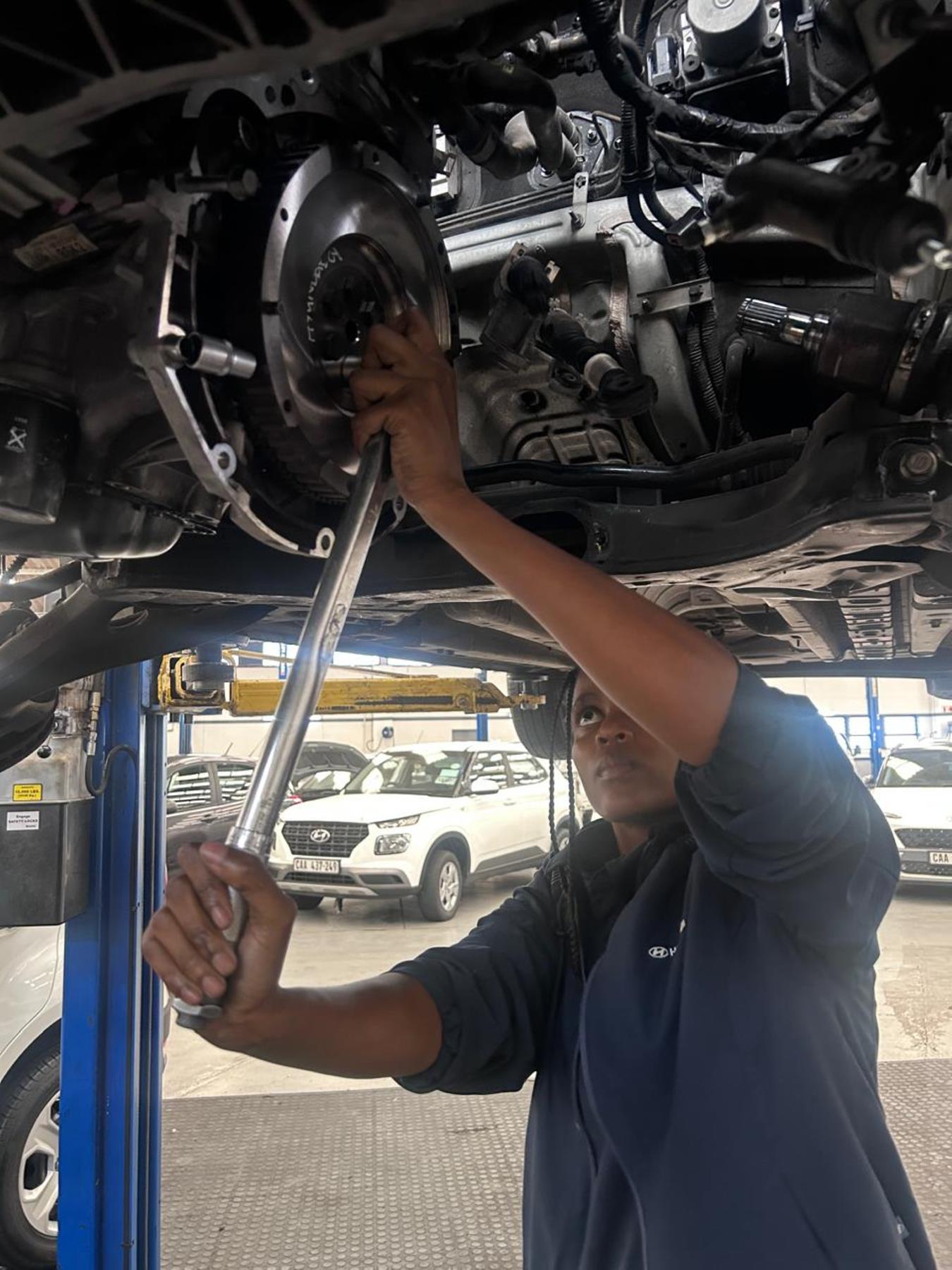
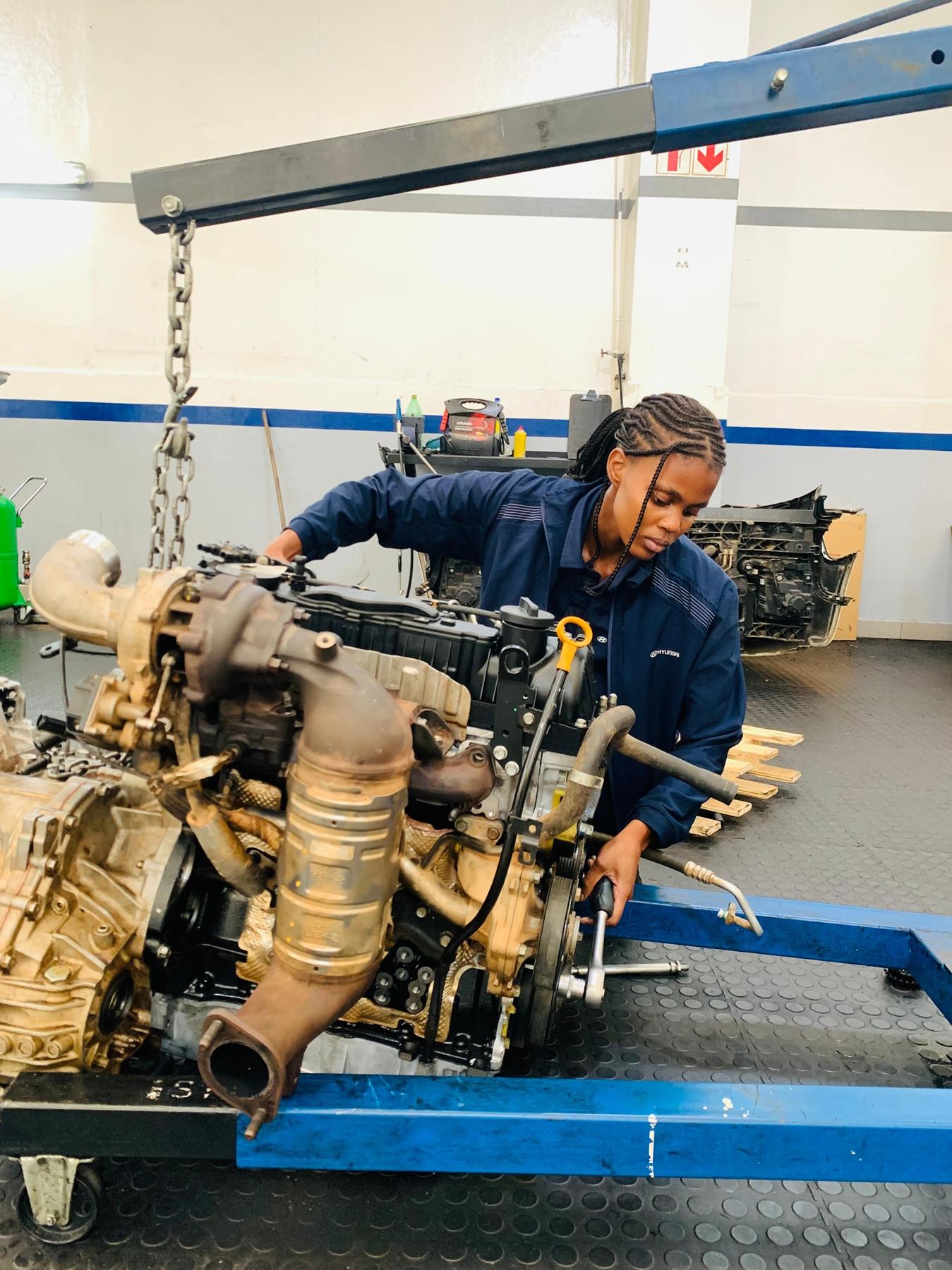
Service tools do not know if you are male or female - they respond to skill and focus. That is how 21-year-old Lathitha Mbambo describes her approach to the workshop floor at Hyundai Bellville in Cape Town, where she is upending expectations about who can excel in technical trades.

Mbambo (21) began her apprenticeship in June 2025 and has since serviced roughly 100 vehicles each month. To date, she has worked on more than 800 vehicles and maintained a clean record with no comebacks. In dealership language, comebacks refer to vehicles that return because faults were not properly resolved - a key measure of technical competence and quality assurance. For any technician, a zero-return rate across hundreds of services is notable. For a first-year apprentice, it is particularly striking.


"Every vehicle that comes into the workshop represents someone's safety and trust," Mbambo says. "I approach each service as if it were my own car. If I sign off on it, I want to be 100% confident it will not return with a fault."

Keevin Peters, Dealer Principal at Hyundai Bellville, said Mbambo's productivity matches that of experienced technicians. "In this business, comebacks affect customer confidence and operational efficiency. To see this level of dedication and consistency from an apprentice speaks to both her discipline and commitment."

Managing 100 vehicles a month demands mechanical knowledge, time management, diagnostic skill and attention to detail. Mbambo said she has learned small things matter. "A missed check today becomes a problem tomorrow. My motto is do it right the first time."


Her presence in the workshop also reflects a broader shift in the automotive sector, as more young women enter technical careers. She said the tools of the trade do not distinguish between genders - only between those who apply themselves and those who do not.

In a separate development highlighting the importance of skills development, Isuzu Motors South Africa has renewed its partnership with the Nelson Mandela University's Govan Mbeki Mathematics Development Centre. The collaboration, which began in 2018, focuses on strengthening mathematics and physical science education in under-resourced schools in Nelson Mandela Bay.

The programme combines learner support, teacher training and digital resources. In the 2025 matric exams, learners who participated achieved an 80% pass rate in both mathematics and physical science. That compares with national pass rates of 64% for mathematics and 77,3% for physical science. Of the 30 learners in the cohort, 25 qualified for bachelor's or diploma studies, opening pathways to tertiary education and careers in science, technology, engineering and mathematics.


Natalie Gill, project leader at the Govan Mbeki Mathematics Development Centre, said the initiative provides interactive digital tools and professional development for teachers. "With the support received from Isuzu, we have been able to empower a significant number of learners by strengthening connections between classroom learning and real-world challenges," she said.

Nandi Matomela, Department Executive for Corporate Affairs at Isuzu Motors South Africa, said education remains a core pillar of the company's social investment strategy. "Through this collaboration, we have encouraged the adoption of STEM subjects in our schools, aligning learning outcomes with the skills and needs of the future," she said.

Several former participants in the programme are now studying computer science, civil engineering, electrical engineering and accounting. The renewed partnership aims to expand access to innovative teaching tools and mentorship, supporting more young South Africans in pursuing opportunities in the STEM economy.

https://bit.ly/4tQhPUn

Wednesday, 12 June 2024

UD Trucks expanding its Ultimate Women programme

UD Trucks expanding its Ultimate Women programme

UD Trucks Southern Africa (UDTSA) has announced the expansion of its ‘Ultimate Women Programme’ in collaboration with the Commercial Transport Academy (CTA).

Following the programme's success over the past two years, the CTA has launched its inaugural Bus Driver Development Programme. This initiative is a joint effort involving the CTA, Southern African Bus Operators Association (SABOA), Clarendon Transport Underwriting Managers (CTU) and UDTSA. Around 30 women trainees will benefit from this transformative programme, and to bolster the training process, UDTSA has provided CTA with a new Croner Bus PKE 280 65-Seater.


The ‘Ultimate Women Programme’ by UDTSA was initiated in 2022 with the goal of promoting gender transformation within the transport industry. At its launch, UDTSA donated two new Kuzer light-medium duty trucks.

Nicci Scott, the founder of the Commercial Transport Academy, says: “We are delighted to partner with UDTSA in our shared vision of increasing female representation in the transport industry and fostering an equitable society. The programme has made significant strides since its inception and we are immensely grateful to UDTSA for their unwavering support and the profound impact this has had on the lives of these young women.

“With the new focus on training bus drivers, we are committed to working closely with all our partners to ensure the successful completion of the programme.”


Participants in the Bus Driver Development Programme will undergo a comprehensive 12-month training course that will include technical modules on vehicle operation and control, defensive driving techniques, traffic laws and regulations and route navigation or planning.

Additionally, the programme will feature a strong theoretical component, covering essential topics such as stress management, professionalism and effective passenger communication.


Filip Van den Heede, Managing Director of UD Trucks Southern Africa, remarked: “Our partnership with CTA has been transformative in our ongoing mission to empower women in our industry and make a lasting impact on the communities we serve. Expanding the programme to include bus driver training underscores the success of this important initiative and our commitment to creating a better life for people, the planet, and the logistics sector.

“We wish the new candidates a fruitful journey in the coming months and are confident they will contribute to a brighter future.”

https://bit.ly/3Xn7qlq

Monday, 12 September 2022

Colin-on-Cars - New graduates from VWSA training programme

Colin-on-Cars - New graduates from VWSA training programme

Massive investment since it was launched in 2011, has seen a number of candidates processed through Volkswagen South Africa’s Dealer Principal Apprentice Programme (DPAP).

The programme offers candidates personalised mentoring and coaching, which is structured to provide broader training exposure, using a blended learning model. It is uniquely designed and developed for Volkswagen and focuses on principles of leadership and management within the automotive industry.

Transformation

“Volkswagen Group South Africa (VWSA) has invested more than R1-billion in transformation programmes in the past 10 years. The DPAP promotes economic inclusion and diversification of the dealer network as well as fostering a true spirit of transformation and black economic empowerment,” says Nonkqubela Maliza, VWSA Corporate and Government Affairs Director.

The fourth wave of the programme took 10 candidates through a development journey that covered subjects such as retail business, finance, leadership and general management. The programme is developed by Optima Training, a global specialist in development and management learning programmes.

Promoted

Of the total 33 candidates who have graduated from the DPAP programme in the past decade, 17 have been promoted into Dealer Principal positions whilst others have been promoted to Group Financial Director and management roles.

VWSA has invested in transformation and B-BBEE programmes through its Business Support Centre in Kariega, Automotive Industry Transformation Fund, the VWSA B-BBEE Initiatives Trust, Ntinga Project and the DPAP.

“The goal of our initiatives is to make a lasting and valuable impact in the transformation of the South African automotive industry.

Furthermore, VWSA has also provided meaningful work opportunities to more than 2 000 unemployed youth through the Youth Employment Service (YES), an investment of R128-million,” concluded Maliza.


https://bit.ly/3QPZTER

Monday, 22 November 2021

Colin-on-Cars - Boost for auto industry in Senegal

Colin-on-Cars - Boost for auto industry in Senegal

Development of the automotive industry in Senegal will be getting a boost from the Coega Development Corporation (CDC) that will provide advisory services and expertise to the West African country.

This follows this year’s Intra-African Trade Fair Conference opened by President Cyril Ramaphosa, and is part of the Coega Africa Programme.

“Final negotiations between Senegalese Investment Agency, PAIMRAI, and the CDC have recently concluded with the CDC and Automotive Investment Holdings (AIH) being appointed to elaborate a strategy for the development of the automotive industry in Senegal,” says Dr Ayanda Vilakazi, CDC Head of Marketing, Brand and Communications.

The Intra-African Trade Fair 2021 took place from 15-21 November 2021 under the theme African Continental Free Trade Area (AfCFTA) - a single market for goods and services across 55 countries, aimed at boosting trade and investment.

Analysis

The Senegalese Automotive Industry Strategy developed by the CDC and AIH will provide a comprehensive analysis of the automotive industry in Senegal, its potential and the upstream and downstream linkages that can be developed with countries such as South Africa and Morocco, which are the leading vehicle manufacturers in the continent. 

The appointment of the CDC sees the organisation expanding its project footprint throughout the continent, with projects currently in Zimbabwe, Cameroon for the Central African Republic, and now Senegal. Drawing from 21 years of expertise in project managing mega and complex infrastructure projects in South Africa for public and private sector, the Coega SEZ has successfully developed its Automotive Zone and attracted investment exceeding USD 895-million.

Dr Vilakazi explains the Sub-Sahara Africa automotive sector currently accounts for less than 3% of global production, against 30% for China, 22% for Europe and 17% for North America.

“The motorisation rate in this region was very low in 2018, with 42 cars per 1 000 inhabitants, against 837 in the United States, 173 in China and 214 in South Africa, for a world average of 180 cars per 1 000 inhabitants.

“This rate hardly exceeds 3% in Senegal, which means only 30 people out of 1 000 own a private vehicle.”

Nascent

Apart from Nigeria and Ghana, the automotive industry remains nascent in the member countries of the Economic Community of West African States, whose process of industrialisation faces the threat of used car imports from Europe, Japan, United States, Canada, and other countries.

The sub-regional and regional integration, through the development of upstream and downstream links in the automotive industry value chain, will stimulate industrialisation and competitiveness throughout Africa. According to research conducted by Dakar’s Foreign Trade Office, about 100 000 vehicles are imported to the country every year, which require constant replacement of parts due to difficult climate and infrastructural conditions.

Senegal imports almost all spare parts. However, strong government focus on encouraging automotive industry in the country is an important driving force for Senegal. Stringent environmental regulations on pollution and carbon emissions are necessitating heavy investments.

As the leading Special Economic Zone (SEZ) in Africa, the CDC is poised to foster collaboration with the rest of the continent to promote the coordinating, championing, and driving of the implementation of free trade across borders and take advantage of supply chain networks and technological advancement.

“We believe the African Continental Free Trade Area (AfCFTA) will provide investors with easy access to new, rapidly developing markets while it has the potential to lift 30 million people out of extreme poverty but achieving its full potential will depend on significant policy reforms and trade facilitation measures,” says Ms Nkuli Mxenge-Mayende, CDC’s Global Market Manager.


https://bit.ly/3cBnEyx

Wednesday, 1 September 2021

 New intake of women in truck driver training programme

The move to infuse more women into the transport industry continues with a further 30 female candidates joining the Volvo Trucks South Africa Iron Women commercial vehicle driver training programme. 

Iron Women is aimed at enhancing the capacity of professional drivers and to ultimately enable them to contribute to their future employers’ fleet safety, profitability, and efficiency.  This qualification, which is approved by the Transport Education Training Authority, is based on both theoretical and practical modules. 


To date, 40 women have graduated from the programme. 

Marcus Hörberg, vice president of Volvo Group Southern Africa, in his introductory message said the successes of the previous Iron Women instalments have inspired the company to continue the programme, and in the process create real change in society. 

“Over the past couple of years, the successful Iron Women candidates have proven their worth and are employed by some of the leading transport and logistics companies in South Africa,” says Hörberg. “We wish our new candidates every success and know they will go on to make a lasting and positive impact on our industry.” 

Prof H Mkhize, deputy minister of the Department of Women, Youth and Persons with Disabilities, said in her relayed message that according to Statistics South Africa, economic data indicates the transport, storage, and communication sector contributes 9,3% to South Africa's GDP. 

“Whilst transport alone contributes about 6,5% to employment creation in South Africa, women are severely underrepresented in this industry. It is therefore important that we support the establishment of initiatives that will help increase the pool of skilled women drivers in the country,” says Prof Mkhize. 

Volvo Trucks’ Iron Women programme will also form part of the Women Inspiring Women to Lead in Transport initiative (WIWLT), that will see 120 female professionals, 300 entrepreneurs and 495 truck drivers being trained and mentored over a three-year period. 

The initiative led by the Commercial Transport Academy (CTA) is supported by United States Agency for International Development (USAID). 

“The reality is that greater participation of women within the sector is important for diversification, yet the last recorded data from StatsSA suggests that women only make up around 17.5% of the working population,” says Nicci Scott, CTA’s Founder. “This reinforces that the sector remains a non-traditional environment for women.” 

“Our programme provides an opportunity for greater community upliftment, as we know that when women are developed, empowered, and have access to equal employment opportunities, it increases diversity and equal payment opportunities,” she concluded.