

Isuzu Motors South Africa (IMSAf) has published its 2026 Sustainability Report, detailing what the company describes as measurable gains across environmental performance, skills development and local supply chain strengthening.
The report tracks the company's movement against the Isuzu Environmental Vision 2050 and aims to show how sustainability considerations have been worked into operations rather than treated as a separate function.
On the environmental front, IMSAf recorded a 38% reduction in carbon emissions compared with its 2013 baseline, even as production volumes increased over the same period. Water efficiency improved by 8,05%, and the company maintained its Zero Waste to Landfill status for the ninth year running, with 95 % of operational waste being diverted through recycling and other resource management measures.
In terms of cleaner transport options, IMSAf continues to offer Compressed Natural Gas trucks and dual-fuel CNG/Diesel technology to the local market. A dedicated Clean Technology and Engineering Trial Unit has been set up to assess and develop next-generation lower-emission mobility solutions, with the aim of supporting South Africa's broader move toward reduced carbon emissions in the transport sector.
Since 2019, the company has put R51,49-million into youth development programmes, reaching 554 young people through its Youth Employment Service and Graduate-in-Training initiatives. Of those, 132 have been taken on in permanent roles, with the graduate programme achieving a permanent employment absorption rate of 69,2 %.
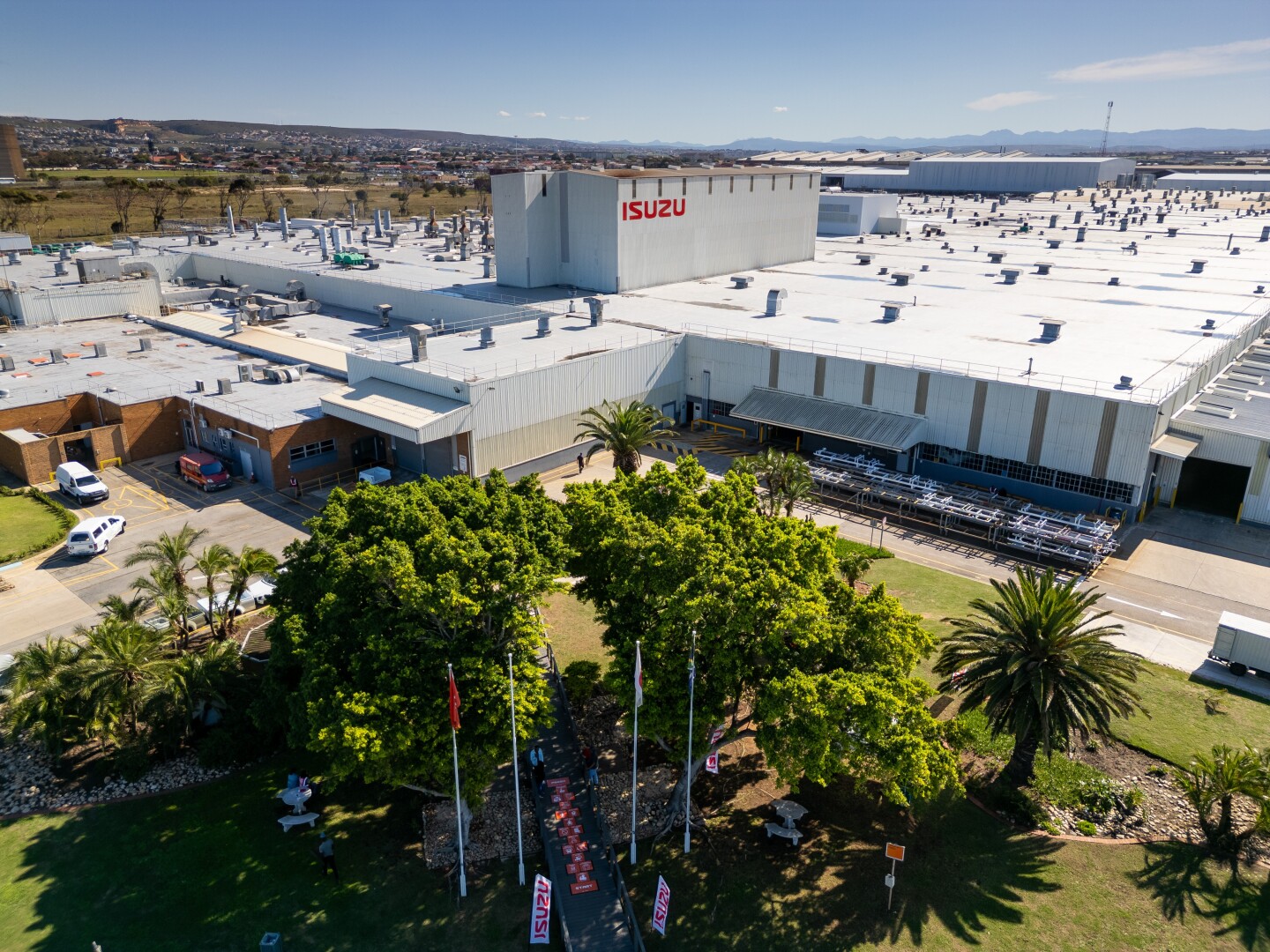
On the supply chain side, IMSAf invested R510-million in supplier development and tooling during the reporting period. This included the development of 729 vendor tools and the localisation of 250 components for the new Isuzu D-MAX. Logistics optimisation work resulted in a reduction of 500 tonnes of CO₂ from transport-related emissions, while seven emerging suppliers were brought into the company's incubation programme as part of its shared-value approach to manufacturing.
Billy Tom, President of Isuzu Motors South Africa, said the report shows how the business is trying to deliver value beyond vehicle production. He noted that sustainability is not treated as a separate initiative but as a core part of how the company operates, and that the success of the business is tied to the success of its employees, communities and the environment. He also stressed that progress depends on collaboration across the value chain, whether with suppliers, young people in training programmes or community partners.
The company also invested more than R1,3-million in a sustainability data management system to improve reporting accuracy and environmental performance tracking. Better data oversight helped the business avoid more than R500 000 in utility costs through earlier identification of inefficiencies and quicker corrective action.
The release of the 2026 Sustainability Report forms part of IMSAf's ongoing commitment to the Isuzu Environmental Vision 2050 and to transparent reporting practices. The full report is available on the company's website.
https://bit.ly/46AeZbx


