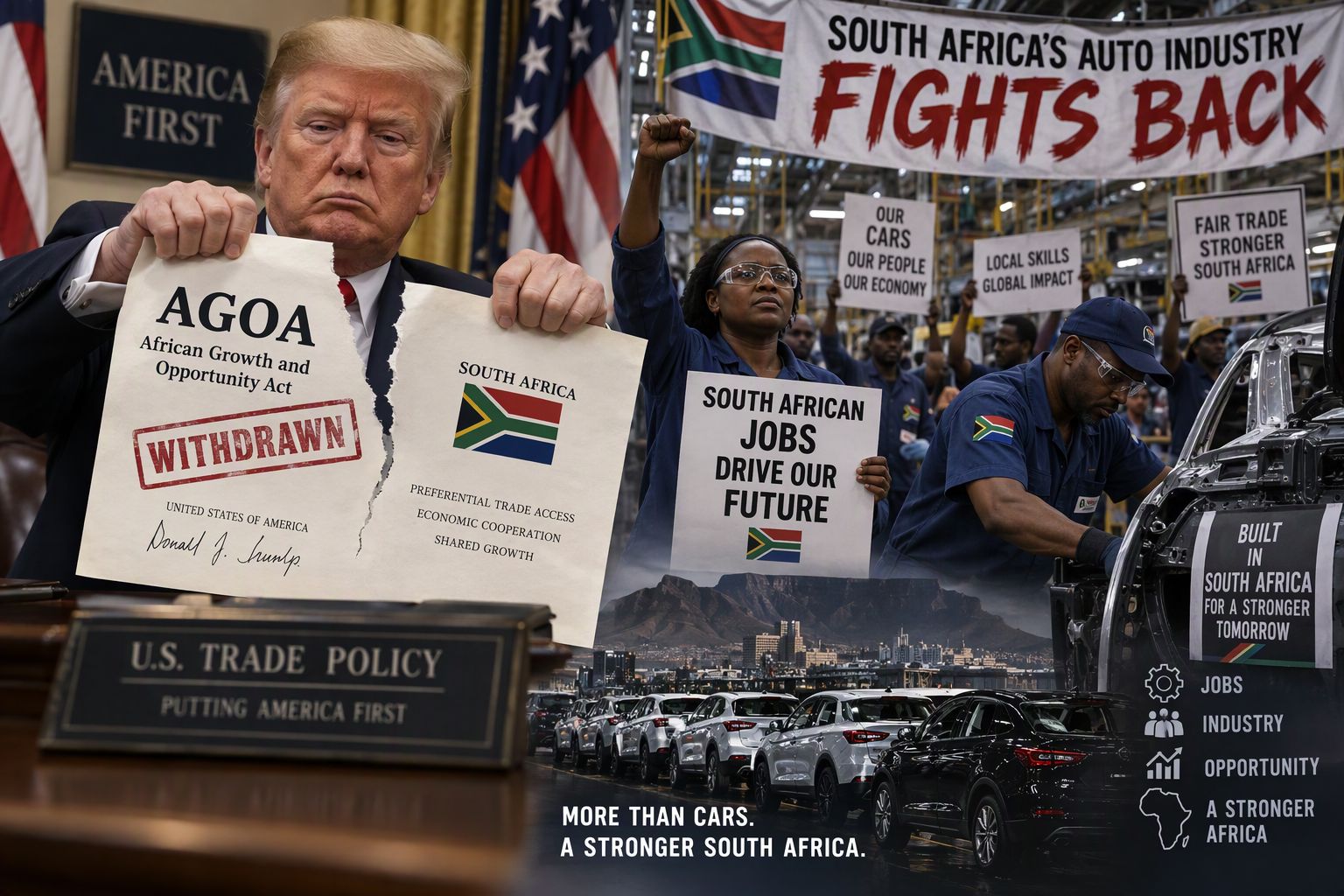
The US announced on November 2 it will suspend South Africa and Rwanda from AGOA from January 2027. For autos, the loss is less severe than the headline suggests, which shapes what the industry should prioritise.
Automotive exports to the US were already hit with new tariffs last year, effectively cancelling out AGOA benefits. Naamsa says the 25% Section 232 tariff continues to nullify the preferential access SA vehicle makers historically enjoyed under AGOA. Vehicle exports to the US have fallen 83,2%, according to naamsa figures. So the damage is mostly already done, and the five priorities below follow from that.

- Make the Section 232 tariff the main negotiating target, not AGOA.
Naamsa is already calling for a durable trade agreement with the US. The industry should push government to pursue a bilateral deal giving autos tariff relief, perhaps quota-based, as other countries have sought. The parent companies (BMW, Mercedes-Benz, VW, Toyota, Ford, Nissan, Isuzu) have Washington access that Pretoria lacks, and they should use it.
- Move export volume to markets that still work.
The US, Mexico and Canada together took only about 8% of South Africa’s automotive exports in 2025. The EU remains the crucial destination, so defending that position matters most. Africa accounted for R49,5-billion, or 17%, of automotive exports in 2025, and AfCFTA gives a path to grow it. Plants built around US-bound models need new export programmes.
- Protect the component and tyre suppliers.
Smaller suppliers, not the big assemblers, are the most exposed. The tyre, equipment and parts association has warned of tariff jumps, lost contracts and supply chain disruptions. The industry should press for short-time work, retraining and working-capital support before jobs are lost. COSATU has already warned of job losses in a country with one of the highest unemployment rates in the world.
- Lock in the EV transition policy.
Trade shocks hurt most when an industry is already behind on technology. Clear, durable incentives for new-energy-vehicle production would keep investment decisions in South Africa as export markets shift towards electrification. Naamsa has itself called the shift to clean mobility an existential priority.
- Cut local costs and deepen domestic production.
Logistics (ports and rail), electricity and input costs make South African cars less competitive on thin margins. Naamsa is also targeting the R357.5bn automotive import market for localisation, which would build volume at home that doesn’t depend on Washington.
The exclusion is an announced intention, and its legal basis is already being debated. The industry should plan for it taking effect while government keeps engaging. These five points are my own analysis rather than an official plan.
https://bit.ly/4kvHKyf


No comments:
Post a Comment