

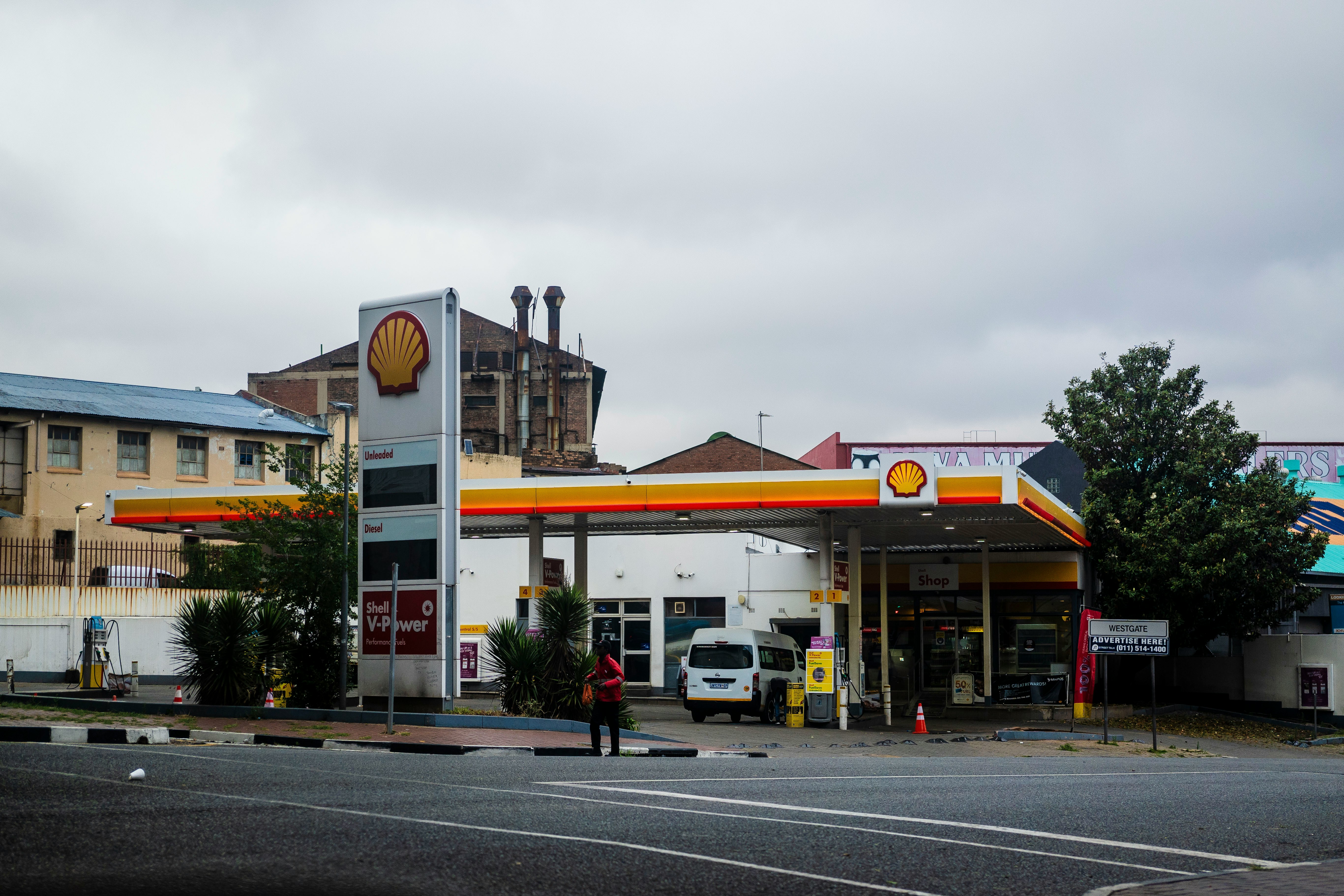
Just after sunrise in Midrand, the forecourt at a busy filling station hums with the familiar weekend rhythm. Delivery vans idle in a neat queue. A taxi driver leans against his Quantum, scrolling through voice notes from customers already running late for church trips and family visits. A mother in gym gear taps her bank card at the pump, her eyes fixed on the digital display climbing higher than she expected just a week ago.
She does not know it yet, but the numbers she is watching are about to become even more unpredictable.
Thousands of kilometres away, in a boardroom lined with marble and soft gold lighting, the United Arab Emirates has just walked out of OPEC. No warning. No slow drift. A clean break from the cartel that has shaped global oil markets for more than half a century.
And in South Africa, where every litre of petrol and diesel is imported, priced in United States dollars, and adjusted monthly by a formula that leaves households hanging on every cent, the ripple is already on its way.
“This is not a small diplomatic tiff. It is a structural shock,” says Dr Nandi Maseko, an energy policy analyst at the University of the Witwatersrand. “South Africa is exposed. Very exposed.”
Why the UAE’s exit matters
The UAE is not just another oil producer. It ranks among the world’s top ten crude exporters, with production capacity that rivals some OPEC heavyweights. More importantly, it is one of the most technologically advanced and efficient producers in the world. For years, it has pushed inside OPEC for higher production quotas, frustrated by what Abu Dhabi saw as a Saudi-led strategy of keeping a lid on output to prop up prices.
Now, freed from those constraints, the Emirates can pump as much as it wants.
In the short term, that could mean cheaper oil flowing into global markets. The UAE could open its taps to boost revenue and grab market share, putting downward pressure on the Brent crude price that South Africa’s entire fuel pricing system tracks. But in the long term, analysts say, it means something far more unsettling for a country like South Africa: volatility.
OPEC’s strength has always been its ability to coordinate supply among members with wildly different political interests and economic needs. Remove one of its biggest players, and the cartel’s grip weakens. Saudi Arabia, OPEC’s de facto leader, may respond by cutting its own production to defend higher price floors. A price war between Riyadh and Abu Dhabi would send shockwaves through global benchmarks.
Markets hate uncertainty. Traders love it. South African motorists and businesses will feel the consequences at the pump and on the ledger.

“This is not a small diplomatic tiff. It’s a structural shock.”
— Dr Nandi Maseko, Wits energy policy analyst
South Africa’s fuel price formula is brutally simple. Global oil price plus rand exchange rate equals monthly adjustment. When global oil becomes unpredictable, that formula turns into a roulette wheel.
Economists tracking the UAE’s exit warn that the country could face three distinct scenarios in the coming months. If the UAE floods the market with additional crude, South Africans could see short-term dips at the pump, perhaps a reprieve of fifty to eighty cents a litre.
But if Saudi Arabia retaliates with aggressive production cuts to defend a higher price floor, Brent crude could spike sharply, pushing petrol up by more than a rand and a half in a single adjustment. The worst case, analysts say, is a prolonged period of instability if OPEC cohesion continues to fracture and both Gulf powers play a game of chicken with global supply.
“We could be entering a world where petrol drops 80 cents one month and jumps R1,50 the next,” says independent economist Lyle Petersen. “For households trying to budget and businesses trying to plan logistics, that is a nightmare. You cannot build a stable economy around that kind of unpredictability.”
Energy economist Nomvula Khumalo, who has advised the Department of Mineral Resources and Energy on previous oil shocks, puts it more directly. “The UAE’s exit removes one of the stabilising pillars of the global oil market,” she says. “South Africa should prepare for a period of sharper swings, not just in pump prices but in the broader inflation cycle. Transport costs feed into everything from bread to building materials.”
A mixed picture for supply security
South Africa sources its crude from a handful of suppliers. Saudi Arabia remains the largest, followed by the UAE, Nigeria and Angola. With the UAE no longer bound by OPEC quotas, Pretoria could gain access to more competitively priced cargoes. That is an attractive prospect for a country whose refining capacity has dwindled over the past two decades and whose fuel import bill continues to rise.
But the upside comes with real risk.
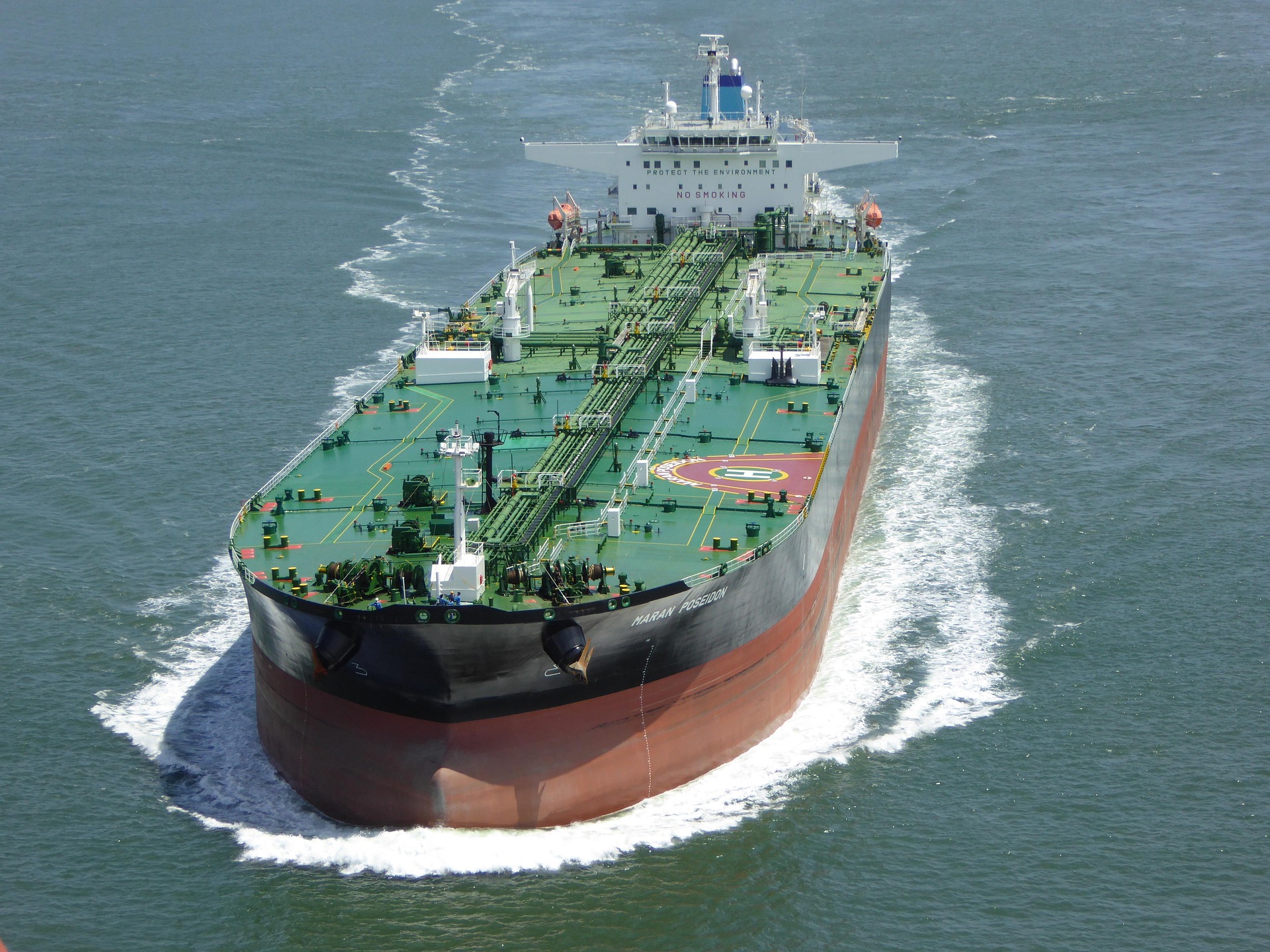
A fractured OPEC raises the spectre of regional tensions spilling into shipping lanes. The Gulf is the chokepoint through which much of South Africa’s crude supply passes. Any instability there, whether a price war, retaliatory production cuts, or diplomatic rifts escalating into something more direct, would immediately threaten shipping routes and delivery schedules. Insurance costs for tankers could rise, adding another layer to the final pump price.
“South Africa’s vulnerability is structural,” says shipping analyst Kabelo Mokoena, who has tracked maritime logistics on the Arabian Sea route for more than a decade. “Whether oil is cheap or expensive, the country is at the mercy of Middle Eastern supply chains. A destabilised OPEC only magnifies that exposure. If the Gulf sneezes, our tankers catch a cold.”
SOUTH AFRICA’S CRUDE IMPORT SOURCES
Saudi Arabia — 41%
UAE — 23%
Nigeria — 18%
Angola — 11%
Other — 7%
The UAE may offer cheaper cargoes outside OPEC quotas. Saudi Arabia may tighten supply to defend prices. West African producers such as Nigeria and Angola could gain leverage if Gulf supply becomes unreliable. Shipping risks increase if tensions between Riyadh and Abu Dhabi escalate.
Diplomatic tightrope for Pretoria
The UAE’s departure also reshapes the geopolitical landscape in which South Africa must operate. Relations between Abu Dhabi and Riyadh have cooled in recent years, and the split from OPEC is widely expected to deepen that rivalry.
Pretoria has spent years cultivating strong ties with both states. The UAE has become an increasingly important investor in South African logistics, ports, and renewable energy projects. Dubai-based capital has flowed into everything from solar farms in the Northern Cape to port modernisation in Durban. Saudi Arabia, meanwhile, remains a critical energy partner and a major player in BRICS-aligned diplomacy, with Crown Prince Mohammed bin Salman having built a direct relationship with President Cyril Ramaphosa’s administration.
Now Pretoria may find itself navigating a more delicate diplomatic path, balancing energy security against investment interests and broader geopolitical alliances.
“This is a tightrope, and it is getting thinner,” says a senior official in the Department of International Relations and Cooperation, speaking off the record. “We cannot afford to alienate either Riyadh or Abu Dhabi. But we also cannot afford to be seen as taking sides in a Gulf rivalry that could intensify quickly. Every meeting, every statement, every trade delegation will be scrutinised.”
WHAT EXACTLY IS OPEC?
Founded in 1960 by five major oil exporting countries, the Organisation of the Petroleum Exporting Countries has grown to include 13 members, mostly from the Middle East, Africa and South America. Its stated purpose is to coordinate production policies to influence global oil prices. OPEC controls roughly thirty percent of global crude supply, but because its decisions affect market expectations, its influence extends far beyond that share.
Why the UAE leaving is seismic: It weakens the cartel’s unity, removes one of its most powerful producers, and signals deeper political fractures between Gulf monarchies that were once reliable allies within the organisation.

OPEC TENSIONS THROUGH THE YEARS
1973 — The Oil Embargo: Arab members cut supply to the West in response to the Yom Kippur War, triggering global shortages and a reordering of energy politics.
1990 — Gulf War Disruptions: Iraq’s invasion of Kuwait destabilises OPEC unity, with members split on whether to increase production to calm markets.
2014 — The Shale Shock: The United States shale oil boom forces OPEC to abandon price defence and instead fight for market share, sending crude prices crashing.
2020 — The Russia–Saudi Price War: A breakdown in talks between OPEC and its Russia-led allies leads to both sides flooding the market, with prices briefly turning negative.
2023 — UAE–Saudi Quota Clash: The UAE publicly clashes with Saudi Arabia over baseline production quotas, threatening to leave OPEC unless its capacity is recognised.
2026 — UAE Exits OPEC: A major producer walks away from the cartel, shaking global markets and raising questions about OPEC’s future cohesion.
A catalyst for energy transition
The upheaval could accelerate South Africa’s long-discussed shift away from imported fossil fuels. Policymakers have signalled renewed interest in electric mobility, green hydrogen, synthetic fuels and expanded renewable generation. The country has natural advantages: solar radiation among the best in the world, land availability, and industrial expertise in gas-to-liquids technology through Sasol.
Fuel price instability often strengthens the case for diversification. When petrol jumps unpredictably, the argument for electric vehicles becomes more compelling. When diesel spikes without warning, the logic of green hydrogen for industrial use starts to sound less like an environmental statement and more like an economic necessity.
“Instability is often the catalyst for reform,” says Professor Thabo Radebe, an energy transition specialist based at the University of Cape Town. “South Africa has talked about moving away from imported oil for years. We have the strategies. We have the task teams. What we have lacked is urgency. A destabilised oil market might finally provide that urgency. This could be the moment South Africa stops talking and starts building.”
Analysts caution, however, that meaningful transition takes time. Electric vehicle infrastructure is still sparse outside major metros. Green hydrogen projects are capital-intensive and require long-term off-take agreements. Synthetic fuel production is technically feasible but not yet cost-competitive without policy support. The UAE’s exit may open a window, but South Africa will have to move deliberately to walk through it.
The UAE is not just an oil exporter. It is a global investor with deep pockets and a growing appetite for African partnerships. Freed from OPEC constraints, Abu Dhabi is expected to expand its investment footprint as it repositions itself outside the cartel’s structures. That could translate into deeper partnerships in African energy corridors, infrastructure development, renewable energy financing, and logistics hubs.
Trade experts say South Africa should move quickly to secure favourable terms while the UAE is recalibrating its global strategy. The Emirates have already shown interest in South African ports, solar projects and industrial zones. A more independent UAE, no longer bound by OPEC diplomacy, may be more willing to strike bilateral deals that benefit both sides.
But it will require strategic diplomacy, not passive optimism. Other African countries, including Kenya, Angola and Nigeria, are also courting UAE investment. South Africa’s bureaucratic hurdles, port inefficiencies and electricity constraints could make it less attractive if not addressed urgently.
THE ROAD AHEAD
The UAE’s departure from OPEC is not the end of the oil world. But it is the end of a certain kind of predictability. For half a century, OPEC has been a stabilising if imperfect force in global energy markets. Even when prices spiked or crashed, the cartel’s existence meant producers were at least talking to each other, coordinating, finding common ground.
That era is not necessarily over. OPEC still has significant members and market power. But the loss of the UAE, one of its most capable producers, changes the calculus.
For South Africa, the next few years will be shaped by more volatile fuel prices, shifting Gulf alliances, new opportunities for investment and a stronger case for energy diversification. The country has weathered oil shocks before. It weathered the 1970s embargo indirectly, the 1990 Gulf War price spike, the 2008 runaway crude, and the 2020 COVID demand collapse. It will weather this one too.
But the choices made now, by policymakers, by industry, by investors, will determine whether South Africa emerges more resilient or more exposed. Will Treasury strengthen the fuel price stabilisation fund? Will the energy department fast-track independent fuel procurement? Will private capital flow into renewables and alternatives with renewed urgency? Will diplomacy in the Middle East shift from passive friendship to active hedging?
Back at the Midrand filling station, the mother in gym gear drives off, unaware of the geopolitical drama unfolding across the ocean. Her tank is full. Her morning is ordinary. But soon enough, the numbers on that pump will tell the story. A story of a Gulf breakup, a cartel shaken, and a country at the southern tip of Africa that imports every drop and hopes for the best.
Soon enough, she will notice. And South Africa will have to decide how it responds.
https://bit.ly/4czpccg

No comments:
Post a Comment