

As South Africa's auto industry races to electrify, a troubling question emerges: Could the cure for carbon emissions be worse than the disease?
The Karoo stretches endlessly under a brutal sun, its semi-desert plains dotted with hardy shrubs and the occasional springbok. It's the perfect place for a solar farm—high irradiation, flat land, and seemingly empty horizons. But ‘empty’ is a dangerous illusion.
Beneath the panels of South Africa's rapidly multiplying solar parks, a quiet transformation is taking place—one that international research suggests may be more complex, and potentially more harmful, than the green energy narrative lets on.
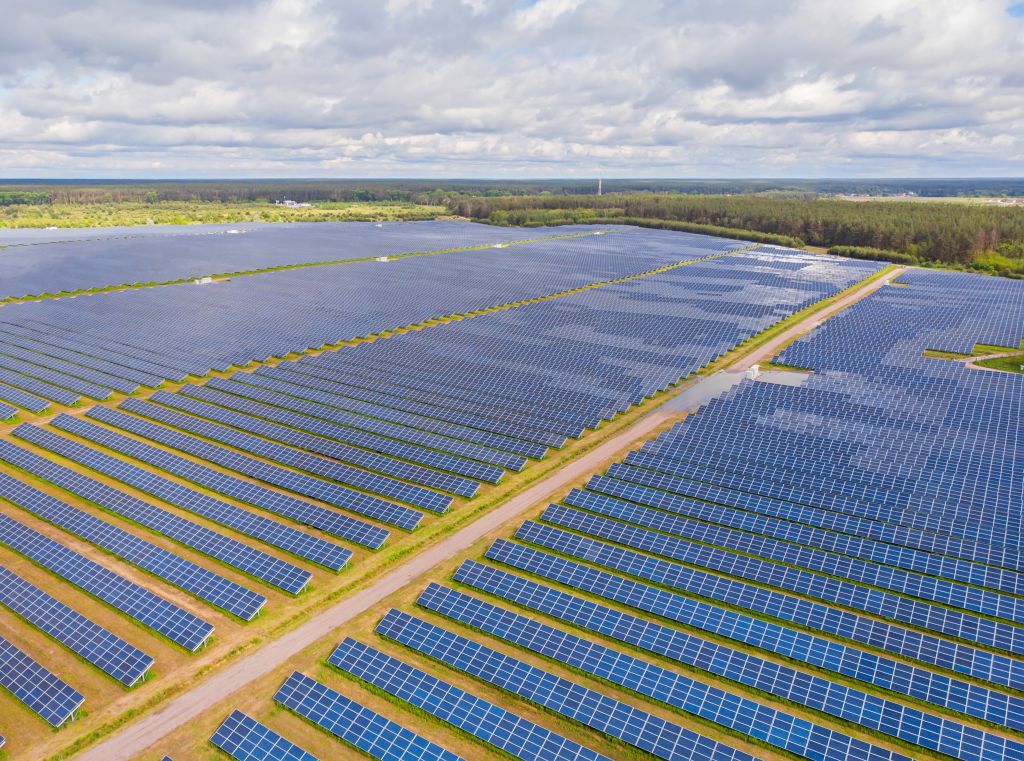
For the country's auto industry, already buckling under the weight of load-shedding and global decarbonisation pressures, the ecological shadow cast by utility-scale solar could become an unexpected choke point, threatening not just the land, but the very factories and supply chains that sustain the sector.
The narrative around solar energy is seductively simple: sunlight hits panel, electrons flow, emissions drop. But the ecological reality, as revealed by a growing body of meta-analyses, is far messier.
A comprehensive 2025 meta-analysis published in IOPscience, synthesising 44 dryland studies, found that photovoltaic power plants (PVPPs) are most consistently associated with reduced near-surface wind speed and air temperature, alongside increased soil moisture and vegetation cover.
Another major meta-analysis in the Journal of Environmental Management confirmed these microclimatic shifts, reporting significant reductions in wind speed (-63,55%) and soil temperature (-9,72%), while soil moisture content increased by a staggering 301,63%. On the surface, this sounds like a boon for arid regions.
Yet, a deeper look reveals a more troubling picture. The same 2025 IOPscience study noted that responses of aboveground biomass and annual net primary productivity were "less robust" and should not be interpreted as uniform ecological benefits.
Meanwhile, a Chinese meta-analysis published in 2025, examining 50 global studies, found vegetation diversity actually declined by 6,38% under solar panels, even as species richness and cover increased. This suggests a homogenisation of the landscape—a few hardy species thriving, while the delicate mosaic of native flora is lost.
The critical factor, as the research underscores, is context dependence. The ecological effects of a solar farm are not universal but are heavily dictated by the type of ecosystem it replaces. Grasslands and savannas—South Africa's primary biomes targeted for solar development—appear to be particularly sensitive. A study in Frontiers in Ecology and Evolution specifically noted photovoltaic panel installation increased plant aboveground biomass and vegetation cover in grasslands, but also reduced CO2 flux, plant species richness and vegetation cover in woodlands. In other words, you might get more grass, but you lose the trees and the complex biodiversity they support.
The very act of ‘greening’ the immediate microclimate can come at the cost of the larger ecological fabric.
This ecological complexity is not just an academic concern in South Africa; it is a legal and social powder keg. The strategic roll-out of renewable energy has been guided by Spatial Planning tools and Strategic Environmental Assessments (SEA) to identify Renewable Energy Development Zones (REDZs). Yet, the friction between these zones and existing land use is palpable.
The recent proclamation of the Preservation and Development of Agricultural Land Act, 2024, now explicitly restricts development on high-potential agricultural land, creating "protected agricultural areas" mapped using soil quality, climate, and biodiversity data. This legislative shift is a direct response to the creeping industrialisation of agricultural landscapes.
And the conflicts are not hypothetical. The Phomolong community in the Free State shut down a solar project over a flawed recruitment process, blocking access to healthcare and schools.

The Supreme Court of Appeal overturned the environmental authorisation for Eskom's Richards Bay gas plant, citing a failure to consider cumulative impacts and community participation. These are not isolated incidents; they are the new reality of a green energy transition conducted without sufficient social and ecological buy-in.
Why should a motor manufacturer care about a patch of disturbed Karoo scrub or a community grievance in the Free State? Because these seemingly local issues translate directly into industrial risk.
The South African automotive sector is a cornerstone of the economy, accounting for over 20% of manufacturing output. But it is also an energy-intensive industry under immense pressure. The EU's Carbon Border Adjustment Mechanism (CBAM) looms like a guillotine, threatening to add punishing carbon tariffs to vehicles manufactured with South Africa's coal-heavy electricity.
 Solar panels at Ford's Silverton Plant, Pretoria
This is why we see companies like Ford installing massive 13,5-megawatt solar carports at its Silverton plant, and Maxion Wheels energising its own solar PV systems. The industry is desperate for clean, reliable power. The shift to New Energy Vehicles (NEVs) is not just a trend; it is an economic necessity, with recent ILO-led social dialogues in the Eastern Cape explicitly focusing on reskilling the automotive workforce for this transition.
However, this transition is built on a fragile foundation. The JET-IP identifies inadequate transmission infrastructure, delays in coal decommissioning, and funding gaps as major barriers.
Add to this the social and legal delays associated with new solar projects, and the risk of supply-chain disruption becomes acute. Land-use conflicts and protracted environmental authorisations don't just delay energy projects; they delay the electrification of the auto industry itself, raising costs and creating investor uncertainty.
As the JET-IP review notes, the plan is hindered by "geographic, political, and logistical complexities". Every hectare of solar farm that becomes a battleground is a hectare of potential energy that could have powered a factory line, lost to litigation and protest.
The situation is not hopeless, but it demands a radical shift in thinking. The current model—which often treats land as either a conservation zone or an energy plantation—is fundamentally flawed. The solution lies in integration.
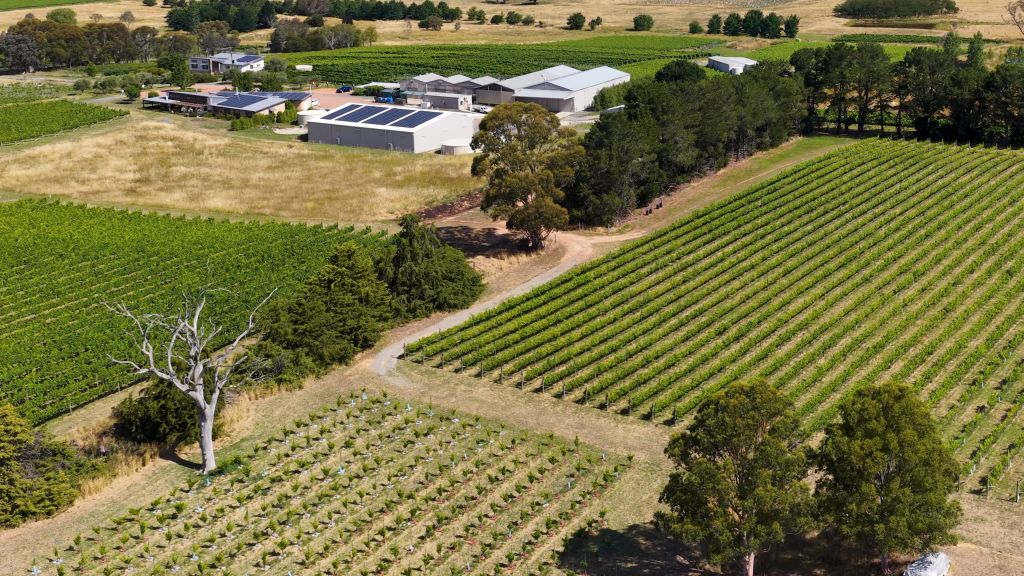
The most promising avenue is agrivoltaics. The successful commissioning of a 1 MWp ground-mounted solar system at Genade Boerdery in the Northern Cape, which supports the farm's irrigation and production, demonstrates a working model for dual-use land.
Similarly, Enel Green Power's Adams solar plant in the Northern Cape has partnered with a local herb incubator, developing 21 women's cooperatives and demonstrating that energy generation can coexist with economic development.
The University of the Western Cape's ‘Green New World’ project is another beacon, creating an agrivoltaic system that will integrate solar energy, water purification and hydroponics on a single site, generating scientific data and training future practitioners. As a UWC project leader noted, the true value lies in the "seamless integration of electrically driven processes with advanced agricultural practices".
Beyond agrivoltaics, there is a growing recognition that well-designed solar farms can, in fact, enhance habitat. By moderating soil temperature through shading, and using dynamic tracker systems to prevent permanent over-shading, developers can create microclimates that support native grasses and pollinators, while wide row spacing ensures wildlife movement. This transforms solar farms from "ecological trade-offs" into "dual-purpose landscapes".

Policymakers must tie renewable procurement to binding community benefit clauses, ensuring that local communities are not just consulted but are co-investors in the projects that reshape their land.
The Tshwane Automotive Special Economic Zone (TASEZ) is already positioning itself as a benchmark, using solar rooftops and battery storage to attract OEMs, proving strategic investment in distributed generation near manufacturing hubs can mitigate risks and build investor confidence.
The green energy build-out is non-negotiable for South Africa's auto future. But it must be executed with ecological intelligence and social inclusion. The science is clear: large-scale solar can alter local climates, fragment habitats, and fuel community conflicts. If left unmanaged, these risks will translate directly into grid delays, legal blockades, and a slower, more expensive transition to EV manufacturing.
The sector's survival depends on moving beyond the simplistic view of solar as a pure environmental good. The goal must be to generate clean power and preserve ecological function, and deliver tangible community benefits.
As one environmental advisor noted, we must shift from viewing solar farms as ecological trade-offs to serving as "dual-purpose landscapes that deliver both reliable renewable energy and functioning ecological corridors". Anything less, and the auto industry might find itself stranded—not by a lack of electricity, but by the very land it needs to generate it.
https://bit.ly/4wRtgMn

No comments:
Post a Comment