
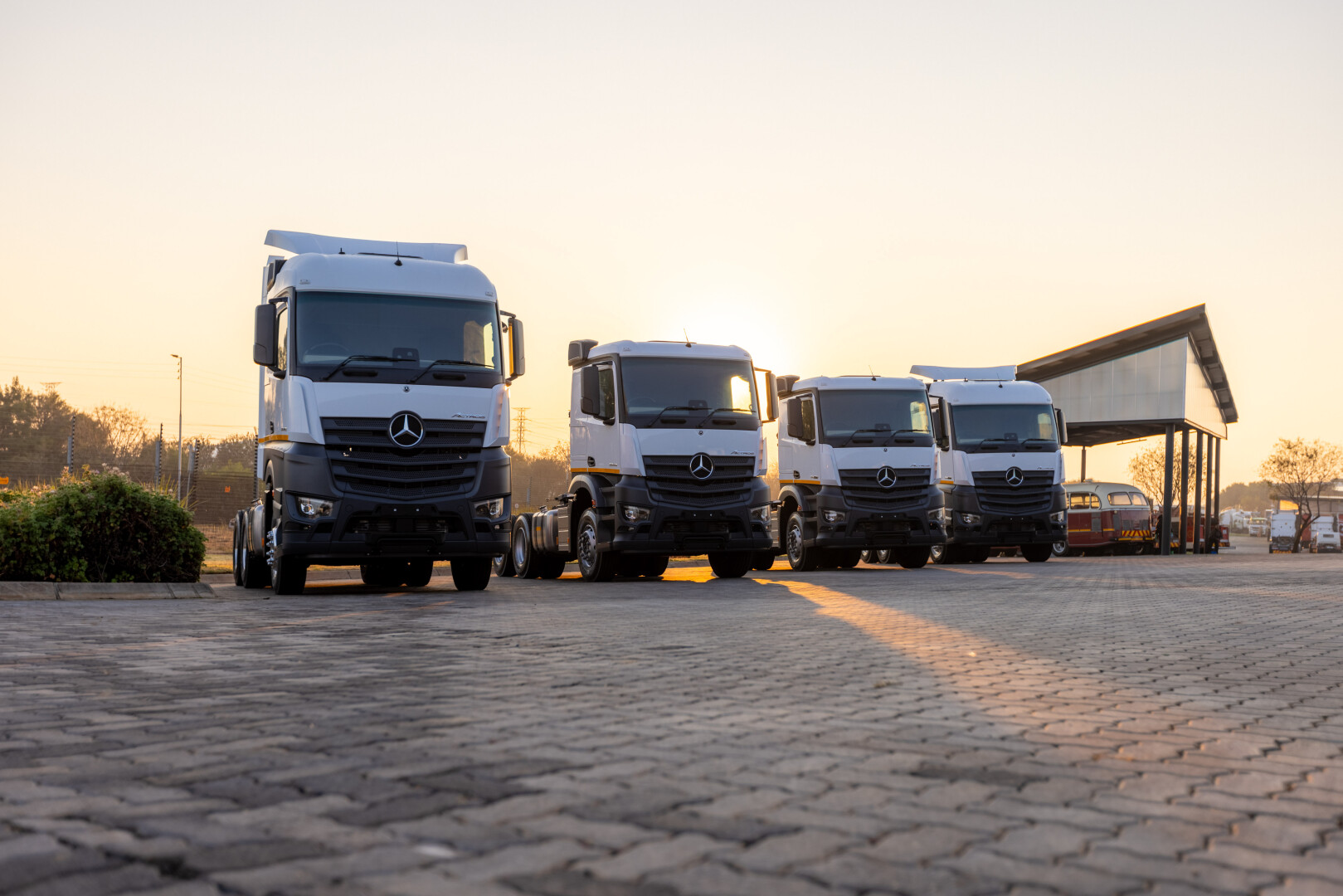
For transport operators running fleets across Southern Africa, the real measure of a truck is not found on the price tag but in the ledger at year end. It is a calculation of downtime, fuel bills, component life, maintenance intervals and resale value. And it is precisely this equation that Daimler Truck Southern Africa says guided the introduction of its latest Actros Base and Line Haul models.
The new arrivals expand the existing Mercedes-Benz Trucks portfolio, but the message from the manufacturer is less about shiny new metal and more about what happens over hundreds of thousands of kilometres. Total cost of ownership, or TCO, sits at the centre of the conversation.

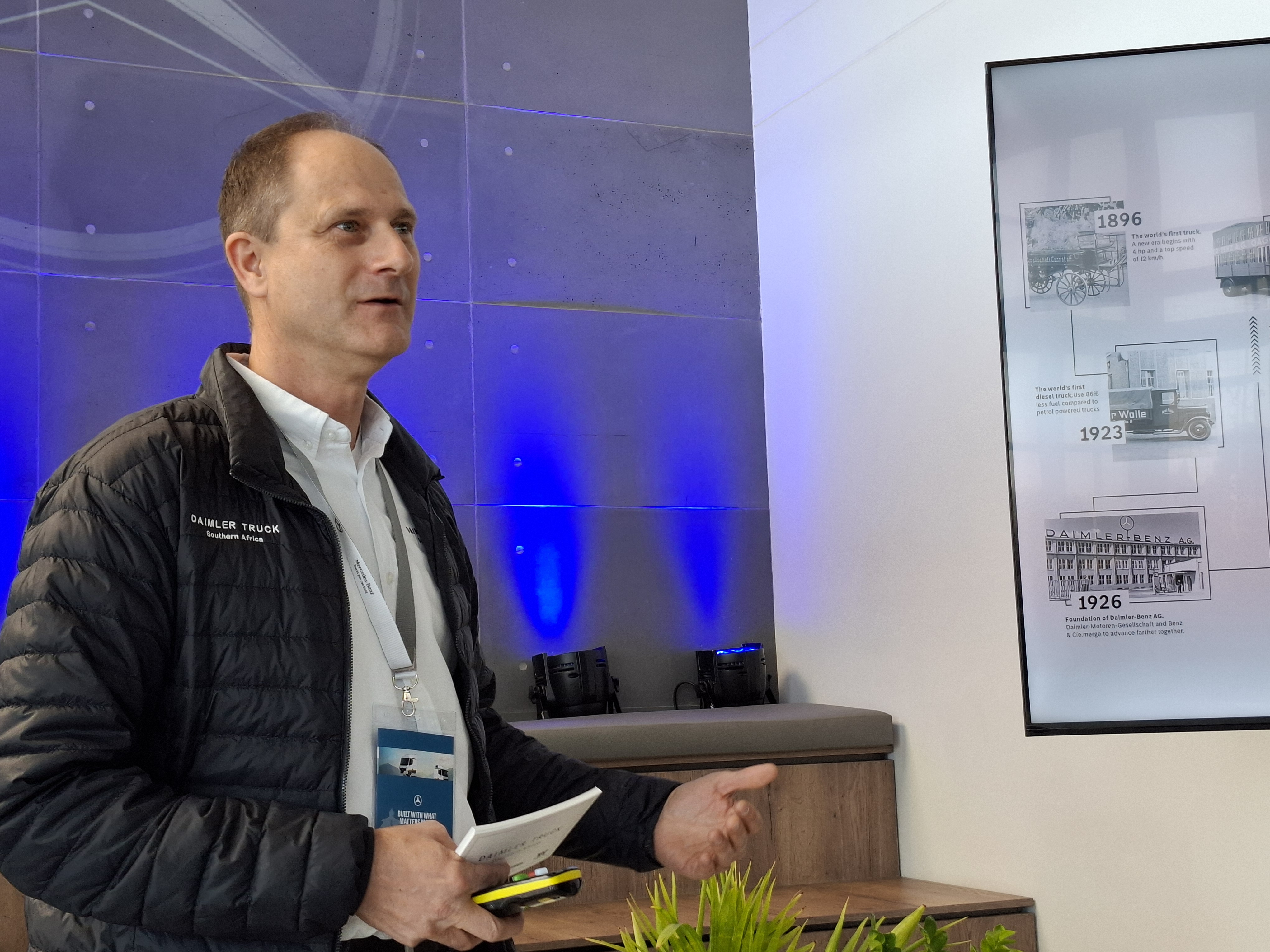
Olaf Petersen, Vice President of Sales and Marketing at Daimler Truck Southern Africa, makes little effort to hide his scepticism about what he calls deceptive packaging in the industry. He points to a trend where competitors cram ever higher horsepower figures into smaller displacement engines, a practice he likens to tuning a small passenger car engine to produce twice its rated power only to have it fail after a few hard laps.
"You can take a Polo 1,0-litre, tune it up to 200 horsepower, and drive three rounds around the racetrack. Then the engine is buggered," Petersen says. The German term he uses is Mogelpackung, deceptive packaging, where a big number on the spec sheet masks a small engine pushed to its limits.
Daimler takes a different approach. The OM460 engine, a 12,8-litre unit, is kept in the 330 kilowatt or 450 horsepower class. The larger OM473, a 15,6-litre big block, delivers 380 kilowatts or 520 horsepower.
“Neither engine is overworked,” says Petersen, “and that translates directly into engine life, fuel efficiency and ultimately a lower TCO for the operator.”
The OM473 comes with a feature called Turbo Compound, which extracts energy from the exhaust stream to deliver an additional 37 kilowatts, roughly 50 horsepower, at no fuel cost. That energy is fed back to the crankshaft, reducing fuel consumption while maintaining output. Daimler claims to be the only manufacturer in the segment offering this technology.

Gearbox selection follows the same philosophy. The G281 gearbox, rated for 2 800 Nm of input torque, is paired with the OM460 engine producing 2 200 Nm. That gives a 27% reserve margin, meaning the gearbox is never stressed to its limit. The larger OM473, with 2 600 Nm, is matched to a gearbox rated for 2 900 Nm. Petersen contrasts this with competitors where the engine output exceeds what the gearbox is designed to handle.
The braking systems differ by model. The OM460 equipped trucks use a hydraulic retarder delivering 420 kilowatts of friction free braking power, roughly 570 horsepower of stopping capability without wearing service brakes. The OM473 variants use a high performance engine brake that achieves similar figures.
Axles are another area where Daimler builds in headroom. The 13 ton tandem axles are typically loaded to nine tons in South African operations, a substantial reserve that contributes to longevity. Air suspension provides ride quality and load stability, while the chassis has been upgraded from E5100 steel to E6100 high tensile material, allowing an eight millimetre thickness that is lighter but stronger than previous generations.
Then there are the small items that add up. LED headlights are rated for 30 000 to 50 000 hours of continuous operation, a lifespan of 10 to 15 years, longer than many trucks remain in service. Petersen says this eliminates the repeated cost and downtime of replacing halogen bulbs, which may last 1 000 hours. A blown headlamp can also mean being turned away from mine sites or other premises with strict light requirements, an operational disruption that carries its own cost.
Fuel theft remains a persistent problem in the transport industry. Daimler has fitted a siphon proof device called Tank Safe into the filler neck, making fuel theft virtually impossible according to the company. Turntables are specified according to application, with the Jost 37 for line haul work and the heavier Jost 38 for side tipper operations where stress loads are higher.
All models share a gross combination mass of 65 tons and dual fuel tanks of 480 litres and 400 litres respectively, providing extended range for long distance operations. The cab meets European ECE R29 strength standards and includes a driver airbag to reduce head, neck and chest injuries in a collision. ABS and ASR, anti slip regulation, come standard.
The four new models are split between Base and Line Haul specifications. The Actros 2645LS/33 Base features a ClassicSpace Long Cab with a single bed and the OM460 engine producing 330 kilowatts and 2 200 newton metres, coupled with a hydraulic retarder. The Actros 2652LS/33 Base uses the OM473 big block producing 380 kilowatts and 2 600 newton metres with the high performance engine brake and air suspension for heavy duty applications.
For long haul operations, the Actros 2645LS/33 Line Haul upgrades to a StreamSpace Long Cab with dual beds, maintaining the OM460 engine and hydraulic retarder but with additional safety systems and higher fuel capacity. The Actros 2652LS/33 Line Haul pairs the OM473 with the dual bed cab, high performance engine brake and driver focused features.
A built in fridge, standard on the line haul variants, is a practical inclusion that Petersen says came after internal debate. Drivers on long routes need cold food kept at proper temperatures, and the company concluded this was not a luxury but a necessity for driver wellbeing on extended trips.
The existing Actros Pure models continue to offer value focused durability, while the RoadEfficiency range targets maximum long haul fuel economy. Actros Fuel Specification models serve hazardous goods transport with enhanced safety features, and the specialised range covers niche applications.
Daimler Truck Southern Africa operates as a wholly owned subsidiary with assembly facilities in East London and a sales and marketing hub in Centurion. A third facility recently opened on the West Rand to serve used vehicle customers. The company also manages nine African markets beyond South Africa, including Namibia, Botswana, Mozambique, Malawi, Zimbabwe, Zambia and Eswatini.
Petersen says the new regional structure under the Lamia division, which groups Latin America, Middle East and Africa, gives the African market a stronger voice in product decisions. Senior management now sits on the truck board rather than reporting through intermediate layers, a change that Petersen believes will result in vehicles better suited to local conditions.
The underlying philosophy remains consistent across the range. Components are sized with reserves. Engines are not pushed to their limits. Small details like lighting and fuel security receive attention because they affect operating costs over time. For transport operators watching their margins, that may matter more than any single specification sheet figure.
https://bit.ly/3Qhyi54

No comments:
Post a Comment