
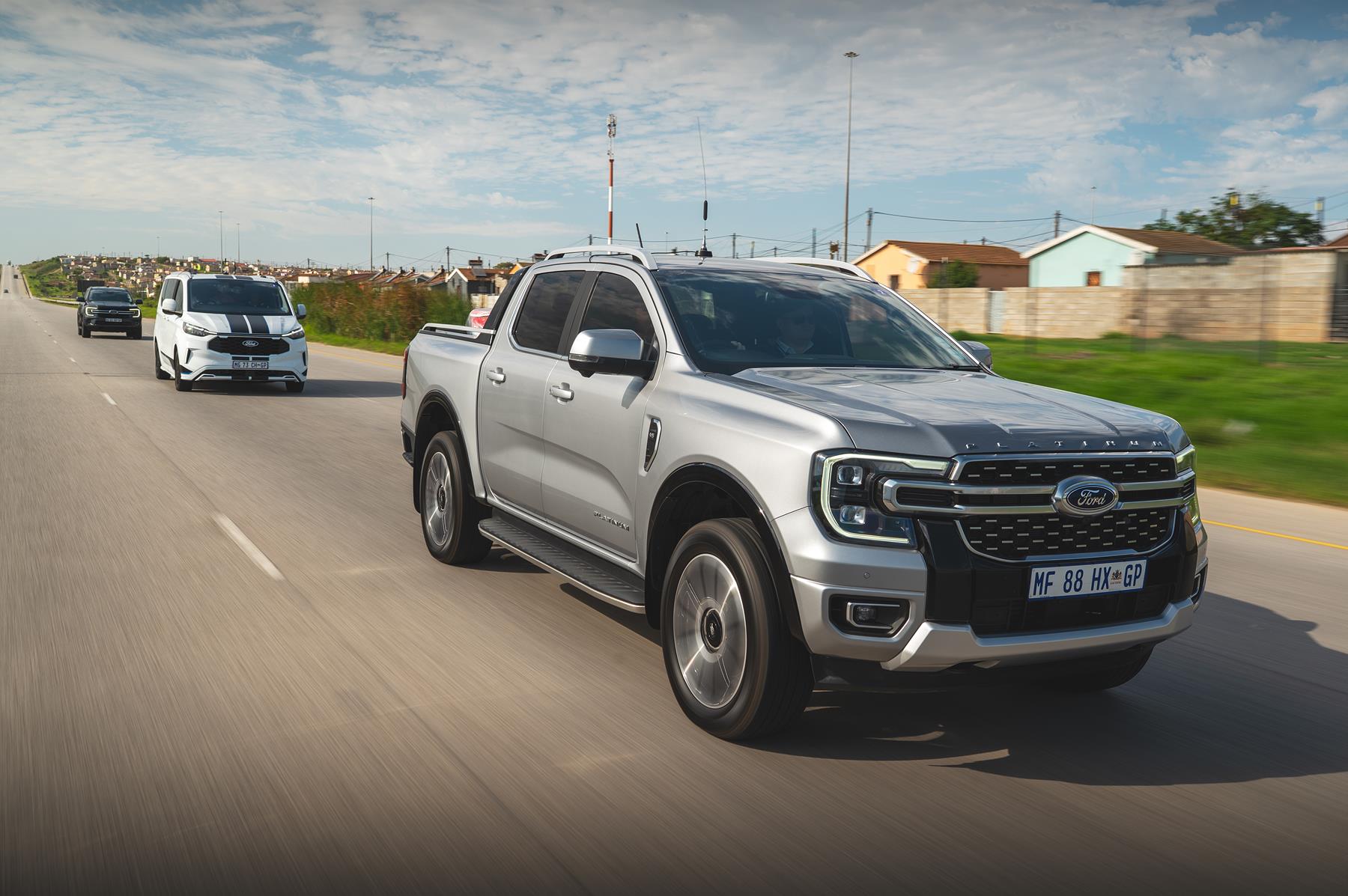
Two of South Africa's automotive manufacturers have reinforced their commitment to education through the Rally to Read programme, with Ford completing its 2026 delivery in the Eastern Cape while Toyota continues its support in KwaZulu-Natal.
Ford Motor Company of Southern Africa concluded its annual Rally to Read in the Eastern Cape recently, delivering books, teaching materials and teacher aids to rural schools in the Nelson Mandela Bay and Sarah Baartman districts. The resources are intended to strengthen reading outcomes in the early years of schooling.

The rally marks the second year of a three-year programme cycle that began in 2025, providing learning materials, teacher training and sustained classroom support to schools in the region. Ford has supported the Rally to Read initiative for more than two decades, and since 2019 has organised its own single-funded events together with the READ Educational Trust.
“At Ford, we believe that if our community investments are not creating generational impact, they are unlikely to change the trajectory of people’s lives,” said Neale Hill, President of Ford Motor Company, Africa.
“Our approach is what we describe as ‘cradle to vocation’, recognising that meaningful economic participation begins with strong foundations in the earliest years of education. Literacy sits at the very beginning of that journey. When children learn to read with understanding, they unlock the ability to succeed in every other subject, ultimately creating pathways to opportunity and shared prosperity.”

Ford’s presence in the Eastern Cape spans generations, with the Struandale Engine Plant in Gqeberha remaining central to the company’s global manufacturing network. Earlier this year, Ford donated three Transit vehicles to the READ Educational Trust to help the organisation reach under-resourced schools more efficiently. One of the vehicles has been converted into a mobile library.
Sibhekaphi Sibanda of the READ Educational Trust said literacy was fundamental to accessing the broader curriculum.
“When learners cannot read and write effectively, they are automatically excluded from subjects such as mathematics, science and technology,” Sibanda said. “Strengthening literacy early gives children access to the rest of their education and to the opportunities that follow.”
Toyota South Africa Motors has meanwhile continued its support of Rally to Read in KwaZulu-Natal, contributing more than 5 000 school shoes to all 13 participating schools in the province alongside classroom resources. The donation forms part of an initiative launched in 2023 that has now distributed 24 000 pairs of shoes to learners in underserved communities.

The shoes are manufactured from recycled disposable hospital drips through Netcare’s MyWalk initiative, a circular innovation that converts waste materials into durable footwear.
Andrew Kirby, President and CEO of Toyota South Africa Motors, said the company’s participation reflected its broader citizenship philosophy.
“As a brand deeply rooted in South African communities, Toyota South Africa Motors is honoured to be part of an initiative that places literacy and ultimately opportunity within reach for thousands of young learners,” Kirby said.
“Our continued participation in Rally to Read reflects our broader corporate citizenship philosophy. We believe that meaningful societal progress begins with accessible, high quality education and the basic resources that enable learners to thrive.”
Through its partnership with the READ Educational Trust, Toyota provides foundation phase reading books, classroom libraries, educational supplies and teacher development support. The Rally to Read programme has reached nearly 1 000 schools and 700 000 learners nationally, with participating school clusters showing measurable improvements in literacy competency and reduced dropout rates.
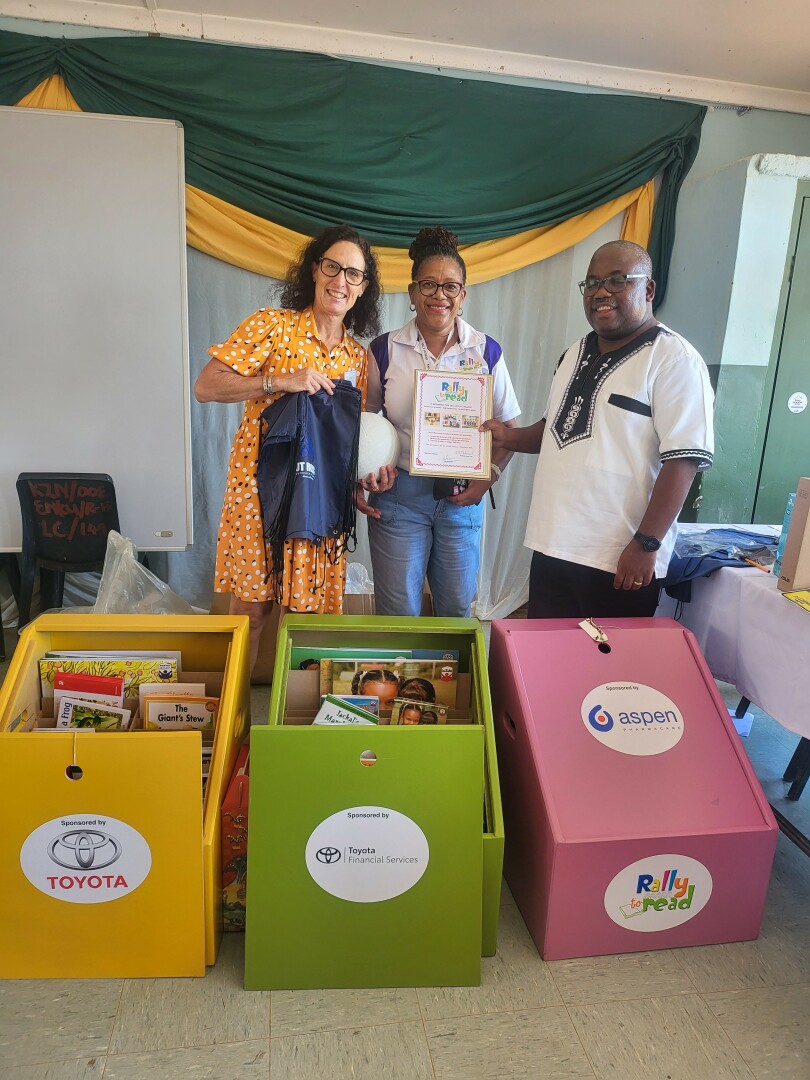
Hill said the programme’s impact was best understood through the moments that unfolded in classrooms.
“During the rally we often speak about numbers, the schools reached, the teachers trained and the learners supported. But when you visit these classrooms, you realise that behind every number is a teacher doing their best with limited resources, and a child discovering the confidence to read,” he said.
“When you intervene in literacy during the earliest years of education and sustain that work over decades, you are not simply running a programme. You are creating what we believe is a generational correction mechanism that helps unlock opportunity for children and communities over the long term.”
https://bit.ly/4uHE0N7

No comments:
Post a Comment