Wednesday, 28 January 2026

Strong growth forecast from UD Trucks and updates to Quester

Strong growth forecast from UD Trucks and updates to Quester

Against a backdrop of economic pressure and market volatility, UD Trucks Southern Africa is charting a course of confident and stable growth. This is anchored by disciplined execution, solid retail partnerships and a consistent focus on keeping customers' vehicles on the road.

These points were central to the recent UD Trucks 2026 Media Engagement at Zwartkops Raceway under the theme ‘Confident, Stable Growth though Volatile Underneath’.

The operating environment continues to present challenges, from rising input costs and fuel price fluctuations to infrastructure concerns. Despite this, UD Trucks Southern Africa is maintaining a resilient performance, which in turn strengthens customer trust in the brand’s support for long-term business sustainability.

This is reflected in the company’s annual figures. UD Trucks Southern Africa achieved an 8% share of the overall new-vehicle market, and a 10,8% share in the heavy-duty segment. This contributed to aggregate industry sales which rose to 31 652 units, up from 31 190 units in 2024. The aftermarket business also saw considerable growth, with Service Agreement uptake reaching around 50%, underscoring the focus on long-term customer value, vehicle uptime and operational efficiency.

“While the operating environment remains challenging, our performance shows that customers trust UD Trucks to deliver reliable solutions that support their businesses,” says Filip Van den Heede, Managing Director of UD Trucks Southern Africa. “Our focus remains clear: to drive further for better by offering innovative products, strong retail partnerships and solutions that make a real difference to customer operations.”

The UD Quon, the flagship long-haul model, continues to lead innovation within the range. Built for demanding heavy-duty applications, the Quon integrates advanced technology with a focus on productivity and uptime for customers facing intense commercial pressure.

“The Quon represents the height of UD innovation—from performance and safety to driver comfort and connectivity. It is engineered for customers who expect more from their vehicles,” says Van den Heede.

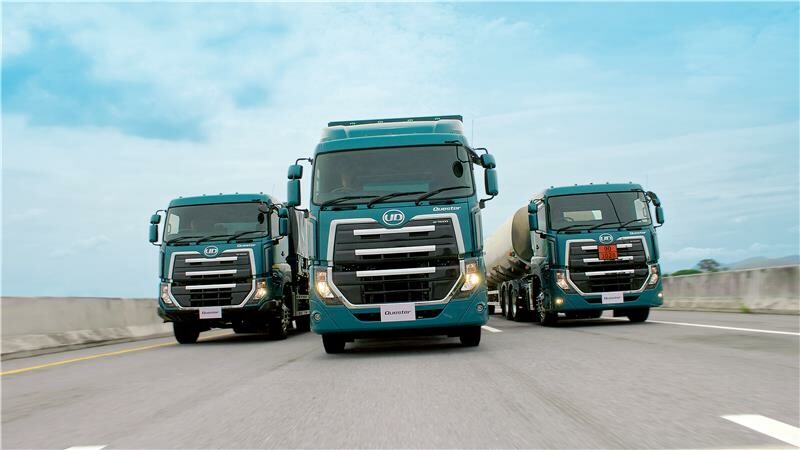
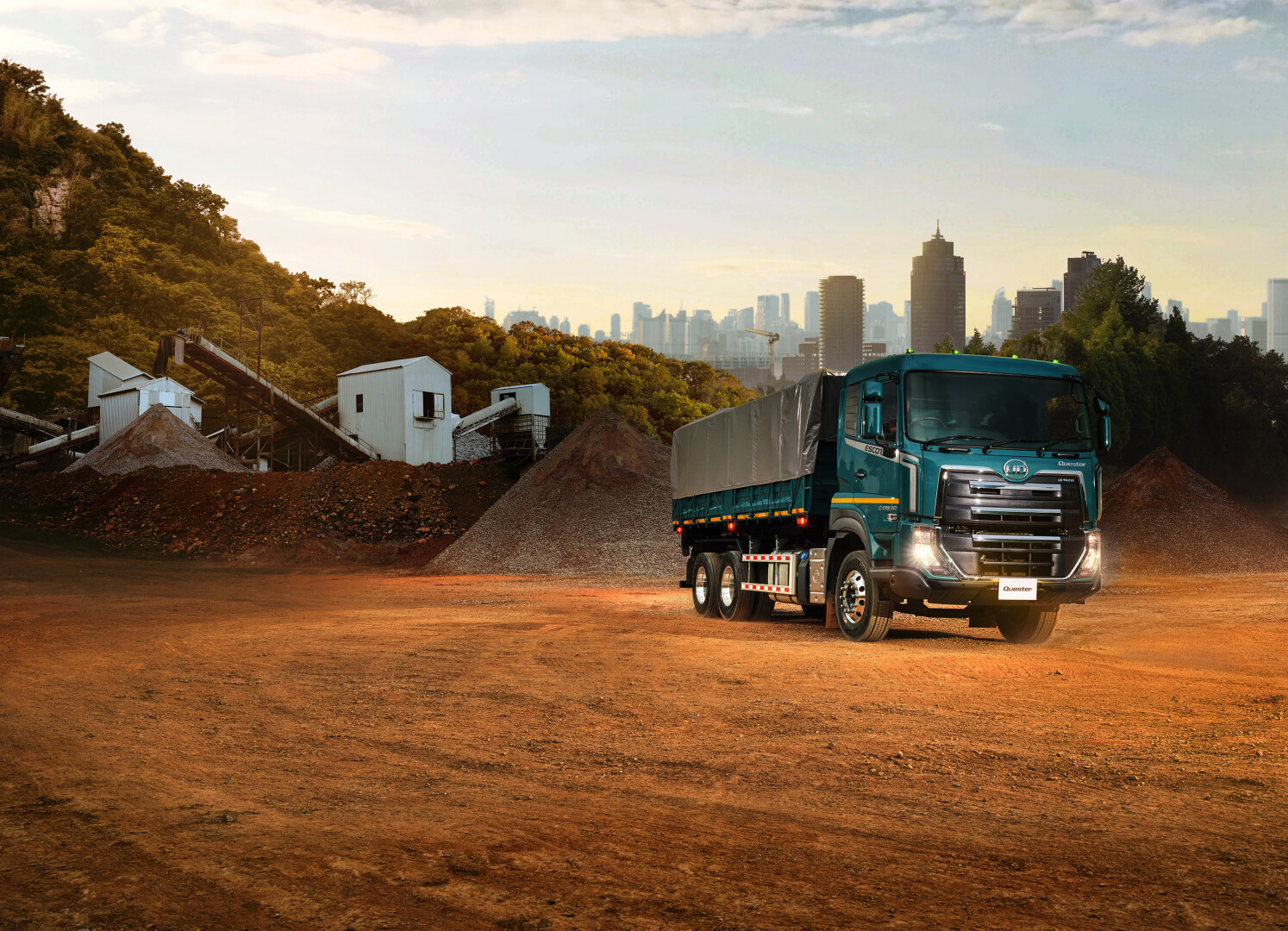
The event also showcased the UD Quester, a model that has been integral to the brand’s success in growth markets globally. Since its launch in 2013, the Quester has established a reputation for efficiency, durability and versatility across sectors like long haul, general cargo, construction and waste management.

Its development is directly informed by customer feedback, with a clear emphasis on fuel efficiency, safety, driver comfort and uptime—all critical factors in managing the total cost of ownership.

Notable features on the 2026 UD Quester include:
• The ESCOT Direct Drive Gearbox, which contributes to fuel efficiency and consistent driving.
• A 4-Stage Retarder for enhanced braking performance and vehicle control.
• UD Stability Control to aid in rollover prevention and directional stability.
• A driver crash bag for added occupant safety.
• A refreshed cab interior designed with driver comfort and usability in mind.

“Quester is more than a truck—it is a business partner,” says Esaia Taunyane, Sales Director at UD Trucks Southern Africa. “Every feature on the Quester is guided by customer feedback. By improving efficiency, safety and the driver experience, we help customers reduce total cost of ownership and achieve stronger long-term returns on their fleet investments.”


With fuel being a major operational cost, the Quester’s engineering—including efficient powertrains, driving support systems and UD Connected Services—is designed to help customers achieve more kilometers per litre without compromising on performance or reliability.

Uptime remains a fundamental part of UD Trucks Southern Africa’s offering. Through proactive maintenance planning, predictive servicing and responsive breakdown support, the company helps customers reduce unplanned downtime and safeguard productivity.

“Uptime is about anticipation, not reaction,” says Sanjay Naipal, Aftermarket Director at UD Trucks Southern Africa. “By combining proactive maintenance solutions with strong dealer support and connected services, we help customers manage costs, protect productivity and keep their fleets moving—even in demanding operating conditions.”

UD Trucks Southern Africa continues to invest in its dealer network, understanding  strong retail environments are crucial to customer experience and uptime. Recent developments include the opening of the new CMH Commercial Pinetown dealership, upgrades to the McCarthy Commercial Boksburg facility to enhance service capability, and a major expansion at McCarthy Commercial Alrode to increase workshop and parts capacity. Further facility improvements are underway in Richards Bay, Worcester, Kimberley, Bloemfontein and Port Shepstone.

People are central to UD Trucks Southern Africa’s long-term strategy. Ongoing investment in cadet development, driver training and leadership programmes reinforces the commitment to building industry-ready skills.

“Driving further for better goes beyond our products,” Van den Heede concludes. “It reflects our purpose of creating a better life—for people, for the planet and for sustainable growth. It is about how we support our customers, empower our people and contribute meaningfully to the communities in which we operate.”

https://bit.ly/4k58gwp

Monday, 12 January 2026

Chinese EV Manufacturers Expand in Africa

Chinese EV Manufacturers Expand in Africa

Chinese electric vehicle manufacturers are swiftly expanding their presence across Africa, as trade barriers in Western markets encourage them to seek new customers on the continent. African demand for electric and hybrid vehicles has risen steadily, driven by urbanisation, higher fuel prices and government incentives for greener mobility.

Major cities such as Nairobi, Lagos, Johannesburg and Cairo are experiencing early adoption of EVs in private, commercial and ride-hailing fleets, despite infrastructure challenges like limited charging networks. The market is further buoyed by a surge in affordable models from Chinese automakers, which blend competitive pricing with plug-in hybrid technology to meet local needs.

Analysts note that Africa’s EV market remains small compared to global sales, but growth rates are among the fastest in emerging regions. This positions the continent as a critical frontier for automakers looking to diversify beyond traditional markets.

In this context, Hong Kong-based Tiazhou Okla Automotive Co., known as Okla Global, has announced a strategic partnership with Treadway Investment Bank to accelerate its expansion across Africa. Treadway will provide corporate finance expertise, facilitate government and private sector partnerships, and help Okla navigate regulatory frameworks in key African markets.

Under the agreement, Okla plans to establish manufacturing and assembly plants in Zimbabwe, South Africa, Nigeria, Kenya and Egypt. These facilities will serve as regional hubs: Zimbabwe and South Africa for the Southern African Development Community (SADC), Nigeria for the Economic Community of West African States (ECOWAS), Kenya for East Africa, and Egypt for North Africa.

Okla stated that this collaboration marks a significant step in its mission to become a leading player in Africa’s electric vehicle industry. Treadway’s role will be central in securing financing, navigating regulatory frameworks and leveraging government relationships to accelerate Okla’s rollout. The partnership is also expected to boost local economies by creating jobs and strengthening industrial ecosystems through localised assembly and production.


Okla’s entry comes amid rapid expansion by Chinese automakers across Africa over the past five years. Companies such as Build Your Dreams (BYD), Chery, Geely, Foton, Great Wall Motor, Haval and Sinotruk have pursued opportunities across the continent, focusing on affordable vehicles as they build local presence. Their growth has been supported by local assembly plants, accessible financing models and strong after-sales support, reshaping consumer expectations and the broader automotive market.

Simultaneously, local players are cultivating their own EV ecosystems. For example, MojaEV Kenya, a Nairobi-based EV distributor, is set to begin local assembly of electric vehicles in partnership with domestic assemblers later this year. This shift from imports to in-country assembly is seen as critical to lowering costs and meeting rising demand for sustainable transport in Kenya and neighbouring markets.

In a related development, Jiangsu Yunyi Electric Company, a high-tech Chinese manufacturer specialising in automotive electronic components, has announced plans to invest approximately R1,2-billion in a production site in Tangier, Morocco’s automotive hub. The company said the Tangier plant will serve as a key overseas production base, leveraging local resources to enhance its global competitiveness and support medium- to long-term strategic goals. Jiangsu Yunyi Electric provides innovative solutions for new energy vehicles, including voltage regulators, rectifiers, diodes, sensors and intelligent wiper systems.

Morocco is emerging as a global automotive powerhouse, attributed to its political stability, geostrategic location, economic performance and incentives for investors. The country’s automotive ecosystem employs over 222 000 skilled workers. This strategic sector has grown exponentially over the past decade, making Morocco the leader in Africa for automotive manufacturing and exports.

In 2025, Morocco’s automotive market was valued at approximately R89,82-billion and is projected to reach around R158,94-billion by 2030, according to expert forecasts. The sector is export-oriented, with 1-million cars produced in 2025. Morocco, which has increased its target to 1,5-million vehicles by 2026, produced 560 000 cars in 2024 and 250 000 in 2020.

https://bit.ly/4qM3OVc

Friday, 9 January 2026

AAAM's 2026 Goals: Boosting Africa's Automotive Industry

AAAM's 2026 Goals: Boosting Africa's Automotive Industry


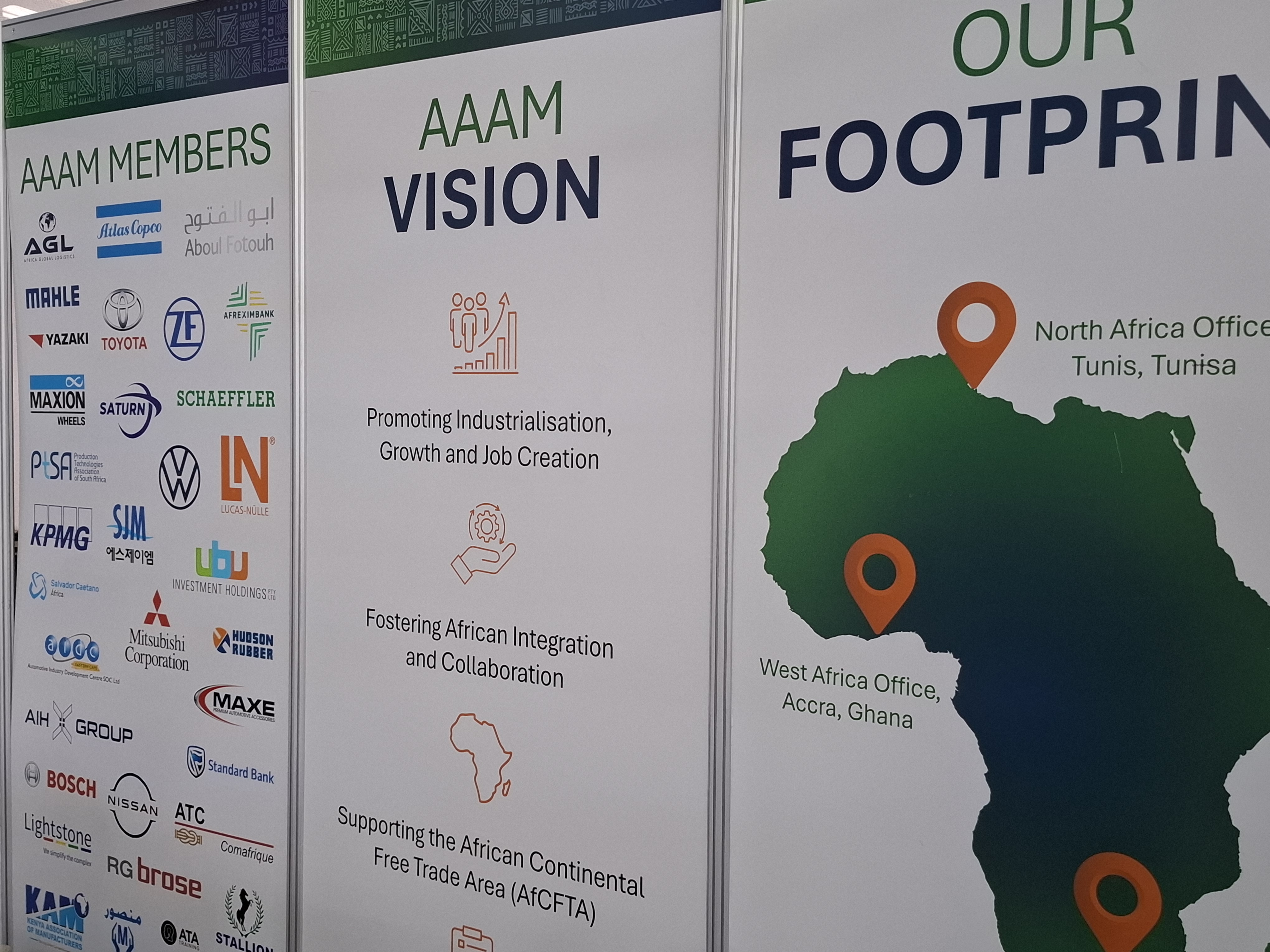
The African Association of Automotive Manufacturers (AAAM) has announced that 2026 will be its year of “progressive development through collaboration,” building on what it describes as a successful period of partnership-building in 2025.

Chief Operating Officer Victoria Backhaus-Jerling stated that the coming year would be focused on turning momentum into measurable outcomes. “Through our collective efforts, we have strengthened partnerships across the value chain,” she said. “Now is the time to translate that foundation into tangible progress for the continent’s automotive industrialisation.”


A key focus will be expanding AAAM’s continental footprint, bolstered by the establishment of its North Africa office in 2025. The office is intended to enhance engagement with regional stakeholders and reinforce North Africa’s role within the broader African automotive value chain.

The association has outlined eight strategic priorities for the year ahead. Top among them is unlocking intra-African trade by supporting the ratification and implementation of the automotive Rules of Origin under the African Continental Free Trade Area (AfCFTA). This follows the expected formal adoption by Heads of State in February of a 40% African originating content threshold—a milestone that would allow automotive products to begin trading under the AfCFTA framework. AAAM will work closely with Afreximbank, the AfCFTA Secretariat and African governments to guide members through the new trading environment.

Further priorities include accelerating automotive policy implementation in key markets such as Egypt, Ghana, Côte d’Ivoire, Kenya, Nigeria and Ethiopia, as well as engaging newer markets like Angola. “Policy certainty remains the foundation of sustainable industrialisation,” Backhaus-Jerling emphasised.

On the manufacturing front, AAAM aims to secure at least five concrete component manufacturing investments in Africa through targeted matchmaking and feasibility studies. The association will also advance sustainability initiatives, promoting re-manufacturing, alternative powertrains, micromobility solutions and supportive legislation for New Energy Vehicles.


Other focal points include enhancing automotive data and market intelligence across the continent, scaling up skills development through executive short courses, and fostering mineral beneficiation to connect Africa’s mining sector with local automotive manufacturing. As a strategic partner to the 2026 Mining Indaba, AAAM plans to help build a more integrated pan-African value chain.

Finally, the association reaffirmed its commitment to affordable mobility, noting continued collaboration with vehicle asset-financing stakeholders to develop accessible and sustainable transport solutions.

“All these initiatives are driven by a single commitment,” Backhaus-Jerling concluded, “to deliver greater impact for our members, strengthen collaboration, and deepen the partnerships that will accelerate sustainable industrial growth across Africa.”

https://bit.ly/3Z3KFCp